Materials Decide What the Print Can Do
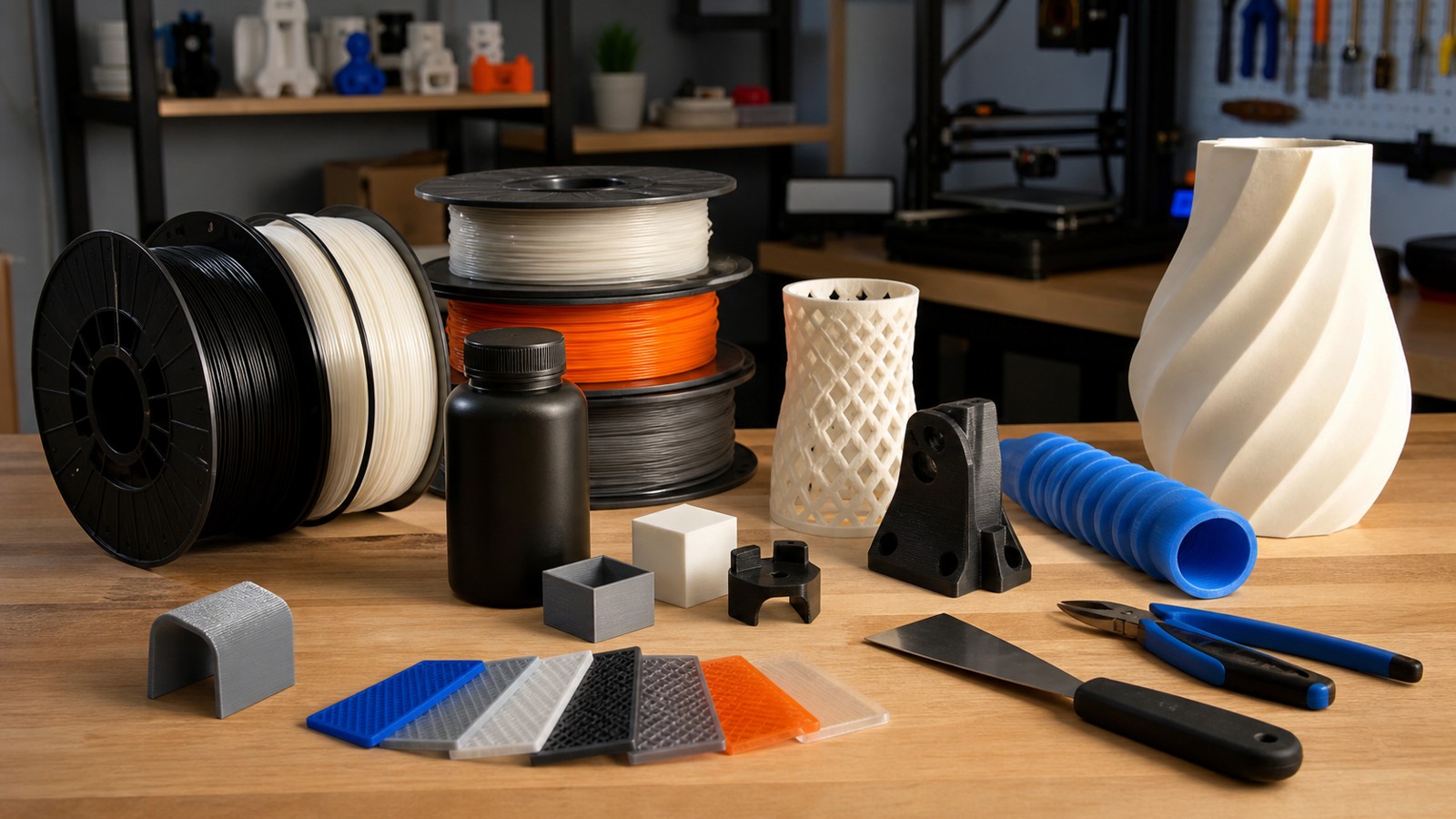
3D printing materials are not interchangeable. PLA, PETG, ABS, ASA, TPU, nylon, resin, and SLS powders each behave differently in strength, flexibility, heat, UV exposure, detail, safety, and finishing.
A: Match the model, material, settings, and finish plan to the purpose of the print.
A: Bed leveling, surface cleanliness, nozzle height, temperature, and material condition are the usual suspects.
A: No. Slower speeds can improve detail, but heat buildup and profile balance still matter.
A: Use the right material, more walls, smart orientation, enough infill, and realistic load testing.
A: Temperature, retraction, travel moves, moisture, and material type all contribute.
A: Diagnose poor first layers, weak parts, stringing, warping, and rough surfaces before buying parts.
A: Very important; it shows toolpaths, supports, layer changes, and possible weak spots before printing.
A: First layers, simple calibration prints, support cleanup, and basic material profiles.
A: Clean orientation, tuned settings, good material handling, and careful support removal, sanding, painting, fitting, and practical testing.
A: It is most useful for makers who want cleaner prints and fewer wasted attempts.
Materials Decide What the Print Can Do
3D printing materials are not interchangeable. PLA, PETG, ABS, ASA, TPU, nylon, resin, and SLS powders each behave differently in strength, flexibility, heat, UV exposure, detail, safety, and finishing.
Beginners get better results when they choose material by use case instead of buying whatever spool or resin is cheapest.
PLA
PLA is the easiest beginner filament. It prints cleanly, smells less than many alternatives, and works for models, organizers, decorations, prototypes, and classroom projects. Its weakness is heat resistance and long-term toughness.
Do not use ordinary PLA for hot cars, outdoor brackets, or loaded parts that need durability over time.
PETG, ABS, and ASA
PETG adds toughness and better heat resistance than PLA, making it useful for practical parts, brackets, containers, and shop fixtures. It can string more and may need careful cooling.
ABS and ASA are better for higher heat and tougher applications, with ASA offering better UV resistance. They usually need enclosure control and ventilation.
TPU and Nylon
TPU is flexible and useful for gaskets, grips, bumpers, feet, and protective parts. It prints slowly and needs a controlled filament path. Nylon is tough and useful for functional parts, but it absorbs moisture and often needs drying.
Both materials reward preparation. Wet nylon or TPU can ruin an otherwise good profile.
Resins
Resin materials are used for fine detail, miniatures, dental-style models, jewelry patterns, and small smooth parts. Standard resins can be brittle, while tough, flexible, castable, and biocompatible resins serve specific workflows.
Resin requires gloves, washing, curing, ventilation, and careful waste handling. It is not the cleanest first material for every beginner.
Powders and Specialty Materials
SLS powders such as PA12 and PA11 are common for functional nylon parts through service bureaus or professional systems. Composite filaments with carbon fiber, glass fiber, wood, or metal fill can change stiffness and appearance, but they may need hardened nozzles.
Specialty materials expand what printing can do, but they also increase process requirements.
FAQ
What is the best beginner material?
PLA is the easiest starting material for most FDM beginners.
What material is best for outdoor prints?
ASA is often a better outdoor filament than PLA because it handles UV and heat better.
What material is best for flexible parts?
TPU is the common beginner-friendly flexible filament.