3D Printing in Plain Language
3D printing is a way to make an object from a digital model by adding material layer by layer. Instead of cutting material away from a block or filling a mold, the printer builds only the areas described by the file.
A: Match the model, material, settings, and finish plan to the purpose of the print.
A: Bed leveling, surface cleanliness, nozzle height, temperature, and material condition are the usual suspects.
A: No. Slower speeds can improve detail, but heat buildup and profile balance still matter.
A: Use the right material, more walls, smart orientation, enough infill, and realistic load testing.
A: Temperature, retraction, travel moves, moisture, and material type all contribute.
A: Diagnose poor first layers, weak parts, stringing, warping, and rough surfaces before buying parts.
A: Very important; it shows toolpaths, supports, layer changes, and possible weak spots before printing.
A: First layers, simple calibration prints, support cleanup, and basic material profiles.
A: Clean orientation, tuned settings, good material handling, and careful support removal, sanding, painting, fitting, and practical testing.
A: It is most useful for makers who want cleaner prints and fewer wasted attempts.
3D Printing in Plain Language
3D printing is a way to make an object from a digital model by adding material layer by layer. Instead of cutting material away from a block or filling a mold, the printer builds only the areas described by the file.
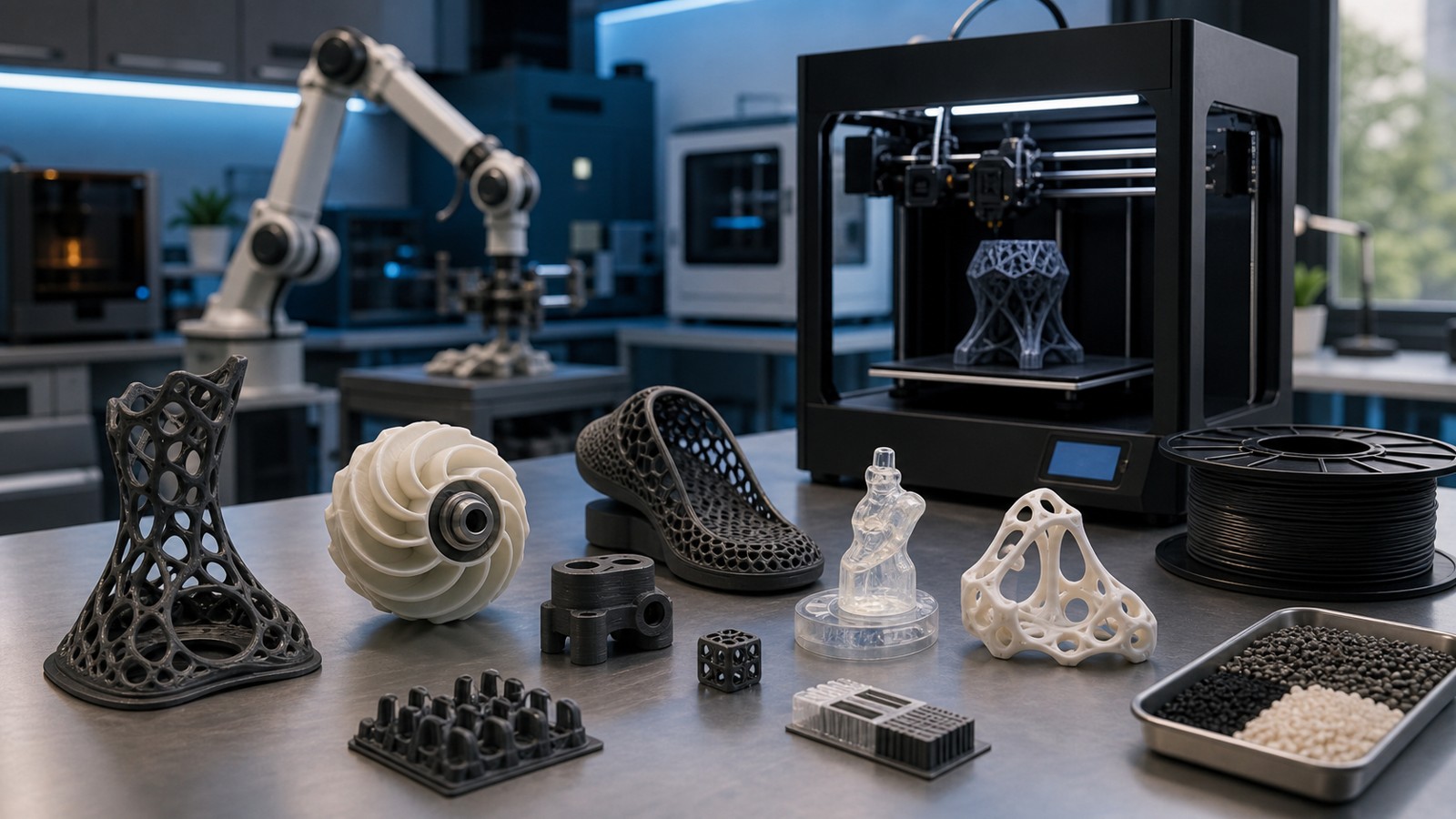
That basic idea can make toys, tools, prototypes, dental models, fixtures, miniatures, replacement parts, art, and production components. The result depends on the printer, material, design, and finishing process.
What You Need to Start
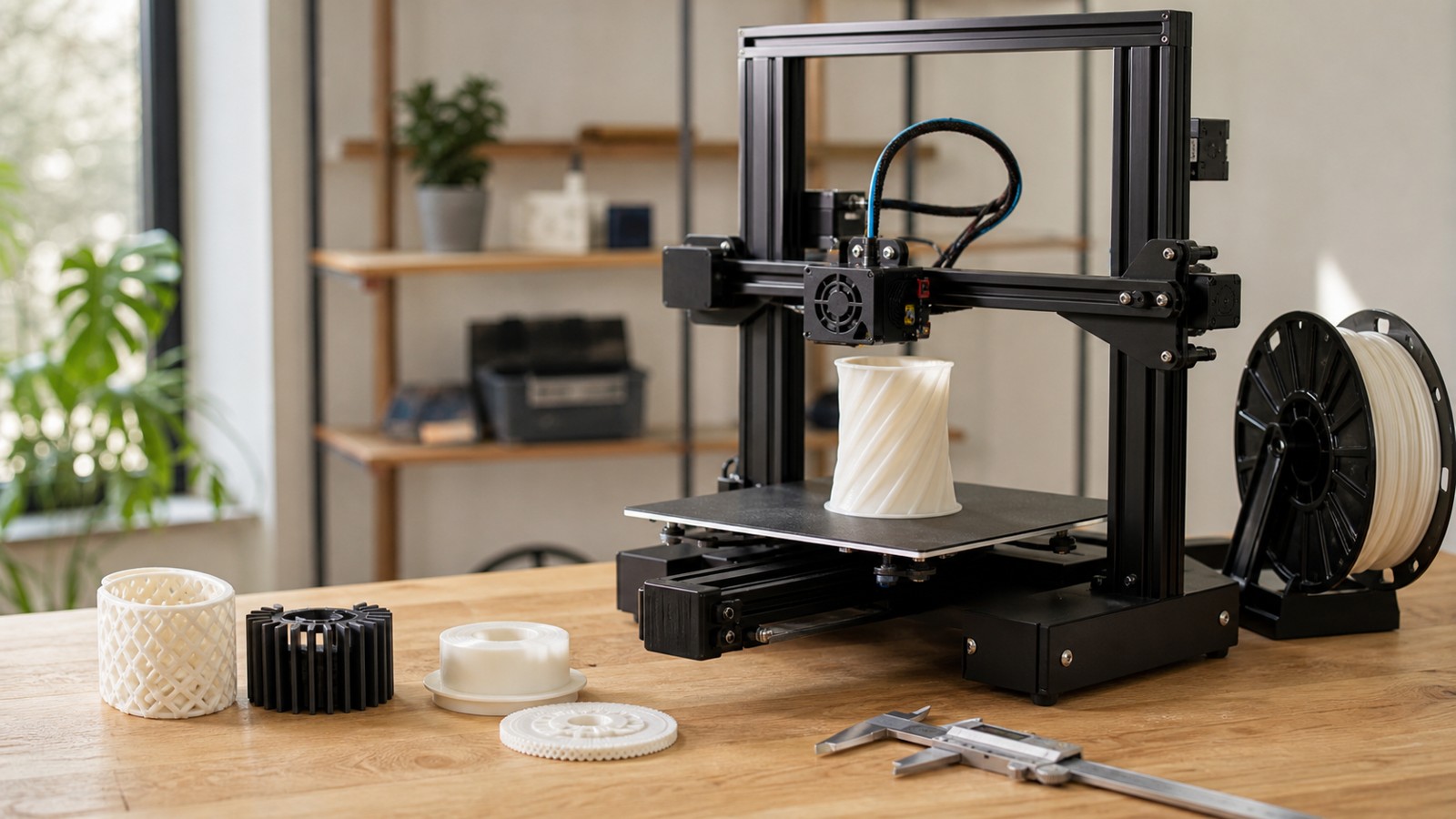
A beginner needs a printer, material, slicing software, a model, and a safe workspace. For FDM printing, that usually means filament and a heated nozzle. For resin printing, it means liquid resin, washing, curing, gloves, and ventilation.
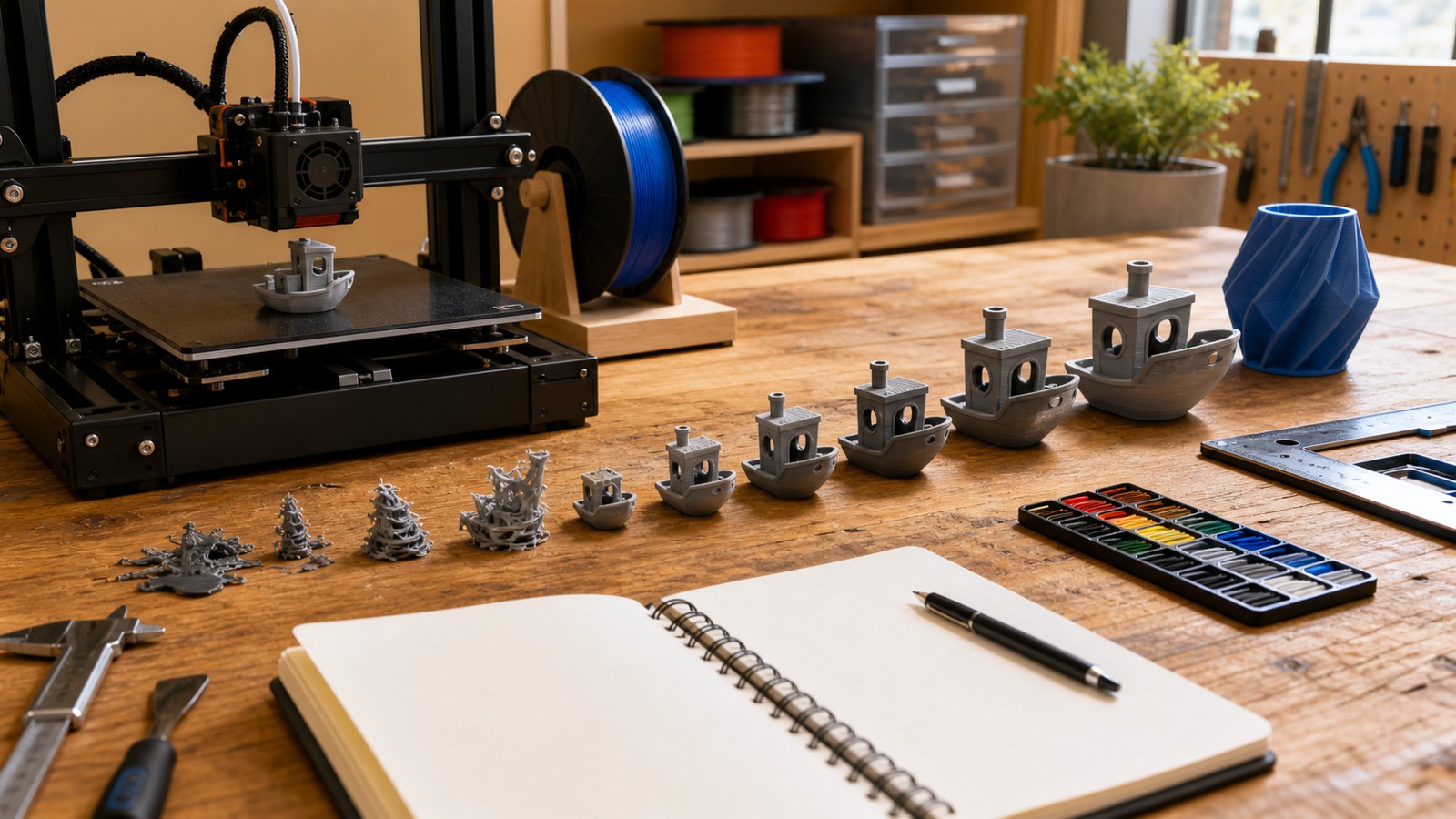
Start with simple models that print quickly. A calibration cube, hook, organizer, or small bracket teaches more than a complicated overnight model that fails halfway through.
The Main Printer Types
FDM printers use filament and are popular for home use, schools, fixtures, and general projects. Resin printers use light-cured liquid resin and are popular for miniatures and fine detail. SLS printers use powder and are common for functional nylon parts through service bureaus or professional shops.
Each type has tradeoffs. FDM is accessible, resin is detailed, and SLS is functional and support-free. The right choice depends on what the object has to do.
Common Beginner Terms
Layer height controls vertical detail. Infill is the internal structure of many FDM parts. Supports hold up overhangs while printing. Bed adhesion keeps the first layer attached. Tolerance is the practical gap between parts that must fit together.
These terms become useful once they connect to visible results. Stringing, warping, weak layers, rough surfaces, and tight fits all point back to design or slicer decisions.
What 3D Printing Does Well
3D printing is excellent for custom objects, prototypes, learning, repair parts, low-volume products, and shapes that would be difficult to make by hand. It lets a user test an idea physically without ordering a mold or waiting for a factory run.
It is less effective for very high-volume simple products, some safety-critical parts, and objects that need perfect molded surfaces without finishing.
A Calm First Workflow
Pick a simple model, check scale, slice with a trusted profile, preview the layers, print slowly enough for success, and write down what happened. If it fails, change one thing and try again.
3D printing becomes easier when the user treats each print as feedback. The machine is not magic; it is a practical tool that rewards observation.
FAQ
Is 3D printing hard to learn?
The basics are approachable, especially with modern printers. Reliable results still require learning materials, slicer settings, and cleanup.
What is the easiest printer type for beginners?
FDM is usually easiest and cleanest for general beginners, while resin is better for small detailed models but adds chemical handling.
Can beginners design their own parts?
Yes. Simple CAD tools and beginner projects make it possible to design organizers, brackets, labels, and replacement parts.