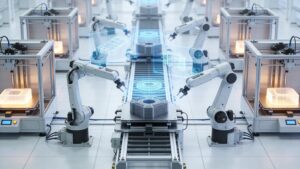
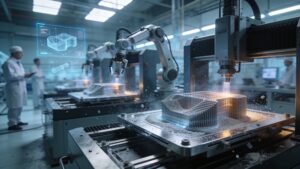
Additive Manufacturing Trends reveal how 3D printing is evolving from a prototyping tool into a core pillar of modern production. What once focused on hobbyist machines and rapid models now spans industrial automation, advanced materials, digital supply chains, and on-demand manufacturing at global scale. From faster print speeds and smarter software to metal printing breakthroughs and sustainable material systems, additive manufacturing continues to redefine how products are designed, built, and delivered. This category tracks the forces shaping the future of printing across industries. You’ll explore emerging technologies, shifting business models, and real-world applications driving adoption in aerospace, healthcare, automotive, construction, and consumer products. Trends in additive manufacturing aren’t just about hardware—they include workflow integration, data-driven optimization, post-processing automation, and distributed production networks. Whether you’re a maker watching industrial techniques filter down to desktop machines, or a professional monitoring where manufacturing investment is headed, Additive Manufacturing Trends offers a clear view of what’s changing, why it matters, and how the next generation of printing is taking shape layer by layer.
A: No—many reach consumer printers over time.
A: Automation and workflow integration.
A: Yes, especially in aerospace and energy.
A: Constantly—strength and consistency lead.
A: Increasingly, for optimization and monitoring.
A: Yes, recycled and bio-based materials are rising.
A: Very, especially for short-run production.
A: Yes, features often trickle down.
A: Reliability and cost control.
A: Scalable, automated digital manufacturing.