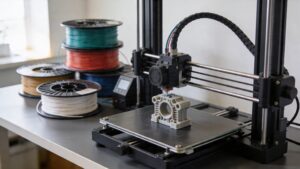
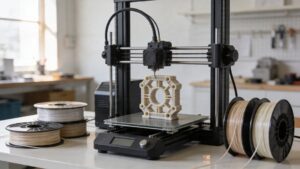
ABS filament is one of the original workhorses of desktop 3D printing, trusted for its strength, durability, and real-world performance. Short for acrylonitrile butadiene styrene, ABS is best known for producing tough, impact-resistant parts that can handle heat, stress, and everyday use. It’s the same plastic used in automotive components, consumer electronics housings, and classic LEGO bricks, which gives makers confidence in its reliability. On the print bed, ABS shines when projects demand structural integrity rather than decorative finishes. It responds well to post-processing techniques like sanding, drilling, and acetone vapor smoothing, making it a favorite for functional prototypes and mechanical parts. While ABS does require a bit more setup than beginner filaments, its performance rewards those willing to dial in their settings. This section of 3DPrinting Street explores ABS filament from every angle—how it prints, where it excels, and why it continues to be a staple in workshops, labs, and maker spaces around the world.
A: Yes, especially for impact and heat resistance.
A: It is highly recommended.
A: Ventilation is recommended.
A: Yes, very easily.
A: Generally 90–110°C.
A: It can without proper heat control.
A: Yes, with ABS cement or acetone.
A: It has slight flexibility but is mostly rigid.
A: Yes, dry storage helps.
A: Better suited for intermediate users.