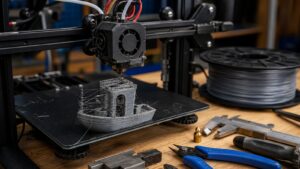
Fused Deposition Modeling is where imagination becomes something you can hold in your hands. It’s the beating heart of modern 3D printing, the method that transformed desktop fabrication from a niche experiment into a global revolution. With a humble spool of filament and a precisely heated nozzle, FDM builds objects layer by layer, creating everything from functional tools and engineering prototypes to artistic sculptures and futuristic gadgets. Its approachable design, customizable settings, and endless material options make it the technology that welcomes beginners and rewards experts.
On 3DPrinting Street, our FDM hub is your gateway into this endlessly creative world. Here, you’ll uncover the science behind extrusion, discover advanced printing techniques, troubleshoot real-world challenges, and explore new materials that unlock fresh possibilities. Whether you’re tuning your first printer or pushing the boundary of what an FDM machine can handle, this is where your ideas gain form, texture, and purpose—one precise layer at a time.
A: It’s a 3D printing process that melts filament and deposits it layer by layer to build solid objects.
A: PLA is the most beginner-friendly—it prints at low temperatures, warps less, and works on open-frame printers.
A: Check bed leveling, clean the surface, adjust Z offset, and make sure your bed and nozzle temperatures are correct.
A: Tune retraction distance and speed, lower nozzle temperature slightly, and keep filament dry.
A: Yes, with the right filament, orientation, and wall settings, FDM can produce durable brackets, tools, and fixtures.
A: No, many models can be oriented to minimize supports; slicer previews help you decide where they’re really needed.
A: It depends on size, layer height, and speed—prints can range from under an hour to more than a day.
A: It’s common, but best practice is to monitor long prints and follow fire safety guidelines for electronics.
A: Filament can absorb moisture or age over time—dry it and store it in sealed containers with desiccant.
A: Use finer layer heights, slower outer walls, good cooling, and post-processing methods like sanding or priming.