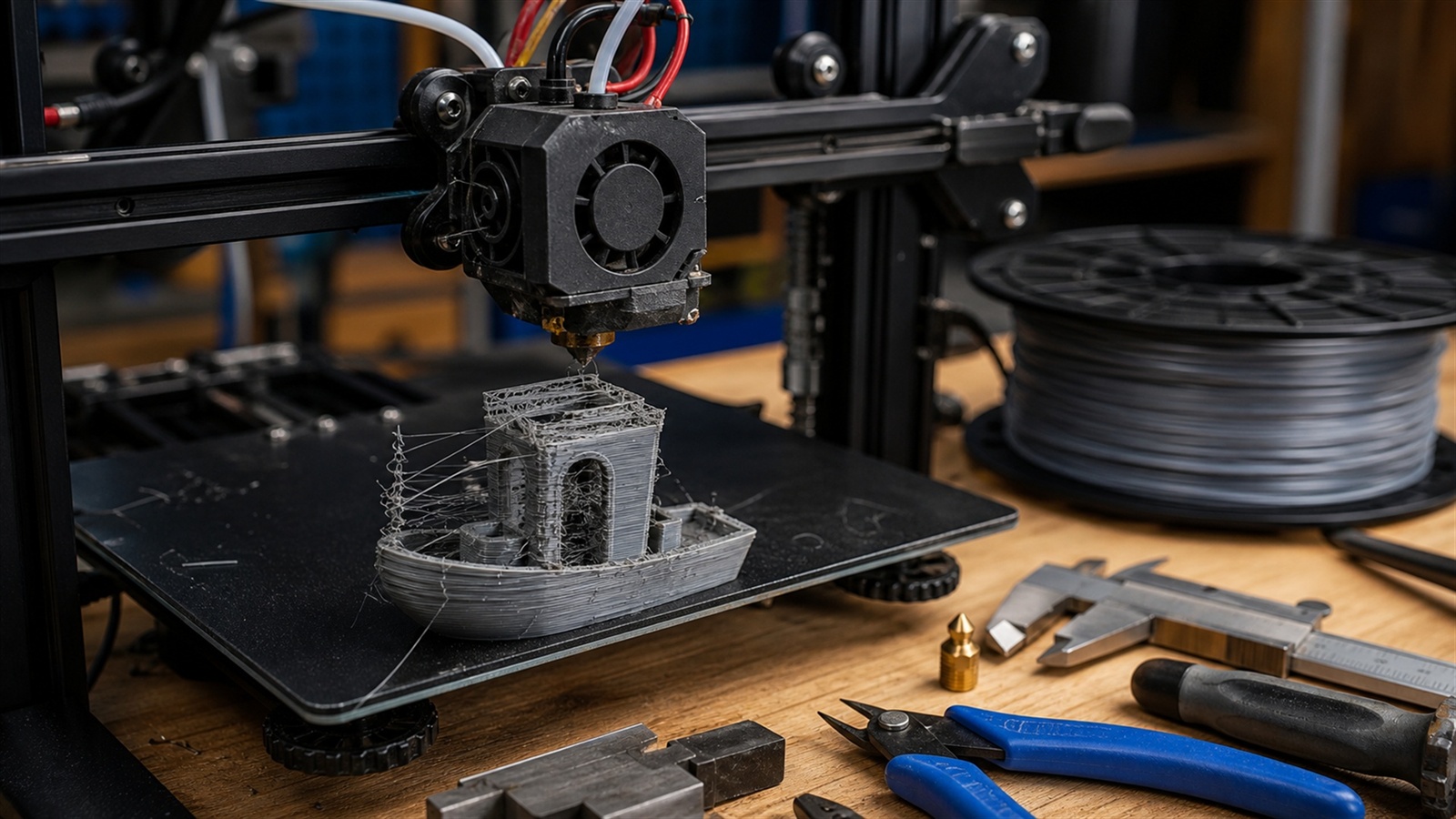
The Complete FDM Material Guide: PLA, ABS, PETG, Nylon, and More
Fused Deposition Modeling has become one of the most accessible, flexible, and powerful forms of modern manufacturing, and at the heart of its versatility lies its vast material ecosystem. Walk into any maker space today and you’ll encounter spools of vibrant PLA, rugged ABS parts curing on a workbench, translucent PETG samples glittering under lights, and stacks of Nylon prints ready for field testing. Each of these materials offers a different blend of strength, flexibility, heat resistance, visual polish, and ease of printing. Choosing the right material isn’t simply about what your printer can handle; it’s about understanding the personality of each plastic, the performance it offers, and the role it plays in transforming ideas into physical reality. This comprehensive guide explores the full spectrum of popular FDM materials, from beginner-friendly favorites to industrial-grade performers, helping you unlock the true creative and functional potential of your printer.
A: Match the model, material, settings, and finish plan to the purpose of the print.
A: Bed leveling, surface cleanliness, nozzle height, temperature, and material condition are the usual suspects.
A: No. Slower speeds can improve detail, but heat buildup and profile balance still matter.
A: Use the right material, more walls, smart orientation, enough infill, and realistic load testing.
A: Temperature, retraction, travel moves, moisture, and material type all contribute.
A: Diagnose stringing, warping, weak layers, clogs, and moisture bubbles before buying parts.
A: Very important; it shows toolpaths, supports, layer changes, and possible weak spots before printing.
A: First layers, simple calibration prints, support cleanup, and basic material profiles.
A: Clean orientation, tuned settings, good material handling, and careful support removal, sanding, painting, smoothing, and part testing.
A: It is most useful for makers matching material behavior to the job instead of only the color.
PLA: The Friendly All-Purpose Starter
Polylactic Acid, or PLA, is the welcoming gateway material for most people entering the world of FDM printing. Derived from renewable resources like corn starch or sugarcane, PLA is as eco-friendly as it is easy to print. Its low extrusion temperature reduces warping and makes it compatible with virtually every FDM printer on the market.
PLA shines when it comes to aesthetics, offering crisp details, strong color vibrancy, and support for countless specialty blends including silk, matte, wood-fill, metal-fill, and glow-in-the-dark. For prototypes, decorative pieces, figurines, and general experimentation, PLA is unmatched. Its main weakness lies in heat sensitivity and brittleness.
Leave a PLA print in a hot car, and it will begin to deform. Use it as a functional hinge, and it may crack. PLA doesn’t like mechanical stress, but for everything else—from learning the fundamentals to producing beautiful visual models—it remains a staple across the entire 3D printing community.
ABS: The Tough Veteran of Industrial Plastic
Acrylonitrile Butadiene Styrene, better known as ABS, is one of the earliest plastics used in home 3D printing and remains a favorite for functional parts that require strength and flexibility. Widely used in consumer products like LEGO bricks and automotive components, ABS offers durability that PLA simply can’t match. With higher temperature resistance and better impact strength, it’s an obvious choice for mechanical housings, brackets, and durable end-use parts.
However, ABS is notoriously difficult to print. It demands precise temperature control, an enclosed build chamber, and strong bed adhesion to counter its tendency to warp. It also releases fumes during printing, making ventilation essential. Makers who master ABS unlock a powerful material capable of producing long-lasting components that thrive in real-world environments.
PETG: The Perfect Middle Ground
Polyethylene Terephthalate Glycol (PETG) has long been celebrated as the ideal hybrid material—stronger than PLA, easier than ABS, and versatile enough for a wide range of practical applications. PETG offers excellent layer adhesion, mild flexibility, and impressive impact resistance.
Unlike ABS, it resists warping and fumes, making it user-friendly while still delivering industrial-grade properties. PETG is especially valued for parts exposed to moisture or mechanical wear. Its glossy, slightly tacky finish provides a visual polish that feels premium, though it can make the material prone to stringing if print settings aren’t dialed in.
Functional prints like camera mounts, protective covers, brackets, gears, and outdoor components often benefit from PETG’s balanced profile. Whether you’re crafting a durable prototype or building a dependable replacement component, PETG consistently delivers reliability without sacrificing ease of use.
Nylon: The Workhorse of High-Performance Printing
Nylon stands in a league of its own within the FDM material world. Renowned for its exceptional strength, abrasion resistance, and surprising flexibility, nylon is the material of choice for demanding engineering applications. It can endure repeated stress, thermal cycles, and even rugged environmental conditions. Whether used for gears, hinges, tooling, or mechanical enclosures, nylon performs far beyond the capabilities of PLA, ABS, or PETG.
It does, however, require very specific conditions to print effectively. Nylon loves to absorb moisture, often pulling humidity directly from the air, so it must be dried thoroughly before use. Printing it at high temperatures also demands an all-metal hotend and proper bed adhesion strategies. But for makers seeking truly functional parts that behave like injection-molded engineering plastics, nylon is often the gold standard—tough, reliable, and capable of handling the real world with confidence.
TPU and Flexible Filaments: Soft, Stretchy, and Surprisingly Strong
Flexible materials like TPU (Thermoplastic Polyurethane) add an entirely new dimension to FDM printing by enabling soft, bendable, and elastic components. From phone cases and grips to vibration-damping mounts and protective pads, TPU gives creators the ability to print objects that compress, twist, and stretch without breaking. These materials challenge printers with their rubber-like properties, sometimes requiring direct-drive extruders and slower print speeds. But once dialed in, TPU rewards makers with unmatched versatility. Its combination of durability, elasticity, and visual finish makes it one of the most exciting additions to the modern material palette.
Composite Materials: Blending Plastics With Performance
The rise of composite filaments has expanded what FDM printers can achieve. These materials mix base plastics like PLA, PETG, or nylon with additives such as carbon fiber, glass fiber, wood fibers, or metal particles. The results are striking—PLA wood-fill can mimic real wood grain, carbon-fiber-reinforced nylon offers aerospace-level strength, and metal-infused PLA produces shimmering, weighty models with an almost metallic feel.
While composites offer powerful benefits, they also require hardened nozzles and careful tuning. They are among the most rewarding materials to master, opening the door to prints that feel premium, professional, and purpose-built for advanced applications.
High-Temperature and Specialty Filaments: For Extreme Projects
Beyond the common choices lie specialized materials designed for extreme demands. Filaments like Polycarbonate, PEEK, PEI (Ultem), and PPSU require industrial-grade printers capable of sustaining high temperatures and enclosed build environments. These materials serve aerospace, medical, and engineering markets where performance is mission-critical. Polycarbonate offers strength and clarity, resisting impacts that would shatter other plastics. PEEK and PEI are among the most advanced thermoplastics available to FDM printing, delivering chemical resistance, heat resistance, and structural performance that rivals machined industrial parts. While they may be overkill for hobbyists, these materials illustrate just how far FDM technology has evolved.
Choosing the Right Material for Your Project
Selecting the right filament begins with understanding the demands of your design. If you’re building a decorative model, a colorful, easy-to-print PLA may be perfect. If durability and practical performance are priorities, PETG or ABS offer the ideal balance. For high-stress components, nylon or carbon-fiber composites provide the reliability needed. And if flexibility or elasticity is essential, TPU is the clear winner.
Visual qualities also play a role. PLA offers unmatched specialty colors and finishes. PETG adds glossy clarity. SLA-like smoothness is possible with the right composite blends. Your choice directly shapes not just the function of your print, but its aesthetic identity as well.
The Future of FDM Materials
The growth of the FDM material ecosystem shows no signs of slowing. Manufacturers are developing stronger, more sustainable, more temperature-resistant, and more visually unique materials every year.
Recycled blends, biodegradable composites, electrically conductive filaments, and carbon-negative bio-materials are all emerging as exciting additions to the next generation of 3D printing. As printers become more advanced and affordable, the range of usable materials expands, empowering creators to push the boundaries of what’s possible.
Whether you’re building functional components that rival commercial products or crafting intricate works of art, the future of FDM materials promises greater creativity, performance, and accessibility than ever before.
The Power of Choosing Well
Mastering materials is one of the most rewarding steps in becoming a confident and capable FDM creator. Each filament tells a story—of strength, of beauty, of resilience, of creativity—and understanding these qualities gives you the power to shape your prints with purpose. PLA invites experimentation, ABS embraces durability, PETG brings balance, nylon elevates engineering, and specialty blends unlock entirely new realms of potential. When you choose the right material, your printer becomes more than a machine—it becomes a tool of limitless expression. Dive deep, experiment boldly, and let the materials themselves show you what 3D printing can truly become.
Research-Backed Context
Material choice is a performance decision, not just a shopping choice. Heat resistance, flexibility, impact strength, odor, moisture sensitivity, UV exposure, food-contact requirements, post-processing, and printer compatibility all change whether a filament or resin is a good fit.
Practical Decision Checks
- Match the material to the part’s environment before comparing price or color.
- Check nozzle temperature, bed temperature, enclosure needs, ventilation, and drying requirements.
- Print a small strength or fit test before using a material for clips, brackets, hinges, or enclosures.
- Compare manufacturer datasheets with real-world slicer settings and part orientation.
FAQ
Is PLA always the best beginner material?
PLA is usually the easiest starting point, but PETG, ABS, TPU, nylon, and filled materials are better when the part needs heat resistance, toughness, flexibility, or outdoor durability.
Why does filament drying matter?
Moisture can cause popping, stringing, rough surfaces, weak layers, and inconsistent extrusion, especially with nylon, PETG, TPU, and composites.
How should a material guide be used?
Use it as a shortlist, then verify the material against the printer, the slicer profile, and the part’s actual job.
Sources and Further Reading
These references support the technical terms, material guidance, process limits, and decision criteria used in this article.