The Three Roots of Modern 3D Printing
SLA, SLS, and FDM explain much of early 3D printing because they represent three different ways to build layers: curing liquid resin, fusing powder, and extruding melted thermoplastic. Each process shaped a different branch of additive manufacturing.
A: Match the model, material, settings, and finish plan to the purpose of the print.
A: Bed leveling, surface cleanliness, nozzle height, temperature, and material condition are the usual suspects.
A: No. Slower speeds can improve detail, but heat buildup and profile balance still matter.
A: Use the right material, more walls, smart orientation, enough infill, and realistic load testing.
A: Temperature, retraction, travel moves, moisture, and material type all contribute.
A: Diagnose failed supports, suction marks, brittle parts, and uncured residue before buying parts.
A: Very important; it shows toolpaths, supports, layer changes, and possible weak spots before printing.
A: First layers, simple calibration prints, support cleanup, and basic material profiles.
A: Clean orientation, tuned settings, good material handling, and careful washing, curing, sanding, priming, and safe handling.
A: It is most useful for makers who want crisp detail and accept the messier workflow.
The Three Roots of Modern 3D Printing
SLA, SLS, and FDM explain much of early 3D printing because they represent three different ways to build layers: curing liquid resin, fusing powder, and extruding melted thermoplastic. Each process shaped a different branch of additive manufacturing.
These origins still matter. Modern desktop printers, resin machines, service-bureau nylon parts, and industrial production systems all build on ideas developed during the rapid prototyping era of the 1980s and 1990s.
SLA: Light Curing Liquid Resin
Stereolithography is closely tied to Charles Hull’s early work and the 1986 U.S. patent for forming three-dimensional objects from successive cross-sections. SLA uses light to cure liquid photopolymer resin into solid layers.
The early value of SLA was speed and surface detail for prototypes. Product teams could hold a physical model far sooner than traditional tooling allowed. Modern resin printers still use the same broad idea, though with very different hardware and materials.
SLS: Laser-Fused Powder
Selective laser sintering builds parts by spreading powder and using a laser to fuse the geometry for each layer. Unfused powder supports the part, which gives SLS an advantage for complex nylon shapes and batches of functional components.
SLS became important because it moved additive manufacturing toward stronger functional parts, not only visual models. It remains a major process for prototypes, fixtures, low-volume production, and support-free polymer geometry.
FDM: Extruded Thermoplastic
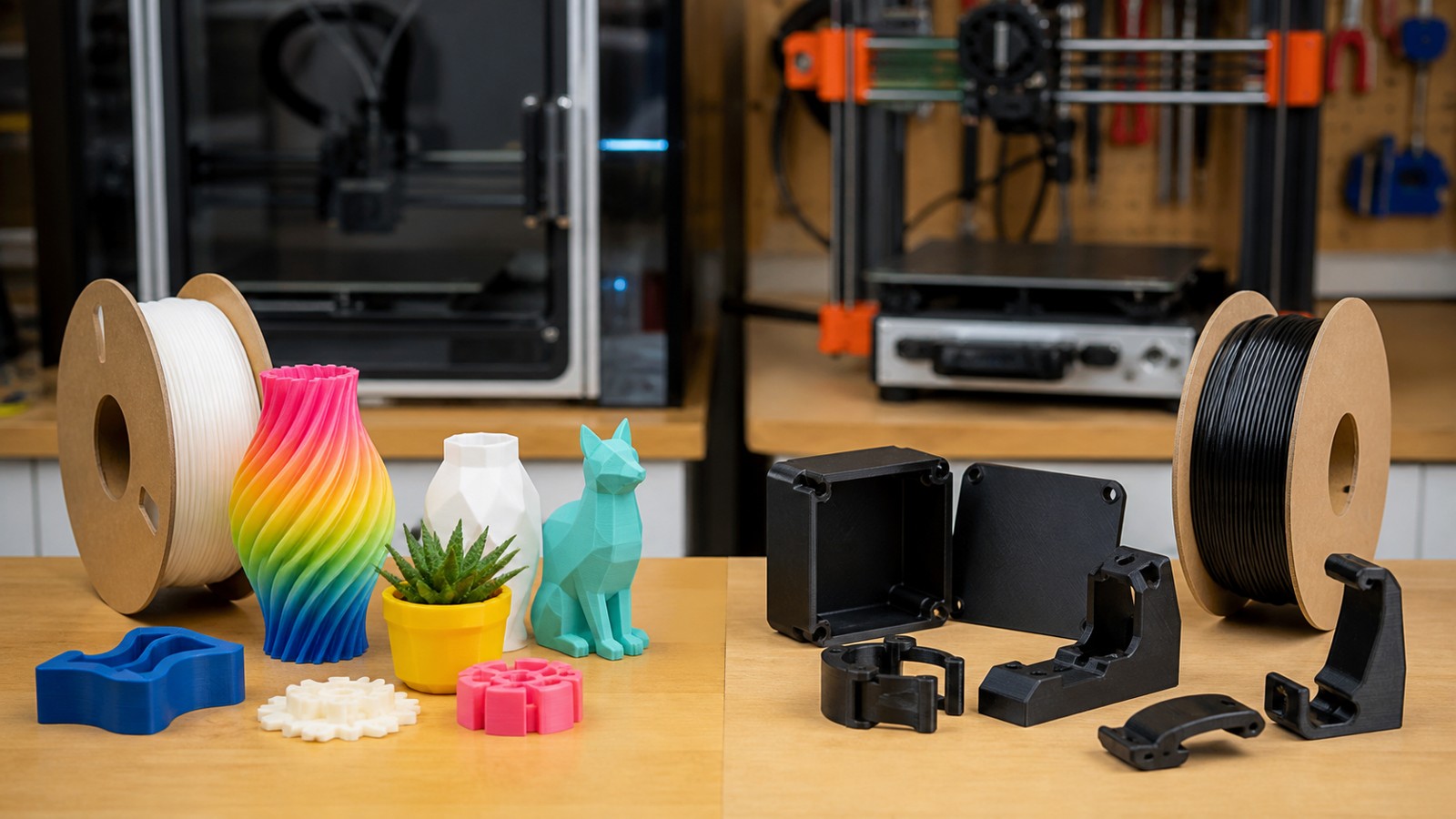
Fused deposition modeling, also called fused filament fabrication in many open-source contexts, builds parts by extruding melted thermoplastic through a nozzle. It is the process most people picture when they think of desktop 3D printing.
FDM became popular because it could be made comparatively affordable, repairable, and understandable. Layer lines, anisotropic strength, and bed adhesion remain part of the process, but its accessibility changed who could make physical parts.
How the Origins Became Today’s Categories
Modern additive manufacturing includes more than these three processes. Standards and industry references group technologies into categories such as material extrusion, vat photopolymerization, powder bed fusion, binder jetting, material jetting, sheet lamination, and directed energy deposition.
SLA, SLS, and FDM are still the practical beginner map. Learn those three and it becomes easier to understand why printers differ in material, strength, detail, surface finish, support strategy, and cost.
Choosing Among the Three
Use FDM for affordable parts, larger objects, fixtures, and general prototyping. Use SLA or other resin workflows for fine detail and smooth surfaces. Use SLS for functional nylon parts, complex support-free geometry, and batch production.
No origin process wins every job. The best choice comes from the part’s material, geometry, tolerance, finish, quantity, and safety requirements.
FAQ
Which came first, SLA, SLS, or FDM?
SLA was the first major commercial 3D printing process, with Charles Hull’s stereolithography patent granted in 1986.
Is FDM the same as filament printing?
Yes in common use. FDM or FFF printers build parts by extruding thermoplastic filament through a heated nozzle.
Why is SLS different from SLA?
SLS fuses powder with a laser, while SLA cures liquid resin with light.