The Next Decade Is About Reliability
The future of 3D printing will be shaped less by novelty and more by reliability. Faster printers, better materials, smarter software, automated quality checks, and stronger standards will make additive manufacturing easier to trust in real workflows.
A: Match the model, material, settings, and finish plan to the purpose of the print.
A: Bed leveling, surface cleanliness, nozzle height, temperature, and material condition are the usual suspects.
A: No. Slower speeds can improve detail, but heat buildup and profile balance still matter.
A: Use the right material, more walls, smart orientation, enough infill, and realistic load testing.
A: Temperature, retraction, travel moves, moisture, and material type all contribute.
A: Diagnose thin walls, unsupported features, tight fits, bad meshes, and weak load paths before buying parts.
A: Very important; it shows toolpaths, supports, layer changes, and possible weak spots before printing.
A: First layers, simple calibration prints, support cleanup, and basic material profiles.
A: Clean orientation, tuned settings, good material handling, and careful test fits, inserts, sanding, assembly, and revision notes.
A: It is most useful for makers designing parts that need to fit, move, or survive use.
The Next Decade Is About Reliability
The future of 3D printing will be shaped less by novelty and more by reliability. Faster printers, better materials, smarter software, automated quality checks, and stronger standards will make additive manufacturing easier to trust in real workflows.
The technology is already used for prototypes, tooling, dental work, medical models, aerospace components, fixtures, consumer products, and education. The next step is making those uses more repeatable and easier to scale.
Smarter Printers and Process Monitoring
Printers are gaining sensors, cameras, input shaping, pressure advance, automatic calibration, and cloud-connected monitoring. These features reduce setup friction and help users catch problems earlier.
Industrial additive manufacturing will keep moving toward in-process monitoring and traceable data. NIST’s work on measurement and standards reflects how important repeatability is for broader adoption.
Materials With Better Proof
Future materials will include stronger polymers, flexible powders, filled composites, high-temperature resins, medical materials, and metal alloys with better data. The useful trend is not only more materials, but better-characterized materials.
A material becomes valuable when designers know its strength, heat behavior, aging, finishing, and process limits.
Additive Manufacturing in Space and Supply Chains
NASA has highlighted 3D printing’s potential for making tools and parts closer to where they are needed, especially when launch mass and lead time matter. Similar logic applies on Earth for spare parts, repairs, and localized production.
The future will not be a printer replacing every warehouse. It will be targeted use where digital inventory and local fabrication solve a real lead-time problem.
More Hybrid Manufacturing
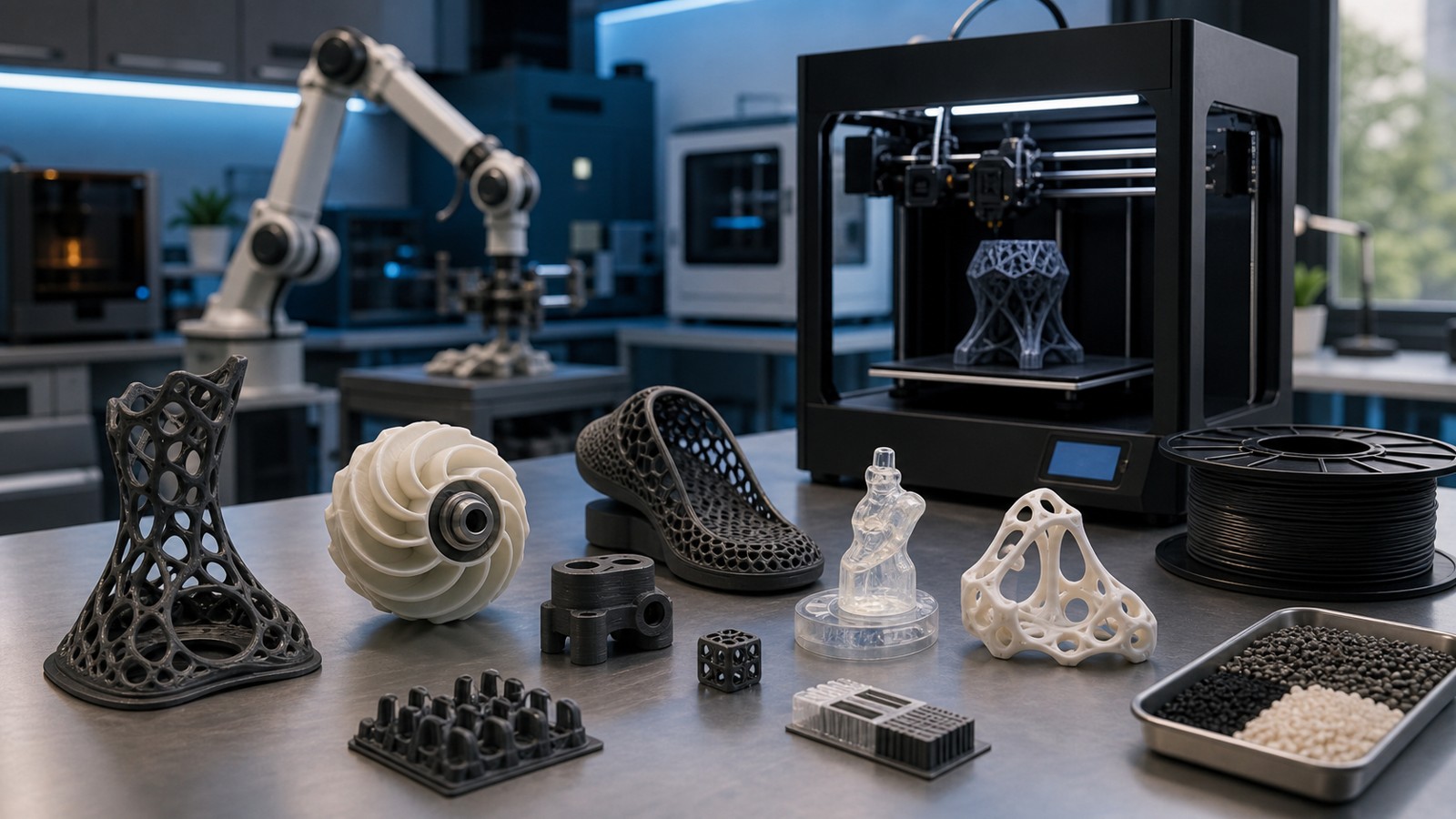
Additive manufacturing will increasingly combine with CNC machining, molding, scanning, and inspection. A part may be printed near-net, machined on critical faces, inspected digitally, and finished for production.
The best workflows will choose processes by what each does well instead of forcing one method to do everything.
FAQ
What is the biggest future trend in 3D printing?
Reliability is the biggest trend: better monitoring, materials, standards, and workflows.
Will 3D printing replace factories?
No. It will become a stronger tool inside manufacturing, especially for prototypes, tooling, complex parts, and localized production.
Will home 3D printing keep improving?
Yes. Automation, calibration, speed, and material profiles will keep making desktop printing easier.