Start With How the Material Behaves
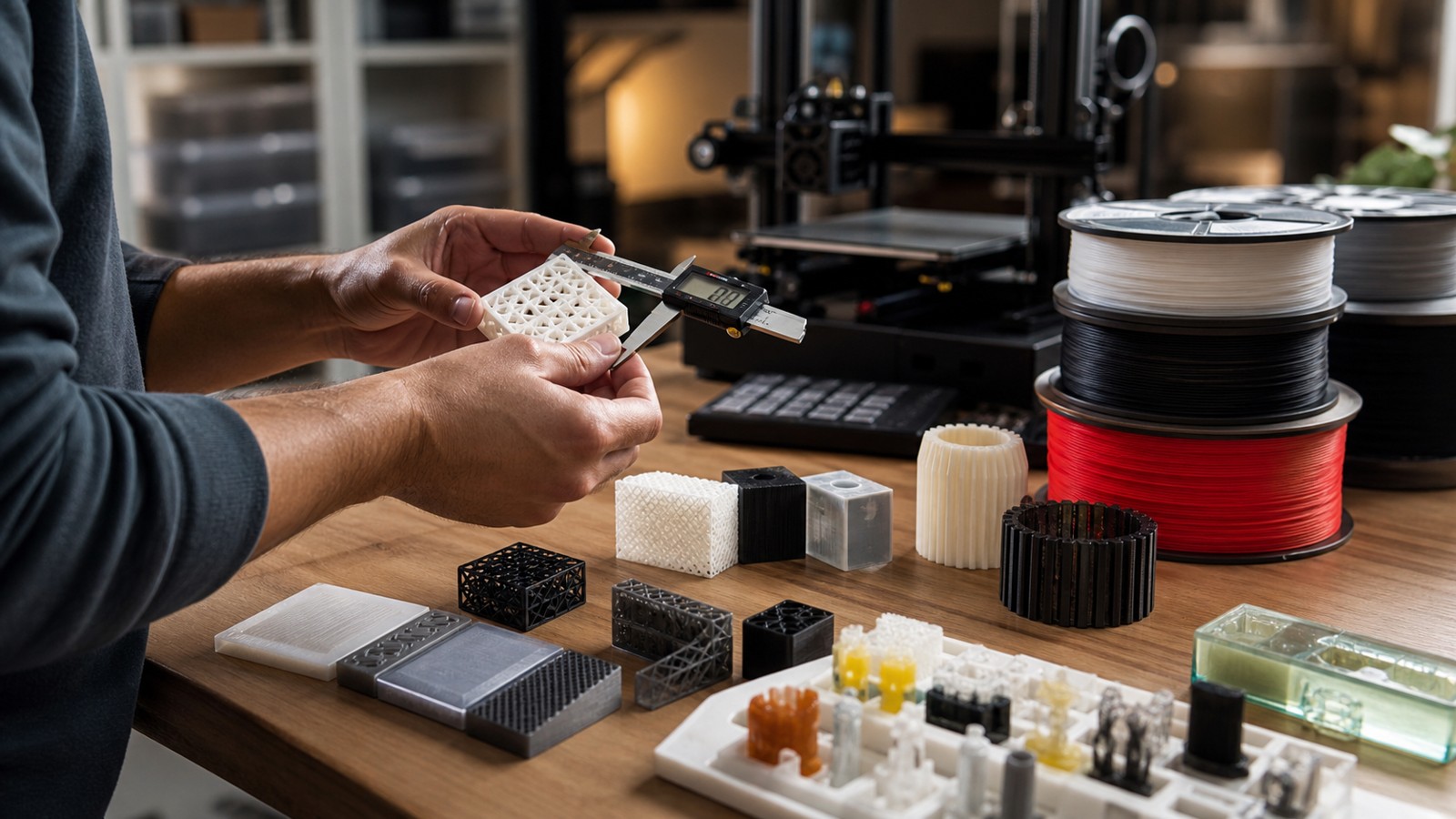
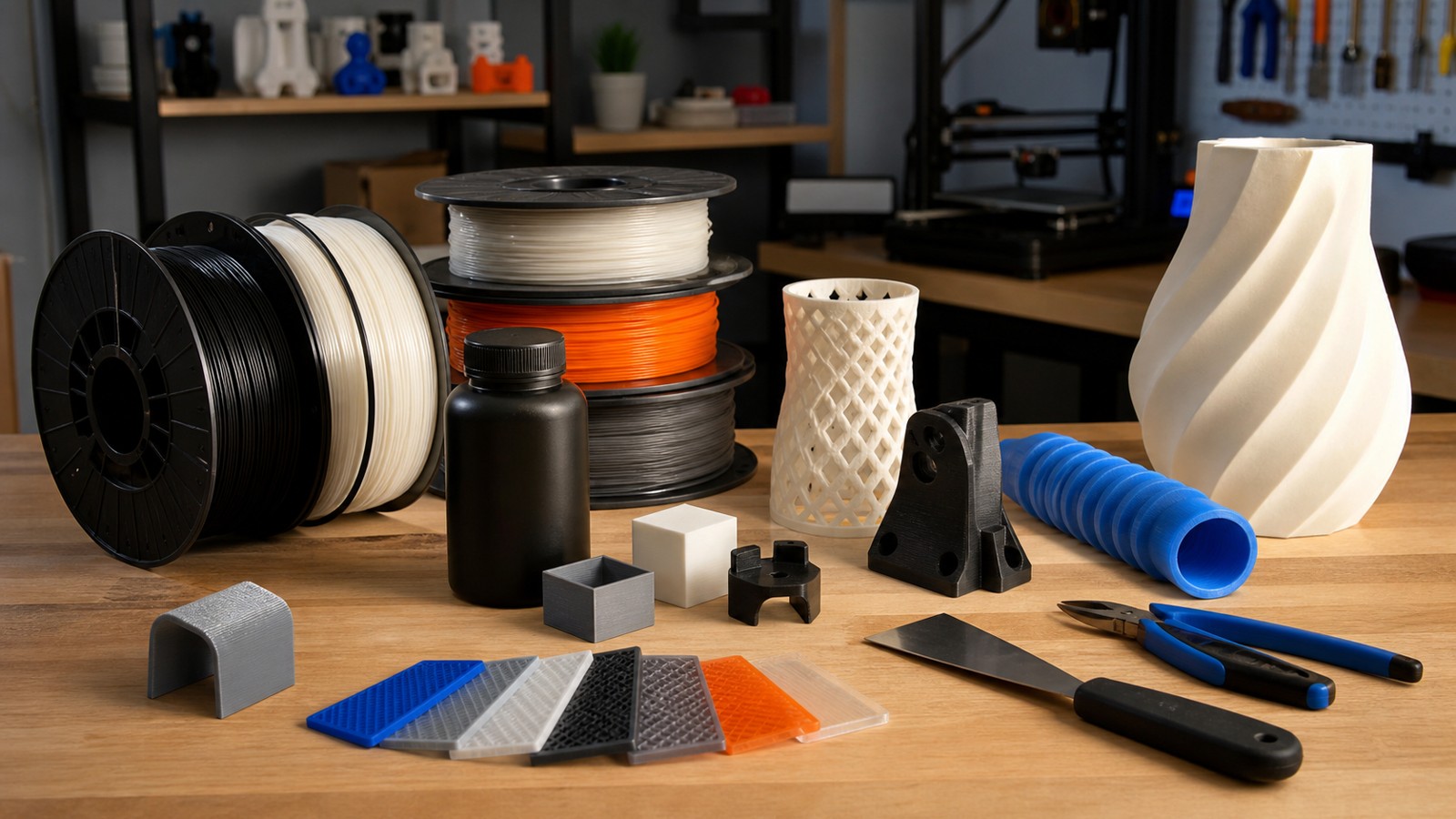
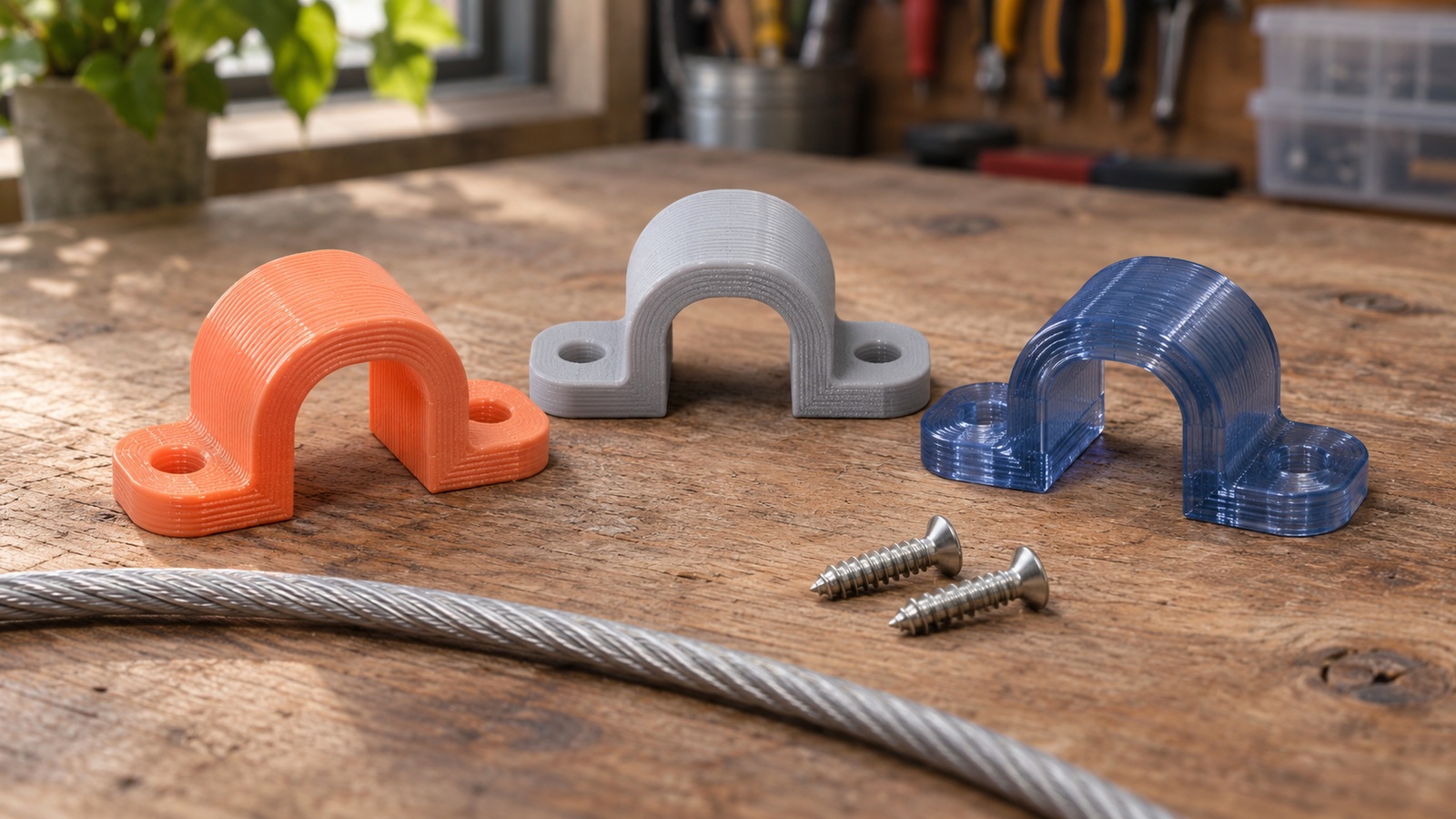
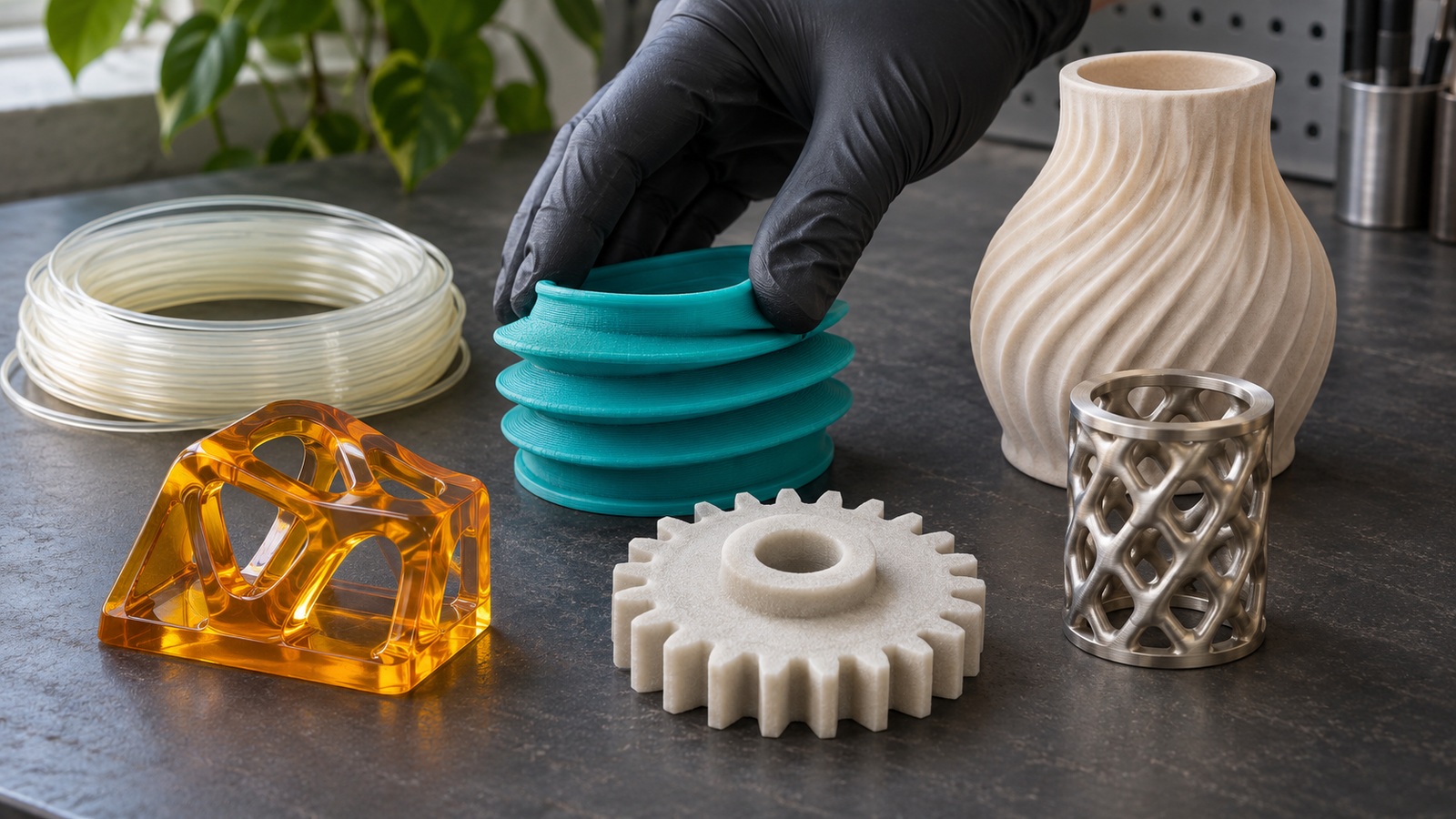
Pick up a rigid printed model, squeeze a flexible bellows, and lift a metal bracket, and the limits of the word plastic quickly become apparent. Printable materials span very different kinds of behavior, from easy-to-process thermoplastics to light-cured resins, engineering alloys, ceramics, and reinforced composites. Their names tell only part of the story because the manufacturing route, processing condition, and part design also influence the result. A material that produces beautiful display models may be unsuitable for a warm enclosure, while a strong engineering grade may be unnecessary for a simple shape check. This overview explains the major material families and the distinctions that matter when reading specifications or discussing a print with a supplier. Rather than ranking everything on a single scale, it connects each family to the properties, handling requirements, and production steps that determine whether the finished object can do its intended job.
A: They normally form and behave differently; common cured resins are crosslinked photopolymers.
A: No; stiffness and impact-related toughness describe different responses.
A: No; evaluate its grade, geometry, fatigue behavior, and actual operating conditions.
A: It is a supplier's description of a resin's intended behavior, not proof that it is ABS.
A: Not unless its complete processing route produces the required final metal condition.
A: They create different reinforcement structures and load paths.
A: Many ceramic routes require additional drying, binder removal, or firing.
A: No; printing compatibility and access for removal still constrain the geometry.
A: It can be misleading when the method, orientation, or processing differs.
A: Nylon names a polymer family rather than a feedstock shape; compatible systems can process it as filament or powder.
Thermoplastics: A Broad Family Behind Filament Printing
Thermoplastics soften with heat and solidify as they cool, making them suitable for processes that melt and deposit material. Desktop filament printing is the most familiar example, but thermoplastic feedstocks also include pellets and powders used by other equipment. The polymer formulation determines much of the starting behavior, while the production process determines how that material becomes a part. A spool and a powder container carrying related polymer names do not imply identical printed properties.
For beginners, the important distinction is between the polymer family and the particular product grade. Colorants, processing aids, impact modifiers, and fillers can change performance. Labels such as plus, tough, or professional are not universal specifications that apply consistently across brands. Use them as a reason to read the technical information, rather than as a substitute for it. The exact material designation becomes especially important when a print must survive heat, repeated loading, or contact with a particular substance.
PLA, PETG, ABS, and Other Everyday Polymers
PLA is a useful starting point for an architectural massing model: it holds a crisp shape and is relatively approachable to print. It also suits detailed figures and quick visual prototypes. Its limitation is that an attractive, stiff model is not necessarily heat-tolerant or resistant to repeated bending. Avoid treating ordinary PLA as an all-purpose engineering plastic simply because the first print looks good.
PETG is often used for handled mechanical parts, such as a small equipment holder. It tends to yield more readily than ordinary PLA, which can help a part survive handling without making it rubbery. During printing, however, bridging and fine overhangs can be more troublesome. Its tendency to bond strongly to some build surfaces also makes the printer manufacturer’s sheet guidance important.
ABS is another thermoplastic, commonly used for technical housings and other parts where its heat resistance is useful. A housing around a warm mechanism illustrates that role, although the exact operating temperature still belongs in the specification. ABS also contracts during cooling and can warp, especially across a broad footprint. Keeping the build environment suitably controlled is a processing requirement, not evidence that the finished part suits every hot application.
ASA adds another useful branch to this family overview: it is commonly chosen for outdoor covers because of its UV resistance. It is not simply an easier-printing substitute for every indoor material, since warping and build-environment requirements still matter. Prusa’s material guide links to individual polymer guides, including their typical uses and processing limitations. Think of these families as different starting points, then consult the particular product when the job demands more than a visual model.
Engineering Polymers Need More Than a Strong Name
Nylon, polycarbonate, and high-performance polymer families expand the possibilities for functional parts, but they also increase the importance of preparation and equipment compatibility. Nylon grades can differ in moisture response, stiffness, and toughness. Polycarbonate-based products may offer attractive thermal and mechanical behavior, yet suitable processing conditions remain essential. Higher-performance materials are not simply ordinary filament with a better specification; they can require a production system designed to maintain the necessary temperatures and environmental conditions.
Read a material’s performance data alongside its printing and conditioning requirements. If a sample was tested dry, annealed, or produced on industrial equipment, ask whether your planned route can reproduce that condition. Moisture absorbed before or after printing may affect some polymers differently. The useful question is how the delivered part behaves in its actual environment, not which sample achieved the largest number on a comparison sheet.
For a small workshop, outsourcing can provide access to an engineering polymer without immediately expanding in-house equipment. Ask for a representative sample and a clear description of the processed condition. That conversation also helps separate a material requirement from a manufacturing habit. A familiar polymer may work after a thoughtful design change, while an exotic grade may still fail if the load direction or geometry is unsuitable.
Photopolymer Resins Form a Different Kind of Plastic
Resin printers commonly use liquid formulations that solidify through light-activated reactions. These cured materials are generally crosslinked polymers rather than ordinary thermoplastics that can simply be remelted into a new shape. Standard display resins, flexible formulations, rigid filled resins, and specialist engineering products can behave very differently. The word resin therefore identifies a broad processing family, not a single mechanical profile.
Final performance often depends on the specified washing and curing procedure. A part that has merely separated from the build platform may not represent the properties listed in the material’s technical data. Follow the supplier’s requirements for the exact resin and machine combination, and consider aging or environmental exposure when relevant. Formlabs’ application-based material guidance illustrates why intended use, design considerations, and post-processing need to be evaluated together.
Flexible Materials Trade Shape Retention for Movement
Flexible thermoplastic filaments and flexible photopolymer resins can both produce deformable objects, but they do not share one universal behavior. Hardness describes resistance to indentation under a particular test; it does not fully describe rebound, tear resistance, fatigue, or how a printed wall bends. Geometry can make the same formulation feel soft in a thin bellows and firm in a thick block. Decide whether the part must cushion, grip, stretch, seal, or repeatedly flex, then evaluate those actions in a representative shape. A material’s ability to bend once is much weaker evidence than a sample that survives the expected motion and returns to a usable form.
Metal Printing Depends on Alloy and Processing Route
Metal additive manufacturing uses alloys rather than a generic metal feedstock. Stainless steels, titanium alloys, aluminum alloys, nickel-based alloys, and other options appear in different systems, each with its own processing requirements. The final component may come from powder fusion, deposition, binder jetting followed by sintering, or bound-metal routes. These methods can produce different microstructures, surface conditions, and finishing needs even when the alloy designation sounds familiar.
For metal projects, the delivered condition is central to the specification. Heat treatment, residual stress management, machining, surface preparation, and inspection can be part of the manufacturing route. A polished photograph does not establish internal quality or suitability for a demanding load. Work with a supplier able to explain the material specification and relevant acceptance criteria. For critical applications, the required qualification and inspection should guide the order before a particular machine or attractive geometry does.
Composites Combine a Matrix With Reinforcement or Filler
Composite feedstocks combine a base material with another constituent, such as chopped carbon fiber, glass fiber, mineral particles, or continuous reinforcement. The added material can change stiffness, dimensional behavior, appearance, wear, and processing demands. However, the result depends on the matrix, the amount and form of reinforcement, and the way the material is deposited. A carbon-filled label does not establish a universal strength advantage.
Chopped-fiber filament and continuous-fiber fabrication deserve particular separation. Short fibers dispersed through a polymer do not create the same reinforcement path as a continuous strand placed through selected regions. The printed structure, fiber orientation, and connection between layers still matter. Filled feedstocks may also increase nozzle wear, making hardware compatibility part of the material choice. Check the supplier’s requirements rather than assuming that any nozzle which can melt the polymer can handle its additives reliably.
Some fillers primarily change appearance or tactile character. Wood-like or metal-filled polymers may create a distinctive finish without becoming structural timber or solid metal. Ask what property the additive is intended to improve, and check whether the evidence matches that purpose. This keeps an attractive surface treatment from being confused with an engineering reinforcement, and it prevents unnecessary processing complications when ordinary unfilled material would satisfy the job.
Ceramics, Castable Feedstocks, and Other Specialist Options
Ceramic printing can involve particle-filled resins, extruded pastes, or other feedstock systems, with drying, binder removal, and firing required by the particular route. These operations can transform the printed shape substantially, including changes in size. Castable materials serve another purpose: they create a pattern that is removed during a casting process, so the final service material may be an entirely different metal. Such examples show why the material placed in the printer and the material present in the finished product must be distinguished. Specialist feedstocks should always be evaluated through their complete production chain, including the equipment needed after printing.
Support Materials Solve a Temporary Manufacturing Problem
A support material is selected to hold geometry during production and then leave the part in an acceptable condition. It may be the same material as the object, a breakaway formulation, or a soluble material used by compatible equipment. Its success depends on adhesion during the build and separation afterward. That balance changes with the model, the material pairing, and the machine’s ability to handle the two feedstocks.
Do not choose a support only by how easily it disappears in a demonstration. Consider storage requirements, printing compatibility, removal access, and the handling or disposal instructions for the removal process. A closed cavity can remain problematic even with a soluble support if liquid cannot circulate and drain effectively. The best support strategy sometimes comes from changing the orientation or design so that less temporary material is needed in the first place.
Storage Is Part of Material Consistency
A spool can absorb moisture between jobs even though the filament still looks ordinary. For a moisture-sensitive nylon, leaving the reel exposed and then changing slicer settings can hide the real preparation problem. Keep dry filament in suitable sealed storage, and use the product’s drying instructions when drying is needed. Prusa’s drying guidance distinguishes material-specific temperatures and warns that excessive heat can damage filament or its spool.
Liquid resin presents a different storage problem: light and contamination can alter a formulation before it reaches the intended exposure step. Keep it in the supplier’s specified container and storage conditions, rather than an open transparent jar beside the printer. Settled constituents may also need mixing before use. Formlabs’ resin-care instructions illustrate why protecting the resin and following its mixing procedure belong together.
Powders require their own handling and contamination controls; a filament-storage routine is not a substitute for the powder system’s instructions. Recovered powder may need managed blending or other preparation before another build. Keep one concise material record connecting the exact feedstock with the preparation and processing used for the successful part.
Read Property Data as a Description of a Test
Strength, stiffness, toughness, hardness, and heat resistance describe different responses. A rigid material resists deformation, but it may fail abruptly under an impact that a more flexible material survives. A heat-deflection result refers to a specified test arrangement and load, not an unconditional service temperature. Look for units, test methods, specimen orientation, and processing condition when comparing technical sheets. Similar-looking numbers are only useful when they describe sufficiently similar tests.
Geometry adds another layer to the comparison. A rib, a thicker wall, or a different load path can have more effect on a particular part than switching between two nearby grades. Printing orientation and local layer bonding can also determine where the object fails. Use property sheets to narrow the candidates, then test the actual feature that carries the risk. A suitable material is one that works within the designed structure and manufacturing route.
Handle the Material and Its Waste as Carefully as the Print
Handling and end-of-life claims need the same care. A plant-derived polymer is not automatically suitable for every disposal route, and recycled content does not by itself establish a complete environmental benefit. Likewise, low odor does not establish that a printing process is emission-free. NIOSH’s safe 3D printing guide explains why material and process choices should be considered alongside exposure controls. Use the supplier’s handling and disposal instructions for the particular feedstock and any cleaning materials involved.