What PolyJet Printing Is
PolyJet is a material jetting 3D printing process that deposits tiny droplets of photopolymer and cures them with UV light. Stratasys describes the process as using inkjet heads, photopolymers, and UV lamps to build precise parts layer by layer.
A: Match the model, material, settings, and finish plan to the purpose of the print.
A: Bed leveling, surface cleanliness, nozzle height, temperature, and material condition are the usual suspects.
A: No. Slower speeds can improve detail, but heat buildup and profile balance still matter.
A: Use the right material, more walls, smart orientation, enough infill, and realistic load testing.
A: Temperature, retraction, travel moves, moisture, and material type all contribute.
A: Diagnose poor first layers, weak parts, stringing, warping, and rough surfaces before buying parts.
A: Very important; it shows toolpaths, supports, layer changes, and possible weak spots before printing.
A: First layers, simple calibration prints, support cleanup, and basic material profiles.
A: Clean orientation, tuned settings, good material handling, and careful support removal, sanding, painting, fitting, and practical testing.
A: It is most useful for makers who want cleaner prints and fewer wasted attempts.
What PolyJet Printing Is
PolyJet is a material jetting 3D printing process that deposits tiny droplets of photopolymer and cures them with UV light. Stratasys describes the process as using inkjet heads, photopolymers, and UV lamps to build precise parts layer by layer.
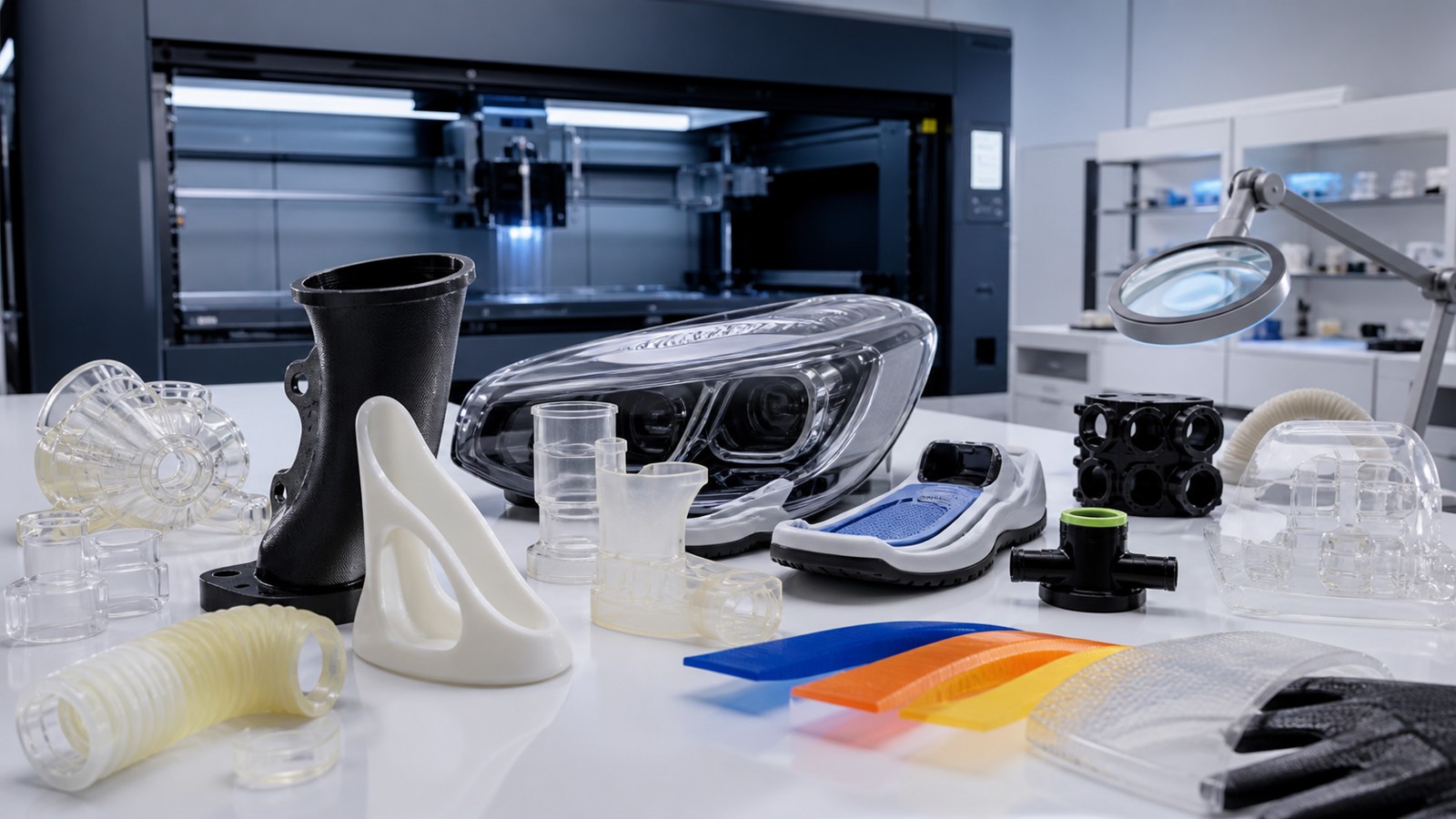
The major advantage is realism. PolyJet can combine rigid, flexible, transparent, colored, and texture-like materials in one model, depending on the printer and material set.
How the Process Works
A CAD model is prepared, sliced, and sent to the printer. Jetting heads place droplets of build material and support material onto the build tray. UV light cures the material as layers are formed.
After printing, supports are removed manually or by dissolving/washing depending on the support type. The part is usually ready for visual review more quickly than many resin workflows that need separate post-curing.
Where PolyJet Works Best
PolyJet is strong for realistic prototypes, medical models, product design reviews, consumer product mockups, soft-touch studies, transparent parts, and multi-color appearance models. It is excellent when the model needs to look and feel close to a finished product.
It is less ideal for cheap rough fixtures, high-heat functional parts, or low-budget hobby printing. Material cost and machine class usually put PolyJet in professional environments.
Strengths and Limits
PolyJet’s strengths are smooth surfaces, fine detail, multi-material printing, color, and fast design feedback. It lets teams test ergonomics, appearance, textures, and overmold-like concepts without production tooling.
Its limits include photopolymer aging, material cost, support cleanup, and mechanical properties that may not match final injection-molded plastics. Use it for what it proves best: design intent, fit, feel, and presentation.
Beginner Takeaway
PolyJet is not the usual first 3D printer for a beginner. It is best understood as a professional prototyping process for high-quality visual and tactile models.
If a project needs a colorful, smooth, multi-material prototype, PolyJet can be the right tool. If it needs a low-cost bracket, FDM or SLS may make more sense.
FAQ
Is PolyJet the same as resin printing?
It uses photopolymers cured with UV light, but it jets droplets like an inkjet process rather than using a resin vat.
What is PolyJet best for?
It is best for realistic prototypes, smooth models, color, transparent parts, and multi-material design reviews.
Are PolyJet parts strong?
They can be useful for handling and prototypes, but final strength depends on material and may not match production plastics.