What the Comparison Really Means
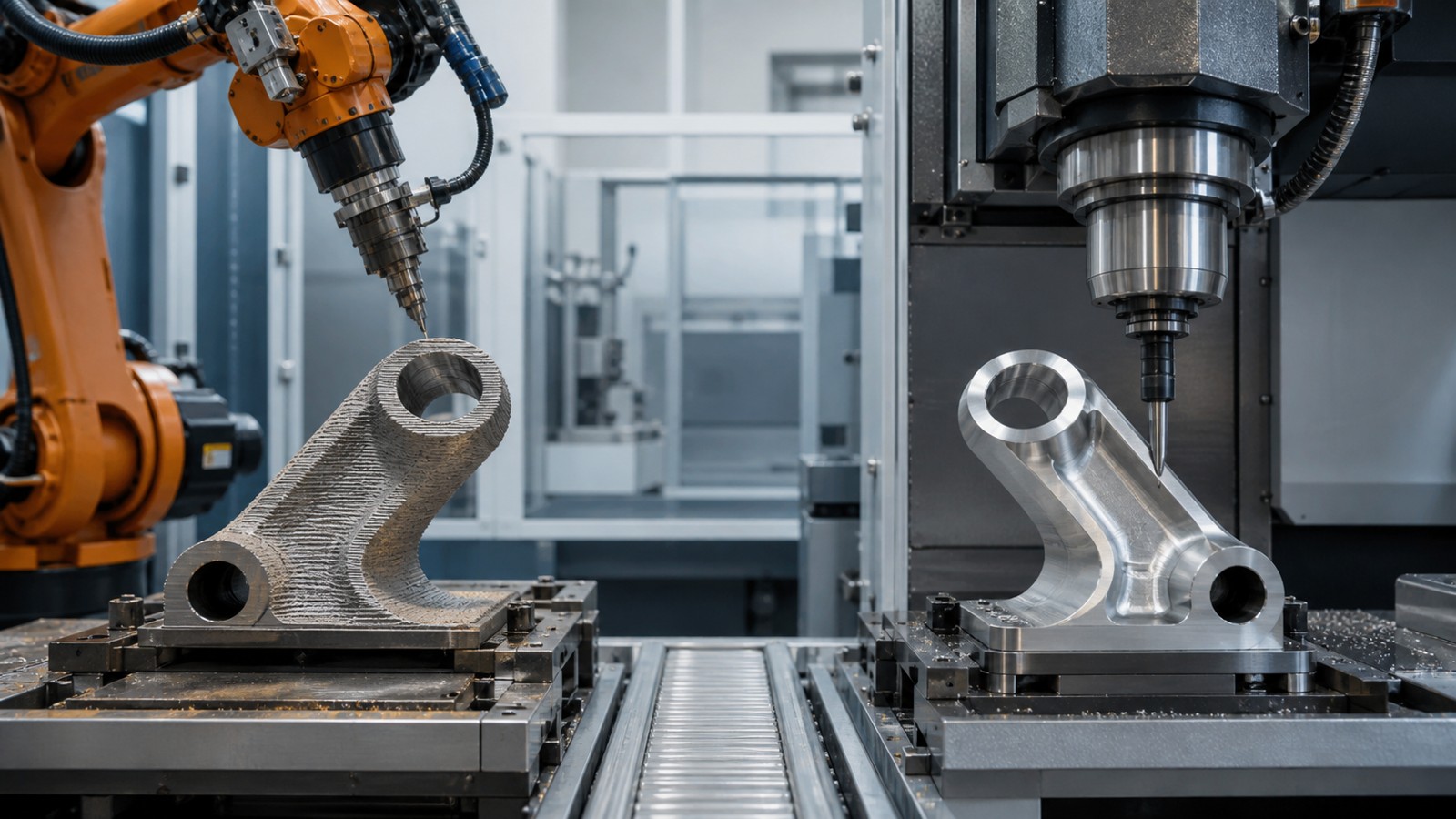
Traditional manufacturing includes machining, casting, forging, molding, sheet metal work, and many established production routes. Hybrid manufacturing combines additive and subtractive methods, most often 3D metal deposition with CNC finishing.
A: Match the model, material, settings, and finish plan to the purpose of the print.
A: Bed leveling, surface cleanliness, nozzle height, temperature, and material condition are the usual suspects.
A: No. Slower speeds can improve detail, but heat buildup and profile balance still matter.
A: Use the right material, more walls, smart orientation, enough infill, and realistic load testing.
A: Temperature, retraction, travel moves, moisture, and material type all contribute.
A: Diagnose slow throughput, inconsistent tolerances, weak parts, and unclear requirements before buying parts.
A: Very important; it shows toolpaths, supports, layer changes, and possible weak spots before printing.
A: First layers, simple calibration prints, support cleanup, and basic material profiles.
A: Clean orientation, tuned settings, good material handling, and careful inspection, part testing, finishing, assembly, and revision control.
A: It is most useful for teams using 3D printing as a workflow tool, not only a hobby machine.
What the Comparison Really Means
Traditional manufacturing includes machining, casting, forging, molding, sheet metal work, and many established production routes. Hybrid manufacturing combines additive and subtractive methods, most often 3D metal deposition with CNC finishing.
The difference is not old versus new. It is about choosing a route that matches geometry, tolerance, volume, material behavior, and cost. Traditional methods remain excellent for many parts, while hybrid workflows solve specific complex or repair-focused problems.
Where Traditional Manufacturing Wins
Traditional manufacturing often wins for high-volume production, simple geometry, predictable tolerances, low unit cost, qualified material stock, and mature supply chains. CNC machining is precise and flexible, casting can be economical at volume, and forging can produce excellent mechanical properties.
If the part is a simple bracket, shaft, housing plate, or high-volume molded component, a traditional route may be faster and more economical than a hybrid route.
Where Hybrid Manufacturing Wins
Hybrid manufacturing wins when the part benefits from added material plus precision finishing. Examples include repairing a worn metal feature, adding geometry to an existing component, building a near-net-shape metal form, or creating a complex part with machined critical surfaces.
It can also reduce waste compared with machining everything from a large block, especially when only certain surfaces need tight finishing. The additive stage creates the rough form; the subtractive stage makes it precise.
Tolerance, Finish, and Inspection
Traditional manufacturing often has clearer tolerance expectations because processes such as CNC machining, grinding, casting, and forging are well understood. Hybrid manufacturing has to manage both additive variability and machining quality.
Inspection becomes central. A hybrid part may need checks after deposition, after heat treatment, and after machining. When the part is safety-critical, qualification can outweigh any apparent time savings.
Cost, Lead Time, and Risk
Hybrid manufacturing can reduce lead time for high-value repairs and complex low-volume components. It can also add risk if the workflow is not mature, because software, machine calibration, thermal distortion, workholding, and process planning all interact.
Traditional methods can be less glamorous but more dependable for repeat jobs. Hybrid methods are most attractive when they remove a real bottleneck, not when they are used just because the technology is available.
Best Practical Choice
Use traditional manufacturing for simple, repeatable, tolerance-driven, or high-volume work. Use hybrid manufacturing when additive build-up and CNC finishing together produce a part that would be hard, wasteful, slow, or expensive by conventional methods alone.
The strongest manufacturing plan may include both: traditional processes for stable production and hybrid processes for repairs, complex features, prototypes, and specialized low-volume metal work.
FAQ
Is hybrid manufacturing better than traditional manufacturing?
It is better for certain complex, repair, or near-net metal workflows. Traditional manufacturing is still better for many simple, repeatable, or high-volume parts.
Does hybrid manufacturing always use 3D printing?
It commonly includes additive manufacturing, but hybrid broadly means combining two or more manufacturing processes.
Is hybrid manufacturing expensive?
It can be expensive, but it may save money when it repairs high-value parts, reduces waste, or avoids difficult multi-step manufacturing.