Both Are Powder-Based, But Not the Same
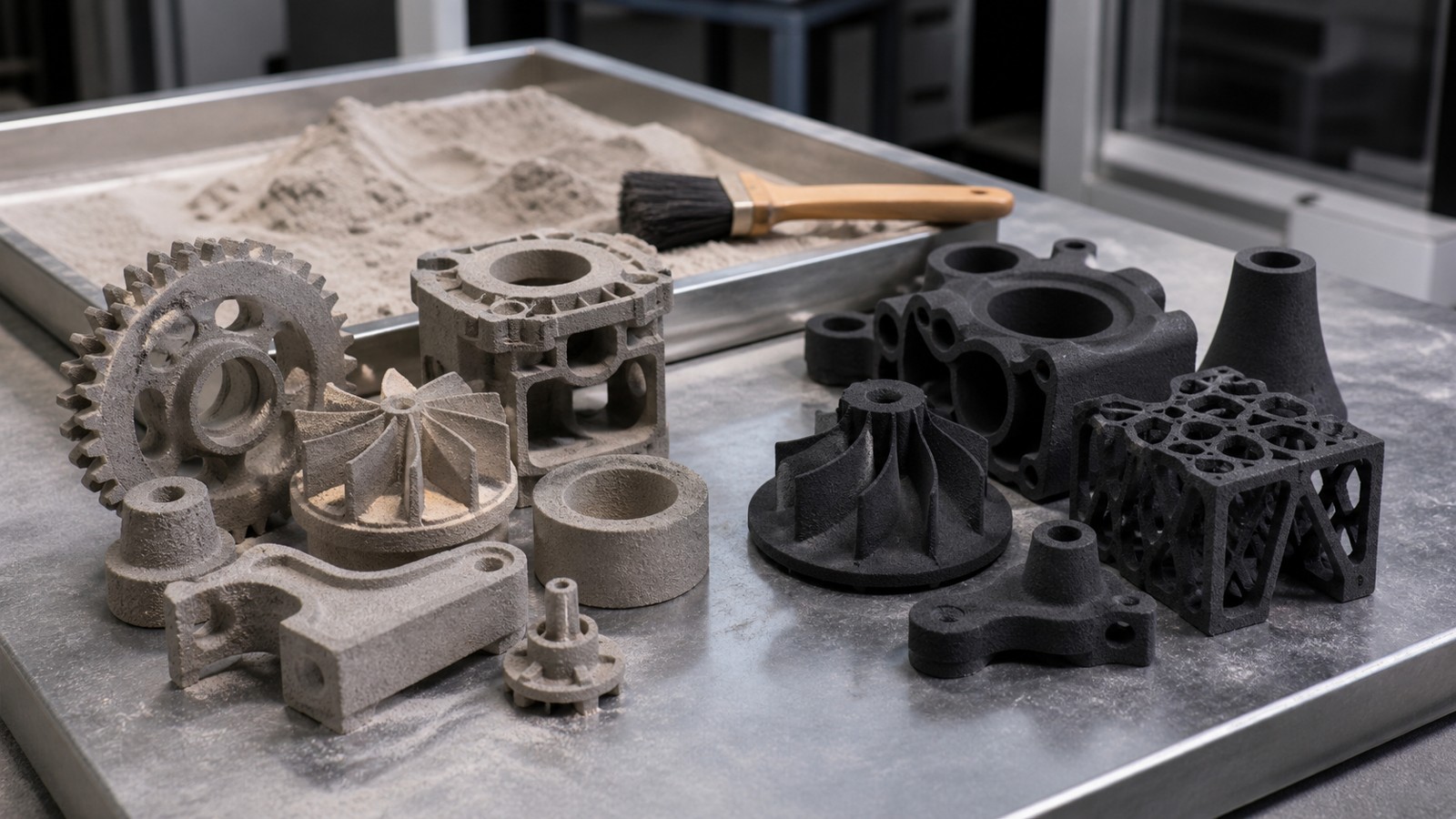
Binder jetting and SLS both use powder beds, but SLS fuses material with a laser while binder jetting deposits binder fluid into powder. That difference changes strength, post-processing, materials, surface finish, and production economics.
A: Match the model, material, settings, and finish plan to the purpose of the print.
A: Bed leveling, surface cleanliness, nozzle height, temperature, and material condition are the usual suspects.
A: No. Slower speeds can improve detail, but heat buildup and profile balance still matter.
A: Use the right material, more walls, smart orientation, enough infill, and realistic load testing.
A: Temperature, retraction, travel moves, moisture, and material type all contribute.
A: Diagnose poor first layers, weak parts, stringing, warping, and rough surfaces before buying parts.
A: Very important; it shows toolpaths, supports, layer changes, and possible weak spots before printing.
A: First layers, simple calibration prints, support cleanup, and basic material profiles.
A: Clean orientation, tuned settings, good material handling, and careful support removal, sanding, painting, fitting, and practical testing.
A: It is most useful for makers who want cleaner prints and fewer wasted attempts.
Both Are Powder-Based, But Not the Same
Binder jetting and SLS both use powder beds, but SLS fuses material with a laser while binder jetting deposits binder fluid into powder. That difference changes strength, post-processing, materials, surface finish, and production economics.
SLS usually produces functional polymer parts directly after cooling and depowdering. Binder jetting often produces a green part that needs additional processing to reach final properties.
Where Binder Jetting Wins
Binder jetting can be excellent for sand casting molds and cores, large-format powder applications, ceramics, and metal part workflows where sintering or infiltration is planned. Printheads can cover wide areas quickly, making the process attractive for scale.
It is especially strong when the final manufacturing route already includes foundry or furnace steps.
Where SLS Wins
SLS wins for functional nylon prototypes, support-free polymer geometry, low-volume production parts, clips, ducts, housings, and fixtures. It does not require the same green-part sintering workflow for typical polymer SLS parts.
For a durable polymer part that needs to be used soon after printing and finishing, SLS is often simpler than binder jetting.
Materials and Post-Processing
Binder jetting has a broad material story because it can work with sand, metals, ceramics, and polymers depending on the system. SLS is most common in polymer powders such as PA12, PA11, filled nylons, and flexible materials.
Binder jetting’s post-processing can include curing, depowdering, sintering, infiltration, or casting steps. SLS post-processing often centers on cooling, depowdering, blasting, dyeing, and smoothing.
Which Is Better
Choose binder jetting when sand, metal, ceramic, scale, or sintering-based production fits the job. Choose SLS when the goal is functional nylon parts with complex support-free geometry.
A fair comparison uses the same application requirements: material, tolerance, finish, strength, quantity, lead time, and total post-processing cost.
FAQ
Is binder jetting stronger than SLS?
Not automatically. Binder jetting strength depends heavily on material and post-processing, while SLS strength depends on polymer powder, process, and design.
Which process is better for metal?
Binder jetting is a major metal additive route, while SLS is generally associated with polymer powder; metal laser powder bed fusion is a separate comparison.
Which is better for nylon parts?
SLS is usually the better powder-bed choice for functional nylon parts.