A New Manufacturing Revolution for Defense
Modern militaries depend on advanced equipment that must perform reliably under some of the most demanding conditions imaginable. From fighter jets and armored vehicles to drones and communications systems, every piece of defense technology must be engineered with precision and durability. Traditionally, producing these systems has required complex supply chains, specialized manufacturing facilities, and long production timelines. In recent years, however, a powerful new technology has begun transforming the defense manufacturing landscape. Additive manufacturing, more commonly known as 3D printing, is rapidly changing how military equipment is designed, produced, and maintained. Instead of machining parts from large blocks of metal or assembling numerous smaller components, engineers can now fabricate intricate structures layer by layer directly from digital models. This shift is more than just a technological upgrade. It represents a strategic transformation for defense organizations around the world. By enabling faster prototyping, lighter components, and on-demand production, 3D printing is helping military forces adapt to rapidly evolving technological challenges.
A: Match the model, material, settings, and finish plan to the purpose of the print.
A: Bed leveling, surface cleanliness, nozzle height, temperature, and material condition are the usual suspects.
A: No. Slower speeds can improve detail, but heat buildup and profile balance still matter.
A: Use the right material, more walls, smart orientation, enough infill, and realistic load testing.
A: Temperature, retraction, travel moves, moisture, and material type all contribute.
A: Diagnose slow throughput, inconsistent tolerances, weak parts, and unclear requirements before buying parts.
A: Very important; it shows toolpaths, supports, layer changes, and possible weak spots before printing.
A: First layers, simple calibration prints, support cleanup, and basic material profiles.
A: Clean orientation, tuned settings, good material handling, and careful inspection, part testing, finishing, assembly, and revision control.
A: It is most useful for teams using 3D printing as a workflow tool, not only a hobby machine.
Understanding Additive Manufacturing in Defense
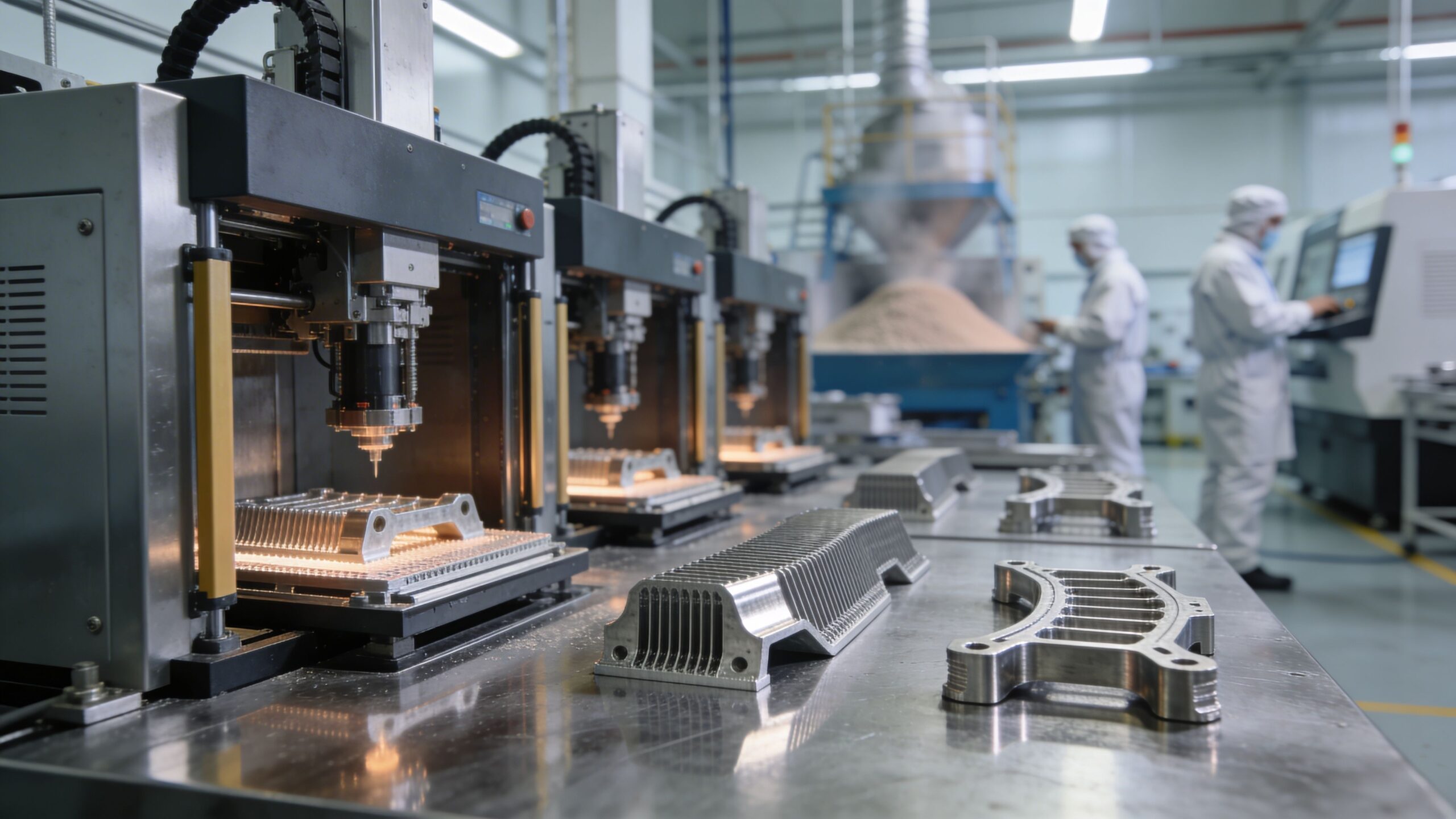
3D printing works by building objects layer by layer from digital designs. Depending on the application, the printer may use metal powders, high-performance polymers, or composite materials to create finished components. Advanced machines use lasers or electron beams to fuse materials together with remarkable precision.
For military equipment manufacturing, this approach offers several advantages over traditional production methods. One of the most significant benefits is design freedom. Engineers can create complex shapes, internal channels, and optimized structures that would be extremely difficult or impossible to manufacture using conventional techniques.
Another major advantage is speed. Traditional defense manufacturing processes often involve extensive tooling, machining, and assembly steps. Each new design may require specialized molds or manufacturing equipment, which can take months to produce. With additive manufacturing, a digital design can be sent directly to a printer, allowing engineers to produce functional prototypes in a matter of days. This rapid development capability is especially valuable for defense programs, where technological superiority can depend on the ability to innovate quickly.
Transforming Military Supply Chains
One of the biggest challenges facing military logistics is the complexity of supply chains. Modern defense systems rely on thousands of components sourced from specialized suppliers across multiple countries. When parts fail or equipment requires maintenance, obtaining replacements can take significant time and resources. 3D printing offers a powerful solution to this challenge by enabling on-demand manufacturing. Instead of storing vast inventories of spare parts, military units can maintain digital libraries of component designs. When a part is needed, it can be printed locally using the appropriate materials and equipment.
This approach dramatically reduces logistical burdens and shortens repair timelines. In remote or combat environments, the ability to produce replacement components on-site can significantly improve operational readiness. Additive manufacturing also allows defense organizations to reduce their dependence on vulnerable supply chains. By producing certain components internally, military manufacturers can maintain greater control over critical technologies.
Designing Lighter and Stronger Equipment
Weight reduction is a critical consideration in military equipment design. Aircraft, drones, and ground vehicles all benefit from lighter components that improve efficiency, mobility, and performance.
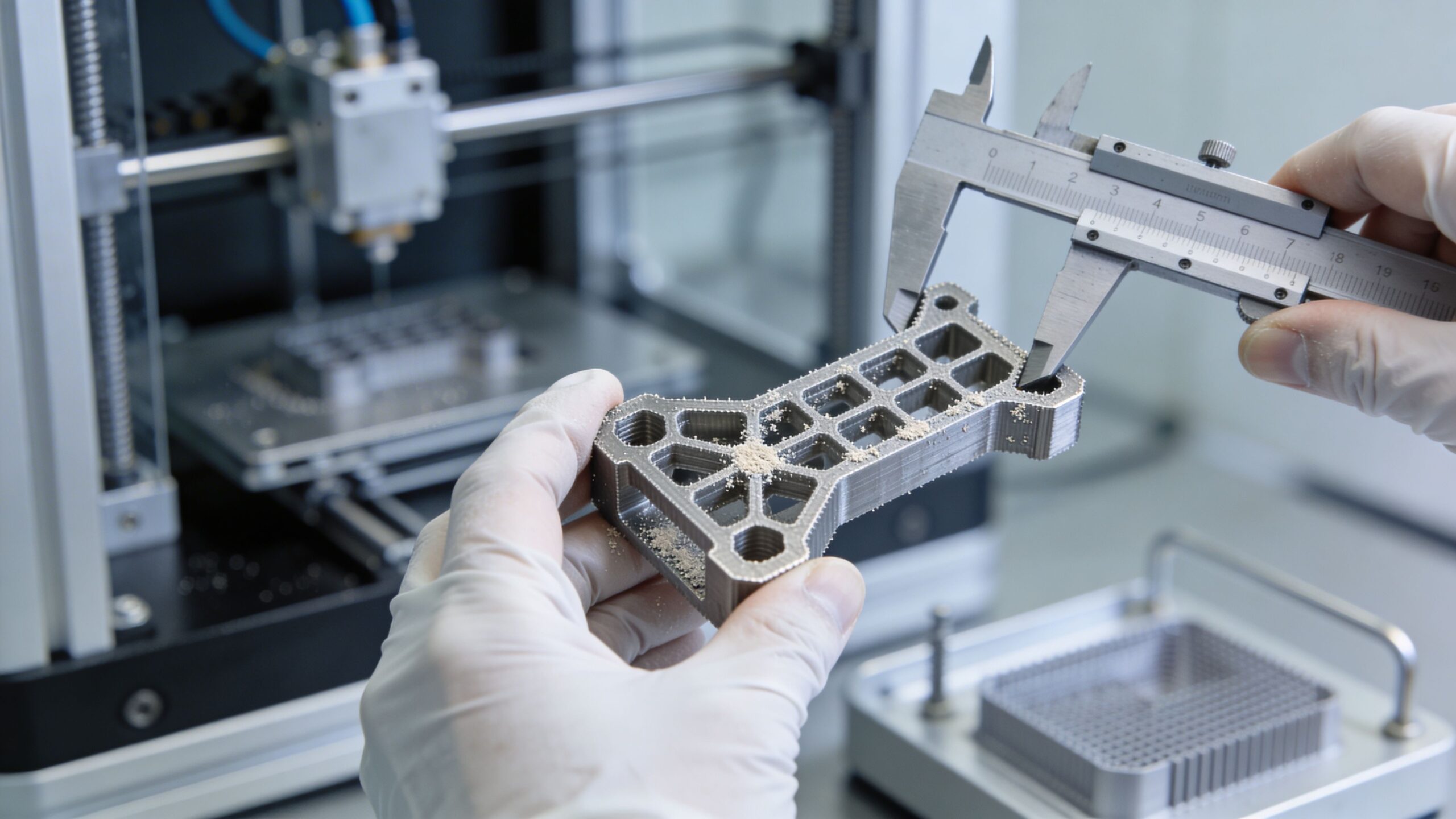
3D printing enables engineers to design structures that use material only where it is needed. Through advanced computational design techniques such as topology optimization, engineers can create parts with intricate lattice frameworks or organic shapes that maximize strength while minimizing weight.
These optimized structures often resemble natural forms found in bones or honeycombs. The internal geometry distributes stress effectively while reducing unnecessary material. The result is equipment that is both lighter and stronger than traditional designs.
In aircraft and unmanned aerial vehicles, even small weight reductions can significantly improve fuel efficiency and flight performance. For ground vehicles, lighter components can enhance mobility and reduce mechanical strain. Additive manufacturing therefore plays a critical role in the next generation of military vehicle and aircraft development.
Accelerating Prototyping and Innovation
Military technology evolves rapidly, and the ability to test new ideas quickly is essential for maintaining technological advantage. Traditional manufacturing processes can slow down innovation because producing new prototypes requires extensive tooling and machining. 3D printing dramatically shortens the design cycle. Engineers can quickly modify digital models and produce new prototypes within hours or days. These prototypes can then be tested, evaluated, and refined before moving to production.
This rapid iteration process allows defense engineers to experiment with new concepts more freely. Complex components such as drone frames, sensor housings, and cooling systems can be redesigned and optimized repeatedly without major manufacturing delays. As a result, additive manufacturing is accelerating innovation across multiple areas of military technology.
Additive Manufacturing for Military Vehicles
Armored vehicles and ground support equipment contain numerous mechanical components that must withstand extreme conditions. Traditionally, many of these parts have been machined from solid metal blocks or produced using casting techniques.
3D printing introduces new possibilities for vehicle design and maintenance. Engineers can create optimized brackets, housings, and structural supports that reduce weight while maintaining durability. Complex cooling channels can be integrated directly into engine components to improve thermal performance.
For maintenance teams, additive manufacturing offers a convenient way to replace worn or damaged parts. Instead of waiting for replacement components to arrive from centralized factories, technicians can produce certain parts directly in maintenance facilities. This capability can significantly reduce downtime for vehicles operating in remote environments.
Drones and Unmanned Systems
Unmanned systems have become increasingly important in modern military operations. Drones are used for surveillance, reconnaissance, logistics, and tactical missions. Because these systems often require rapid development and frequent upgrades, additive manufacturing is particularly valuable.
3D printing allows engineers to create lightweight airframes and aerodynamic components optimized for flight performance. Drone designs can be modified quickly to incorporate new sensors, cameras, or communication systems.
The flexibility of additive manufacturing also makes it easier to produce customized components for specialized missions. Engineers can design unique payload mounts, protective housings, or aerodynamic structures tailored to specific operational requirements.
As unmanned technologies continue to evolve, 3D printing will likely remain a key enabler of innovation in this field.
Field Manufacturing and Mobile Printing
Perhaps one of the most transformative aspects of additive manufacturing for defense is the ability to produce parts directly in the field. Portable 3D printers are increasingly being deployed in military logistics units and maintenance operations. These rugged printers allow technicians to fabricate replacement components during missions. If a small mechanical part breaks or a piece of equipment requires modification, a replacement can be printed on-site rather than shipped from distant supply depots.
Field manufacturing reduces downtime and increases operational flexibility. It also enables rapid customization of equipment to meet specific mission needs. In the future, mobile additive manufacturing units could become standard equipment for forward operating bases and naval vessels.
Materials and Technologies for Defense Printing
Military applications require materials that can withstand extreme conditions, including high temperatures, mechanical stress, and exposure to harsh environments. As a result, defense additive manufacturing relies on advanced materials specifically engineered for durability.
Metal powders such as titanium, aluminum alloys, and nickel-based superalloys are commonly used for high-strength components. These materials provide excellent structural performance while remaining relatively lightweight.
In addition to metals, high-performance polymers and composite materials are used for components that require corrosion resistance or electrical insulation. Researchers are also developing new materials designed specifically for additive manufacturing in defense applications. As materials science continues to advance, the range of components that can be produced through 3D printing will continue to expand.
The Future of Military Manufacturing
The role of 3D printing in military equipment manufacturing is expected to grow significantly in the coming years. As additive manufacturing technologies become more advanced, defense organizations will increasingly integrate them into production and logistics systems. Future military platforms may incorporate hundreds or even thousands of printed components. Entire subsystems could be manufactured using additive techniques that combine strength, lightweight structures, and complex internal geometries.
Beyond manufacturing, digital design and additive production could enable entirely new approaches to equipment development. Engineers may be able to share design updates instantly across global defense networks, allowing military units to print improved components wherever they are needed. This vision represents a more agile and adaptable defense manufacturing ecosystem. By combining digital engineering with advanced production technologies, militaries can respond more quickly to emerging challenges. In an era where technological innovation often determines strategic advantage, additive manufacturing has become a powerful tool for shaping the future of defense.
Research-Backed Context
Industrial additive manufacturing is valuable when it solves a production constraint. Weight reduction, part consolidation, tooling speed, spare-part availability, customization, and shorter development cycles are stronger reasons than novelty alone.
Practical Decision Checks
- Separate prototype use from production use; production requires stronger evidence and documentation.
- Check qualification, repeatability, inspection, post-processing, and material traceability.
- Compare total cost, including machine time, finishing, failed builds, labor, and quality control.
- Look for parts where geometry, lead time, weight, or supply-chain risk gives 3D printing a real advantage.
FAQ
Why do aerospace and defense teams use 3D printing?
They use it when lighter geometry, faster tooling, replacement-part access, or complex designs create a measurable advantage.
Is every printed part production-ready?
No. Production parts need qualified materials, repeatable processes, inspection, documentation, and often post-processing.
What is the main tradeoff?
Additive manufacturing can reduce lead time and part count, but finishing, certification, and machine economics still matter.
Sources and Further Reading
These references support the technical terms, material guidance, process limits, and decision criteria used in this article.