The Core Difference
MJF and SLS are both polymer powder bed technologies, but they fuse powder differently. SLS uses a laser to scan and sinter each layer. MJF applies fusing and detailing agents, then uses heat to fuse selected areas.
A: Match the model, material, settings, and finish plan to the purpose of the print.
A: Bed leveling, surface cleanliness, nozzle height, temperature, and material condition are the usual suspects.
A: No. Slower speeds can improve detail, but heat buildup and profile balance still matter.
A: Use the right material, more walls, smart orientation, enough infill, and realistic load testing.
A: Temperature, retraction, travel moves, moisture, and material type all contribute.
A: Diagnose poor first layers, weak parts, stringing, warping, and rough surfaces before buying parts.
A: Very important; it shows toolpaths, supports, layer changes, and possible weak spots before printing.
A: First layers, simple calibration prints, support cleanup, and basic material profiles.
A: Clean orientation, tuned settings, good material handling, and careful support removal, sanding, painting, fitting, and practical testing.
A: It is most useful for makers who want cleaner prints and fewer wasted attempts.
The Core Difference
MJF and SLS are both polymer powder bed technologies, but they fuse powder differently. SLS uses a laser to scan and sinter each layer. MJF applies fusing and detailing agents, then uses heat to fuse selected areas.
Both processes can make support-free nylon parts for prototypes and production. The better choice depends on material, finish, throughput, cost, and the way the part will be inspected.
Where MJF Is Strong
MJF is often attractive for production batches because agents can be applied across each layer efficiently. HP positions Multi Jet Fusion around speed, quality, and cost-efficiency for functional parts.
It is a strong candidate for housings, clips, ducts, brackets, fixtures, and consumer products when PA12, PA11, or other supported HP materials fit the application.
Where SLS Is Strong
SLS has a long service-bureau history and broad supplier availability. It can be excellent for complex nylon parts, prototypes, low-volume production, and material options such as PA12, PA11, filled nylons, and flexible powders depending on the provider.
SLS can be easier to source from many vendors, while MJF may win when a specific provider’s pricing and production workflow suit the job.
Surface, Color, and Finish
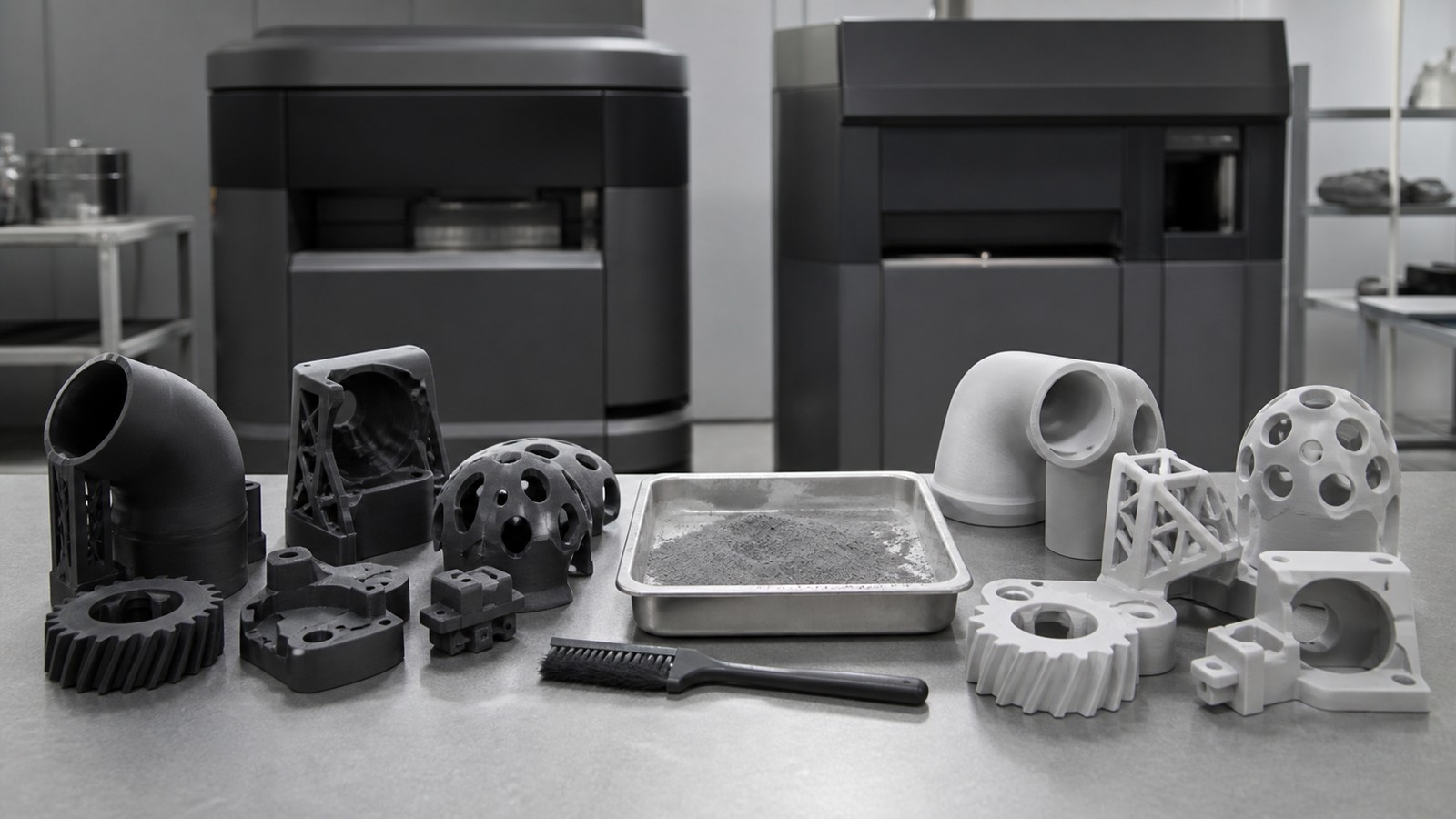
MJF parts often arrive gray and are commonly dyed black. SLS parts may arrive white, gray, or natural depending on powder and provider. Both can be blasted, tumbled, dyed, sealed, or smoothed.
Compare finished samples, not only raw parts. Surface texture, color consistency, and fit after finishing can decide which technology is better for a product.
How to Choose
Choose MJF when quote, throughput, batch consistency, and HP material options fit the project. Choose SLS when supplier flexibility, specific powder options, or established SLS behavior fits better.
For a production decision, order the same part from both processes and measure strength, tolerance, surface, finish, cost, and delivery time.
FAQ
Is MJF better than SLS?
Not universally. MJF can be faster for some batches, while SLS may offer broader supplier and material flexibility.
Do MJF and SLS need supports?
No conventional supports are usually needed because unfused powder supports the parts.
Which is better for production?
The better production process depends on volume, material, finish, quote, and tested part performance.