Speed as a Strategic Advantage
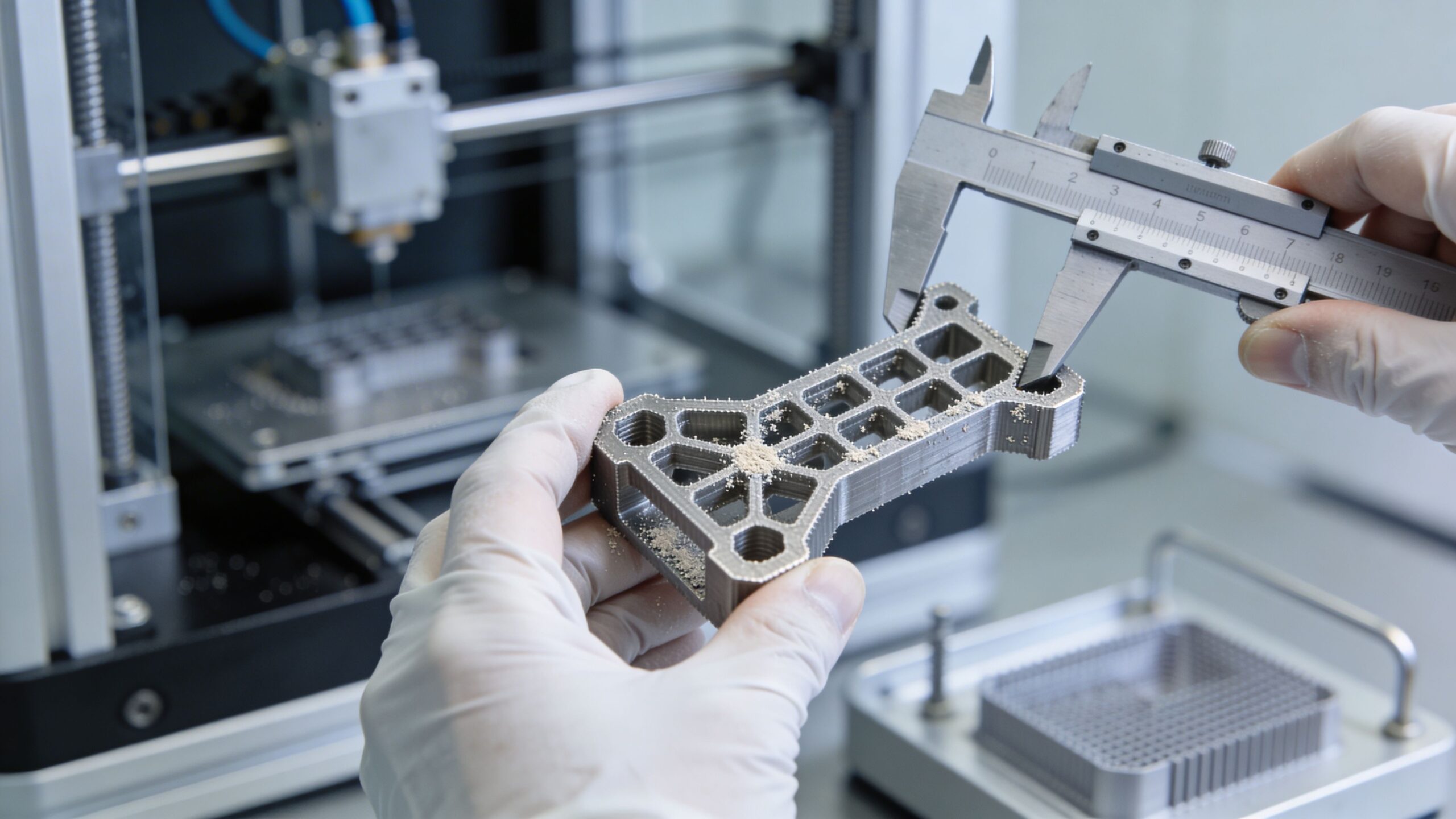
In defense, time is never just money—it’s readiness. When equipment breaks, when a platform needs an upgrade, or when a mission demands a new capability, the clock starts ticking immediately. Traditional manufacturing can be outstanding at producing precise parts at scale, but it often moves at the pace of tooling, vendor lead times, and long supply chains. In a world where threats evolve quickly and deployments don’t wait for backorders, that pace can become a liability. That’s where 3D printing steps in, not as a gadget, but as a strategic manufacturing capability. Additive manufacturing makes it possible to go from a digital design to a physical part far faster than many conventional processes. It can compress prototyping cycles, reduce dependence on distant suppliers, and unlock local, on-demand production for components that would otherwise take weeks or months to arrive. The defense industry has embraced 3D printing because it directly supports what militaries value most: agility, resilience, and rapid response.
A: Match the model, material, settings, and finish plan to the purpose of the print.
A: Bed leveling, surface cleanliness, nozzle height, temperature, and material condition are the usual suspects.
A: No. Slower speeds can improve detail, but heat buildup and profile balance still matter.
A: Use the right material, more walls, smart orientation, enough infill, and realistic load testing.
A: Temperature, retraction, travel moves, moisture, and material type all contribute.
A: Diagnose slow throughput, inconsistent tolerances, weak parts, and unclear requirements before buying parts.
A: Very important; it shows toolpaths, supports, layer changes, and possible weak spots before printing.
A: First layers, simple calibration prints, support cleanup, and basic material profiles.
A: Clean orientation, tuned settings, good material handling, and careful inspection, part testing, finishing, assembly, and revision control.
A: It is most useful for teams using 3D printing as a workflow tool, not only a hobby machine.
What “Rapid Production” Really Means in Defense
Rapid production in defense isn’t always about mass-producing thousands of identical parts. Often, it’s about producing the right part at the right time—especially when the right part is rare, outdated, or urgently needed. Many defense systems operate for decades, and some replacement components are difficult to source because original suppliers have moved on, tooling has been retired, or the part was never produced at high volume in the first place.
3D printing is uniquely suited to these situations because it reduces or eliminates the need for specialized tooling. Instead of waiting for castings, molds, or machining setups, defense manufacturers can print prototypes and limited-run components quickly, then apply finishing and validation steps as needed. In many cases, additive manufacturing becomes a bridge between the urgent demand of operations and the slower cadence of traditional industrial production.
Rapid production also includes rapid iteration. Defense R&D often needs many versions of a part before the final design is locked. Additive manufacturing allows engineers to iterate quickly without rebuilding tooling each time, which speeds the path from concept to deployable hardware.
Rapid Prototyping: Turning Ideas into Hardware at Defense Speed
The defense industry constantly experiments with new solutions—lighter mounts, stronger housings, improved cooling systems, better aerodynamic shapes, and ruggedized enclosures for harsh environments. Prototypes are essential, but traditional prototyping can be slow when it depends on machining queues or external suppliers.
3D printing collapses the time between design and test. Engineers can print prototypes in polymers for fit checks and early testing, then move to metal printing for functional, load-bearing versions. This enables tighter feedback loops: test, learn, redesign, repeat. The result is faster development of everything from drone components to vehicle brackets to custom sensor mounts. The speed advantage becomes especially meaningful when prototypes must be tested in real-world environments. A design that looks great on-screen might behave differently under vibration, heat, dust, or impact. Additive manufacturing makes it easier to produce multiple iterations quickly, increasing the odds that the final design performs well when it matters.
Part Consolidation: Fewer Steps, Faster Delivery
Defense systems are often assembled from many components, and each assembly step adds time, cost, and risk. A part that requires welding, fasteners, and alignment checks will typically take longer to produce and more time to inspect. In defense manufacturing, simplifying assembly isn’t just a nice efficiency gain—it can be a major speed advantage.
3D printing enables part consolidation, which means combining multiple components into a single printed piece. Instead of fabricating several parts and assembling them, a manufacturer can print one integrated structure that performs the same function. This reduces assembly labor and can improve reliability by eliminating joints and potential failure points.
For rapid production, consolidation matters because it turns multi-step workflows into shorter, more direct paths. It also reduces the number of suppliers involved, which can cut lead times dramatically when parts previously depended on specialized vendors.
On-Demand Spares: Replacing Warehouses with Digital Inventory
Defense logistics has always wrestled with a difficult tradeoff: keep massive inventories of spare parts, or risk delays when something breaks. Warehousing spares can be expensive, especially for low-demand items. But waiting for replacements can disrupt operations, especially when equipment is deployed far from large depots. 3D printing offers a different model: digital inventory. Instead of storing every spare part physically, defense organizations can store certified design files and print parts when needed at qualified sites. This can reduce storage burdens while improving responsiveness.
In practical terms, digital inventory works best for specific categories of parts: brackets, housings, mounts, ducts, tool adapters, protective covers, and other components that can be printed and finished quickly. Some parts will still require traditional manufacturing, but additive manufacturing can cover a surprisingly wide range of urgent needs. As defense networks mature, the vision becomes even more powerful: distributed production across multiple secure facilities. If one site is overloaded, another can print the same part from the same qualified file. This supports rapid production while also improving resilience.
Field Printing: Production Moves Closer to the Mission
One of the most dramatic ideas in defense additive manufacturing is field printing—bringing production to the edge of operations. Portable printers can be deployed with maintenance units, logistics teams, or forward bases to fabricate certain components on-site.
Field printing isn’t about making every kind of part. It’s about solving the small failures that can create big delays. A broken bracket, a missing cover, a damaged mount, or a custom adapter can immobilize equipment if the replacement is unavailable. Printing these items on-site can reduce downtime and keep missions moving.
Field printing also enables rapid customization. If a unit needs a specialized tool holder, a cable routing clip, or a protective housing adapted to local conditions, additive manufacturing can produce tailored solutions quickly. In the defense world, where mission needs can change fast, that flexibility is valuable.
Rapid Production for Drones and Unmanned Systems
Unmanned systems evolve quickly, and defense organizations frequently update drones with new sensors, communication modules, and mission-specific payloads. Traditional manufacturing can struggle to keep pace with that iteration, especially for low-volume components and custom mounts.
3D printing supports rapid production by enabling lightweight structures, quick redesigns, and fast fabrication of specialized parts. Airframe components, sensor housings, aerodynamic fairings, and payload mounts can be printed and tested quickly. If the mission changes, the design can change with it. This agility is one reason additive manufacturing has become closely associated with drone development. The technology aligns with the rapid development cycles of unmanned systems, where speed to deployment and adaptability can matter as much as peak performance.
Materials and Processes That Make Speed Possible
Rapid production depends not just on printers, but on materials and processes that support reliable output. Defense additive manufacturing spans polymers for fast prototyping and rugged non-critical parts, as well as metals for high-strength components.
Metal printing often involves powder-based systems that create dense, strong parts but require controlled environments and skilled operators. Polymer printing can be faster and more flexible, especially for prototypes and field-ready components that don’t require extreme heat resistance.
The real speed advantage comes from integrating additive manufacturing into a complete workflow. Printing is only one step. Post-processing, heat treatment, machining, inspection, and testing must be streamlined to ensure that rapid production doesn’t sacrifice reliability. Defense programs invest heavily in this ecosystem because rapid production only matters if the parts work. Speed without quality is not a win in a mission-critical environment.
Quality and Security: The Hidden Side of Rapid Manufacturing
Defense manufacturing has unique requirements beyond speed. Parts must be dependable, traceable, and produced under strict quality controls. Digital files must also be protected. A compromised design file could create serious risks, from defective parts to intellectual property theft.
That means rapid production in defense often involves secure digital workflows, controlled access to design libraries, and rigorous validation procedures. Additive manufacturing systems may use process monitoring, strict powder handling standards, and non-destructive testing to ensure parts meet requirements. These constraints can slow certain aspects of production, but they also create a strong foundation for scaling additive manufacturing responsibly. Rapid production isn’t simply “faster printing.” It’s building an end-to-end system that delivers speed with trust.
Why Rapid Production Is Becoming a Permanent Defense Capability
3D printing’s role in defense isn’t temporary. It’s becoming a permanent capability because it fills a gap that traditional manufacturing doesn’t always address well: fast, flexible, distributed production. It accelerates prototyping, supports on-demand spares, and enables local manufacturing for urgent needs.
As additive manufacturing expands, defense organizations will likely develop broader networks of qualified printers and certified part libraries. More parts will be designed specifically for additive manufacturing, rather than adapted from machined geometries. More maintenance operations will incorporate printed components. And more defense programs will treat additive manufacturing not as a niche tool, but as a standard part of the production strategy.
In a world where readiness depends on adaptability, 3D printing provides a powerful way to shrink time, reduce friction, and keep equipment moving.
Practical Next Steps
Before applying this topic to a real print, use the following checks to connect the idea to a specific part, material, printer, and workflow.
- Separate prototype value from production value: the same part may need different evidence at each stage.
- Check qualification, repeatability, inspection, post-processing, and documentation before assuming a printed part is production-ready.
- Look for applications where weight reduction, part consolidation, tooling speed, or spare-part availability matters.
- Consider the whole cost: machine time, material waste, finishing, labor, failed builds, and quality control.
FAQ
Why do companies use 3D printing in production?
They use it when speed, weight reduction, part consolidation, tooling flexibility, customization, or spare-part availability creates a real advantage.
What makes an industrial printed part trustworthy?
Repeatable process data, qualified materials, inspection, post-processing controls, documentation, and testing make production use more credible.
Is 3D printing always cheaper for industry?
No. It can be cheaper for the right geometry or volume, but machine time, material, finishing, labor, and qualification can outweigh the benefit.
Sources and Further Reading
Use these references to verify terminology, process limits, material behavior, and design guidance related to this topic.