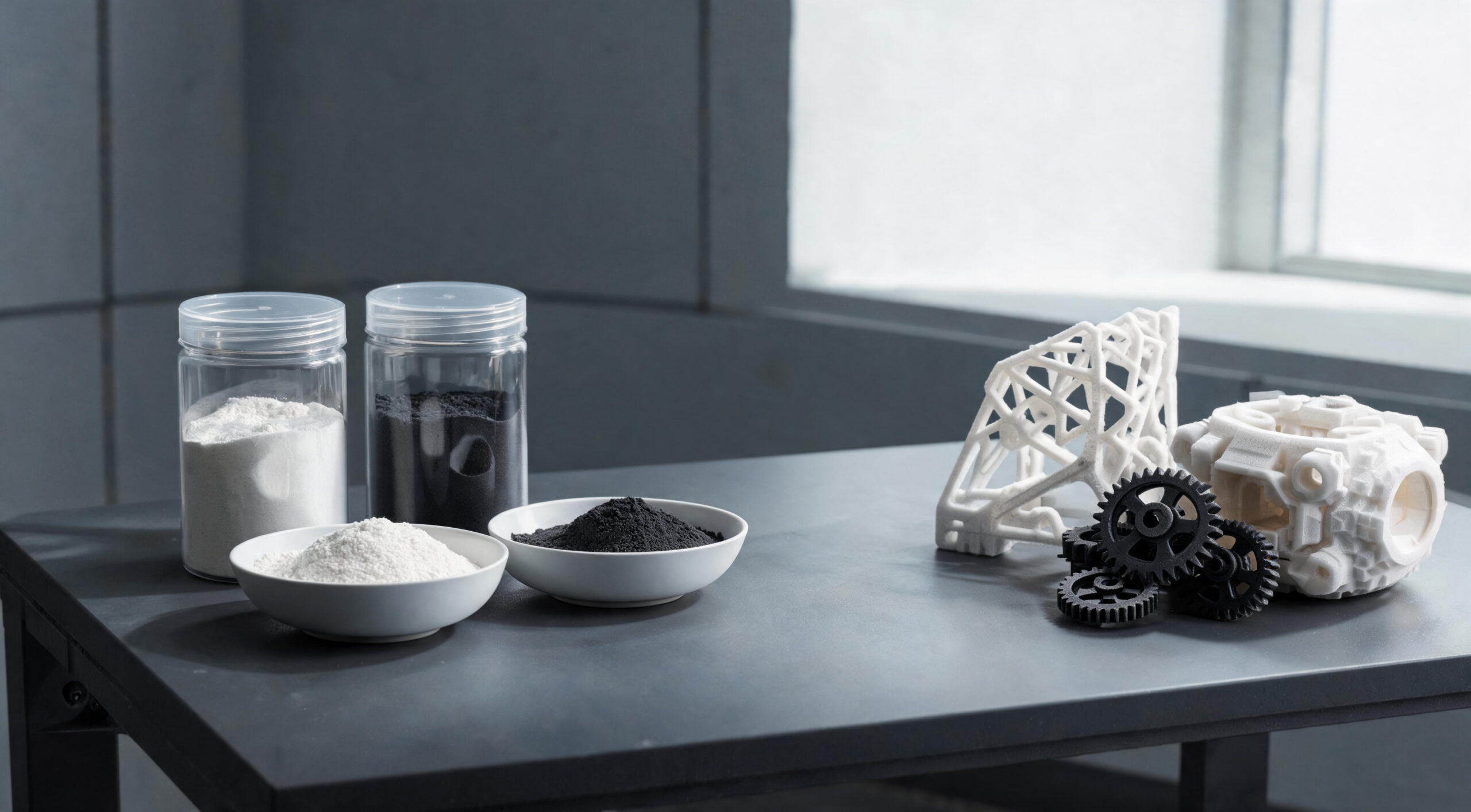
The Rise of Advanced 3D Printing Technology
3D printing has evolved from a futuristic concept into one of the most transformative manufacturing technologies in the modern world. From custom medical devices and aerospace components to lightweight automotive parts and consumer products, additive manufacturing continues to reshape how products are designed and produced. Among the many types of 3D printing technologies available today, Selective Laser Sintering, commonly known as SLS, stands out as one of the most powerful and versatile systems ever developed. For beginners exploring industrial-grade 3D printing, SLS can seem both exciting and intimidating. It involves high-powered lasers, powdered materials, thermal engineering, and advanced digital design workflows. Yet despite its complexity, the core idea behind SLS is surprisingly easy to understand. At its heart, the technology uses a laser to fuse tiny particles of powder together layer by layer until a solid object emerges from the powder bed like something out of science fiction.
A: Match the model, material, settings, and finish plan to the purpose of the print.
A: Bed leveling, surface cleanliness, nozzle height, temperature, and material condition are the usual suspects.
A: No. Slower speeds can improve detail, but heat buildup and profile balance still matter.
A: Use the right material, more walls, smart orientation, enough infill, and realistic load testing.
A: Temperature, retraction, travel moves, moisture, and material type all contribute.
A: Diagnose poor first layers, weak parts, stringing, warping, and rough surfaces before buying parts.
A: Very important; it shows toolpaths, supports, layer changes, and possible weak spots before printing.
A: First layers, simple calibration prints, support cleanup, and basic material profiles.
A: Clean orientation, tuned settings, good material handling, and careful support removal, sanding, painting, fitting, and practical testing.
A: It is most useful for makers who want cleaner prints and fewer wasted attempts.
What Exactly Is Selective Laser Sintering?
Selective Laser Sintering is a powder bed fusion 3D printing technology that uses a laser to selectively bond powdered materials into solid shapes. The process begins with a thin layer of powder spread across a build platform. A laser then scans the surface and heats specific areas according to a digital 3D model. Wherever the laser touches, the powder particles fuse together.
Once one layer is complete, the platform lowers slightly, and another fresh layer of powder is spread across the surface. The laser repeats the process again and again until the entire object is completed. Because the object forms gradually inside a surrounding bed of loose powder, SLS does not require traditional support structures like many other forms of 3D printing. This unique advantage allows SLS to create highly complex geometries with remarkable freedom.
How the SLS Printing Process Works
The Selective Laser Sintering workflow begins long before the printer powers on. Designers first create a digital 3D model using CAD software such as Fusion 360, SolidWorks, or Blender. The model is then exported into a printable file format, usually STL or 3MF, and imported into print preparation software. Inside the printer, powdered material is preheated close to its melting temperature. A recoater blade spreads an ultra-thin layer of powder evenly across the build area. The laser then scans the designated pattern and fuses the powder in those exact regions. After each layer is completed, the build platform lowers by fractions of a millimeter, allowing another layer to be applied. This process continues until the final object is fully formed inside the powder bed.
Why SLS Printing Is So Popular
One of the biggest reasons SLS has become so popular is its ability to produce strong, functional parts. Unlike decorative prototypes that exist only for visual testing, SLS components are often durable enough for real-world use. Engineers rely on SLS to manufacture production-grade parts that can withstand stress, heat, and demanding environments.
Another major advantage is geometric freedom. Because the surrounding powder supports the part during printing, SLS can create internal channels, moving hinges, lattice structures, and intricate shapes that would be impossible or extremely expensive using traditional manufacturing methods. This flexibility allows designers to push engineering creativity far beyond conventional limits.
The Materials Used in SLS Printing
Nylon powders dominate the world of SLS printing because they offer an excellent balance of strength, flexibility, chemical resistance, and durability. Nylon PA12 remains the industry standard and is widely used for engineering prototypes and end-use parts. Nylon PA11 is also popular because of its improved flexibility and impact resistance. Advanced SLS materials continue expanding every year. Carbon-filled nylon powders provide increased stiffness and heat resistance, while glass-filled materials improve structural performance for industrial applications. Flexible elastomer powders are also available for creating soft-touch components and wearable products. As material science evolves, SLS systems are becoming capable of producing increasingly specialized parts for demanding industries.
SLS vs Other 3D Printing Technologies
Many beginners compare SLS with FDM and SLA printing technologies. FDM printers melt plastic filament through a heated nozzle and are popular for home use because they are affordable and simple. However, FDM often requires support structures and may struggle with complex geometries or industrial-grade strength.
SLA printing uses liquid resin cured by ultraviolet light to create extremely detailed models with smooth surfaces. While SLA excels at visual detail, SLS generally produces stronger and more functional parts. SLS also offers superior design freedom because the powder bed naturally supports the print throughout the process.
The Incredible Advantages of SLS
SLS offers several major advantages that have helped it become a cornerstone of industrial additive manufacturing. One of the most important benefits is mechanical strength. SLS parts are often highly durable and suitable for functional testing, production use, and engineering applications. Another powerful advantage is production efficiency. Because parts can be tightly nested within the build chamber, manufacturers can print multiple components simultaneously in a single production run. This increases throughput while reducing waste and labor costs. The ability to recycle unused powder also helps improve material efficiency compared to subtractive manufacturing methods.
The Challenges and Limitations of SLS
Despite its impressive capabilities, SLS is not without challenges. One major limitation is cost. Industrial SLS machines are expensive due to their advanced laser systems, thermal management components, and precision engineering. Materials and maintenance can also add significant operational costs.
The printing process itself requires careful environmental control. Powder handling must be performed safely, and post-processing can be time-consuming. SLS parts also typically emerge with slightly rough or grainy surfaces, which may require additional finishing depending on the final application. For casual hobbyists, these factors can create a steep learning curve compared to entry-level desktop printers.
Industries That Depend on SLS Technology
SLS technology plays a critical role in some of the world’s most advanced industries. Aerospace manufacturers use SLS to create lightweight yet durable parts that reduce fuel consumption while maintaining structural integrity. Automotive companies rely on SLS for rapid prototyping, custom tooling, and specialized performance components. The medical industry also benefits enormously from SLS. Custom prosthetics, surgical guides, orthotics, and patient-specific devices can all be manufactured with incredible precision. Robotics companies frequently use SLS to build lightweight mechanical assemblies, while consumer product developers leverage the technology for rapid design iteration and low-volume manufacturing.
Understanding SLS Surface Finishes
Freshly printed SLS parts typically feature a matte texture with a slightly grainy appearance caused by the powdered material. While this texture is acceptable for many engineering applications, additional finishing processes can dramatically improve aesthetics and performance.
Common finishing techniques include bead blasting, sanding, polishing, vapor smoothing, and dyeing. Black-dyed nylon components have become especially popular in professional manufacturing because they create sleek, production-ready appearances. Some companies also apply specialty coatings to improve chemical resistance, UV protection, or cosmetic quality.
How Strong Are SLS Printed Parts?
One of the most exciting aspects of SLS printing is the impressive strength of the finished components. SLS nylon parts often demonstrate excellent tensile strength, impact resistance, and flexibility. These properties make the technology highly suitable for functional prototypes and real-world applications. Many industries now use SLS not only for prototyping but also for end-use manufacturing. Custom brackets, housings, connectors, hinges, and mechanical assemblies can all be produced using SLS with performance characteristics suitable for demanding environments. The technology bridges the gap between prototyping and production in ways that few manufacturing systems can achieve.
Why SLS Is Ideal for Rapid Prototyping
Rapid prototyping is one of the biggest reasons SLS has become indispensable in modern product development. Traditional manufacturing often requires expensive molds, tooling, and machining operations that take weeks or months to complete. SLS eliminates many of those barriers by allowing engineers to print complex designs directly from digital files.
This speed allows companies to test ideas faster, identify flaws earlier, and accelerate innovation cycles. Designers can modify CAD models, print updated prototypes overnight, and immediately evaluate new concepts. The ability to move quickly gives manufacturers a major competitive advantage in industries where speed and flexibility are essential.
The Future of Selective Laser Sintering
The future of SLS technology looks incredibly promising as advancements continue driving down costs while improving speed and material performance. New generations of SLS printers are becoming more automated, more energy efficient, and more accessible to smaller businesses and advanced makers. Artificial intelligence and machine learning are also beginning to optimize print settings, powder usage, and quality control systems. Meanwhile, new material development continues expanding what SLS can achieve. In the coming years, SLS is expected to play an even larger role in decentralized manufacturing, custom production, aerospace engineering, robotics, healthcare, and consumer product innovation.
Final Thoughts on Selective Laser Sintering
Selective Laser Sintering represents one of the most exciting breakthroughs in modern manufacturing technology. By combining high-powered lasers, advanced materials, and digital engineering, SLS enables creators to produce durable, complex, and highly functional parts with extraordinary efficiency.
For beginners entering the world of industrial 3D printing, SLS offers a fascinating glimpse into the future of manufacturing. While the technology may appear advanced at first, understanding the fundamentals reveals a remarkably elegant process that is reshaping industries around the globe. As SLS systems become more accessible and materials continue evolving, this technology will likely remain at the forefront of additive manufacturing for years to come.
Practical Next Steps
Before applying this topic to a real print, use the following checks to connect the idea to a specific part, material, printer, and workflow.
- Match the material first: PA 12, glass-filled nylon, flexible powders, and specialty blends behave differently under load and heat.
- Check whether the part needs enclosed cavities, snap fits, living hinges, thin walls, or threads before choosing SLS.
- Budget for depowdering, bead blasting, dyeing, sealing, or machining when surface finish and appearance matter.
- Ask for tolerance data and sample parts before using SLS for assemblies that must fit on the first try.
FAQ
When is SLS better than FDM?
SLS is usually stronger for complex nylon parts with no support marks, especially when the design has internal features, assemblies, or batch production needs.
What should I check before ordering an SLS part?
Check material grade, wall thickness, tolerances, surface finish, color, post-processing, and whether the service has printed similar parts before.
Why does powder choice matter?
Powder affects strength, flexibility, heat behavior, finish, recyclability, and consistency from one build to the next.
Sources and Further Reading
Use these references to verify terminology, process limits, material behavior, and design guidance related to this topic.