What Parametric Design Means
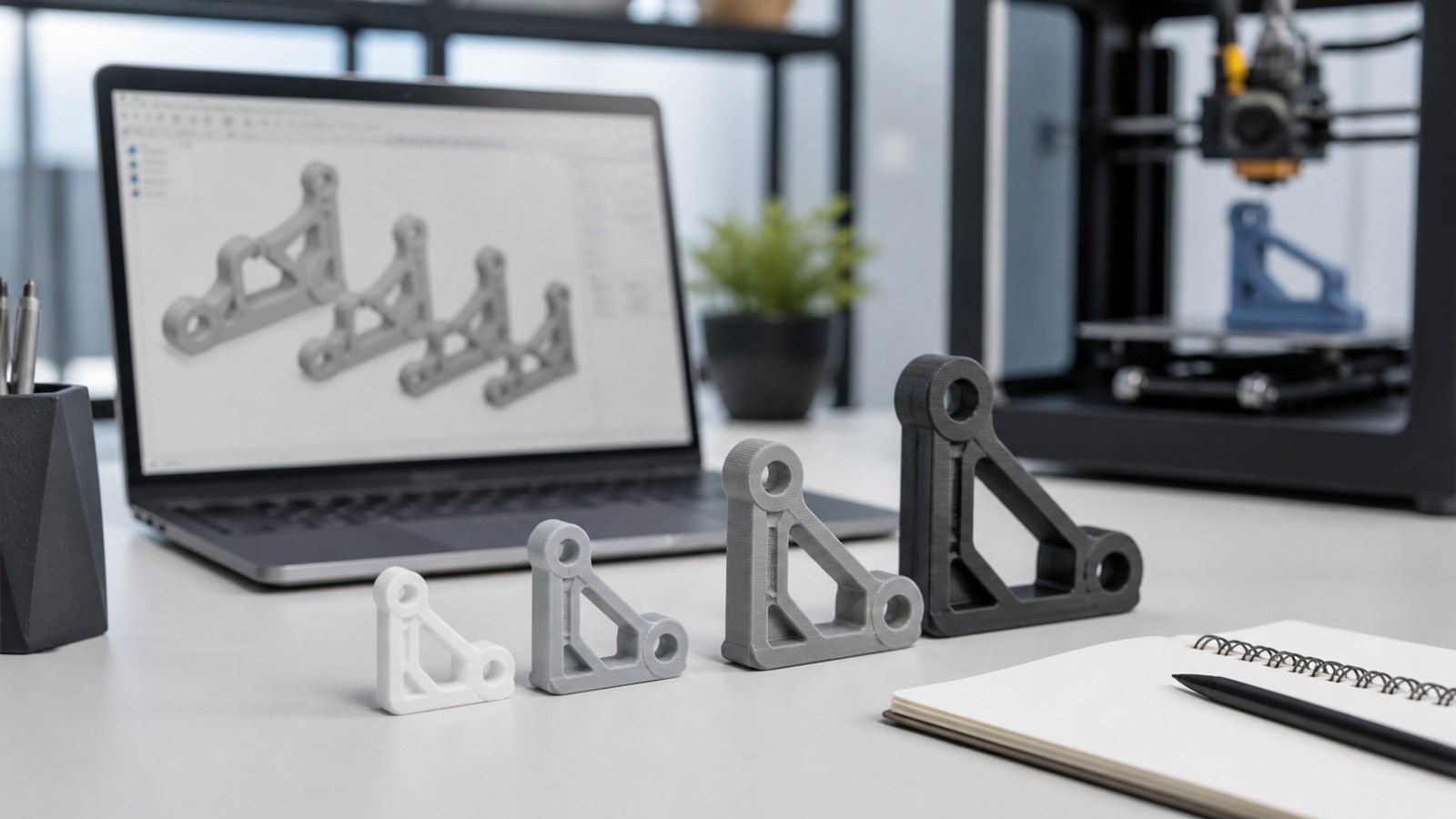
Parametric design means building a model from dimensions, variables, constraints, and relationships instead of only pushing geometry into shape. Change a key value and the model updates according to the rules you created.
A: Match the model, material, settings, and finish plan to the purpose of the print.
A: Bed leveling, surface cleanliness, nozzle height, temperature, and material condition are the usual suspects.
A: No. Slower speeds can improve detail, but heat buildup and profile balance still matter.
A: Use the right material, more walls, smart orientation, enough infill, and realistic load testing.
A: Temperature, retraction, travel moves, moisture, and material type all contribute.
A: Diagnose thin walls, unsupported features, tight fits, bad meshes, and weak load paths before buying parts.
A: Very important; it shows toolpaths, supports, layer changes, and possible weak spots before printing.
A: First layers, simple calibration prints, support cleanup, and basic material profiles.
A: Clean orientation, tuned settings, good material handling, and careful test fits, inserts, sanding, assembly, and revision notes.
A: It is most useful for makers designing parts that need to fit, move, or survive use.
What Parametric Design Means
Parametric design means building a model from dimensions, variables, constraints, and relationships instead of only pushing geometry into shape. Change a key value and the model updates according to the rules you created.
For 3D printing, that is powerful because many parts need revision. A phone stand, enclosure, drawer organizer, hinge, jig, or adapter often changes after the first test print. Parametric modeling makes those revisions faster and less fragile.
A Simple Example
Imagine a box for an electronics board. The board width, board length, wall thickness, screw-hole spacing, lid clearance, and cable opening can all become named values. If the board changes, the enclosure can update from those values instead of being remodeled from scratch.
That is the difference between a one-off mesh and an adaptable CAD model. The geometry remembers why it exists.
Core Parametric Ideas
The main ideas are sketches, dimensions, constraints, features, variables, history, and configurations. Sketches define shape. Dimensions define size. Constraints define relationships. Features turn sketches into solids. Variables and configurations create controlled variation.
Autodesk Fusion, FreeCAD, and Onshape all support parametric workflows. FreeCAD describes itself as an open-source parametric 3D modeler, and Onshape uses configurations to manage part and assembly variations.
Why It Matters for 3D Printing
Parametric design is useful when a part must fit real objects. Printer tolerances, material shrinkage, screws, bearings, wires, magnets, and snap fits all require iteration. A model that can update from a few values is easier to tune than a fixed mesh.
It also helps when sharing designs. A parametric reference model lets another maker adjust width, length, hole spacing, or clearance for a different printer or use case.
Common Beginner Mistakes
Beginners often under-constrain sketches, name nothing, and build features in an order that breaks when dimensions change. Another common mistake is adding decorative detail before the core fit is tested.
Good parametric work starts with design intent. Decide which dimensions are likely to change, name them clearly, and build the model so those changes flow through the part cleanly.
When Parametric Design Is Not Needed
Not every 3D print needs parametric design. A sculpted creature, bust, terrain piece, or hand-shaped prop may be better in Blender or another sculpting tool. Parametric CAD shines when dimensions and relationships matter.
The best designers know when to use each approach. Use parametric CAD for measured parts and mesh sculpting for organic form.
FAQ
What is parametric design in simple terms?
It is a way of designing models so dimensions and relationships control the shape and can be changed later.
Is parametric design good for 3D printing?
Yes. It is excellent for parts that need fit, tolerance, customization, or repeated revisions.
What software supports parametric modeling?
Fusion, FreeCAD, Onshape, SolidWorks, Inventor, and many other CAD tools support parametric workflows.