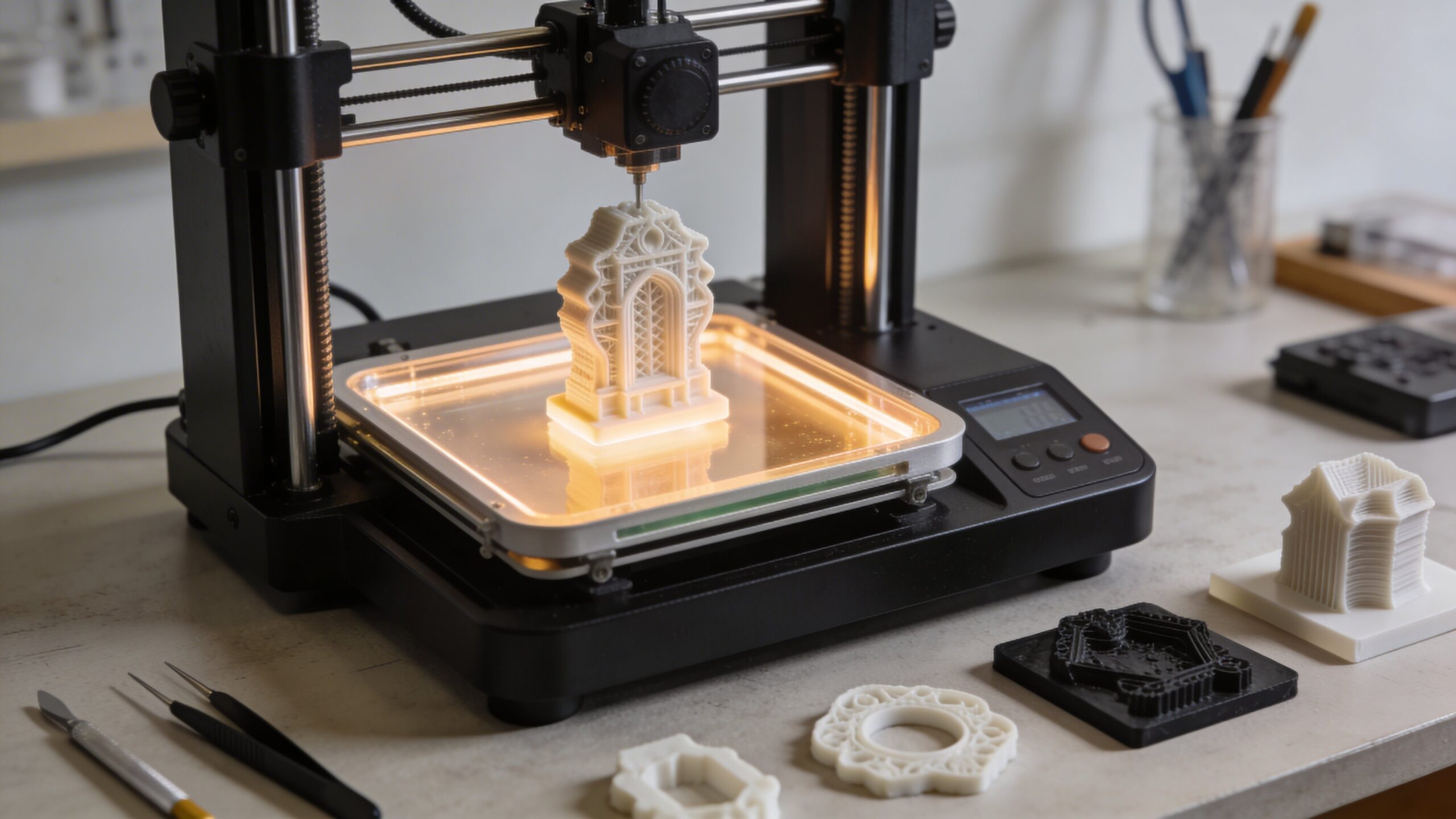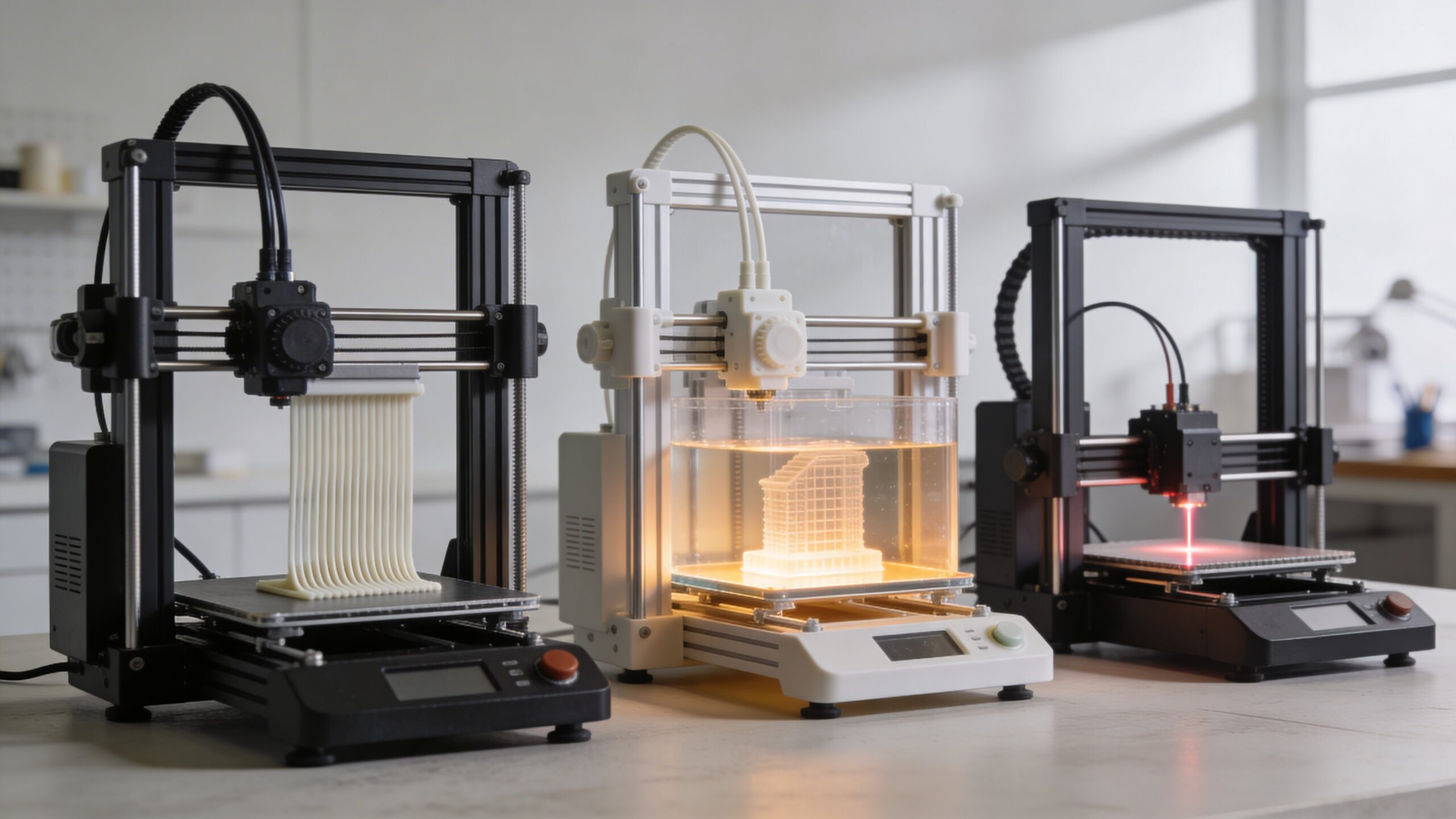
3D printing has evolved from a niche prototyping tool into a transformative technology powering industries from healthcare to product design. At the center of this evolution are three dominant methods: stereolithography (SLA), fused deposition modeling (FDM), and digital light processing (DLP). Each offers a distinct approach to turning digital designs into physical objects, and each excels in different scenarios. Choosing between SLA, FDM, and DLP is not simply a matter of picking the newest or most advanced technology. It requires understanding how each process works, what tradeoffs exist, and how those tradeoffs align with your goals. Whether you are a hobbyist creating detailed miniatures or a professional developing precision prototypes, the “best” technology depends entirely on what you need to achieve.
A: Match the model, material, settings, and finish plan to the purpose of the print.
A: Bed leveling, surface cleanliness, nozzle height, temperature, and material condition are the usual suspects.
A: No. Slower speeds can improve detail, but heat buildup and profile balance still matter.
A: Use the right material, more walls, smart orientation, enough infill, and realistic load testing.
A: Temperature, retraction, travel moves, moisture, and material type all contribute.
A: Diagnose failed supports, suction marks, brittle parts, and uncured residue before buying parts.
A: Very important; it shows toolpaths, supports, layer changes, and possible weak spots before printing.
A: First layers, simple calibration prints, support cleanup, and basic material profiles.
A: Clean orientation, tuned settings, good material handling, and careful washing, curing, sanding, priming, and safe handling.
A: It is most useful for makers who want crisp detail and accept the messier workflow.
Understanding FDM: The Foundation of Modern 3D Printing
FDM is the most widely recognized and accessible form of 3D printing. It works by heating a thermoplastic filament and extruding it through a nozzle, building objects layer by layer. The process is straightforward, reliable, and relatively inexpensive, making it the entry point for many users exploring 3D printing for the first time.
What makes FDM appealing is its versatility and affordability. Printers are widely available, materials are inexpensive, and the learning curve is manageable. However, the tradeoff comes in surface finish and precision. Layer lines are visible, and achieving ultra-fine detail can be challenging compared to resin-based methods.
Understanding SLA: Precision Through Light and Resin
SLA printing uses a laser to cure liquid resin into hardened plastic, layer by layer. This process produces exceptionally smooth surfaces and fine details that are difficult to achieve with filament-based systems. SLA has become a go-to choice for applications requiring high resolution, such as dental models, jewelry prototypes, and intricate figurines. The strength of SLA lies in its ability to produce visually stunning prints with minimal visible layering. However, this precision comes with added complexity. Resin handling requires careful safety practices, post-processing is more involved, and material costs are typically higher than FDM. Despite these challenges, SLA remains unmatched in detail and surface quality.
Understanding DLP: Speed Meets Precision
DLP shares similarities with SLA in that it uses liquid resin, but instead of a laser, it uses a digital projector to cure entire layers at once. This allows DLP printers to achieve faster print times while maintaining high levels of detail. The ability to cure full layers simultaneously gives DLP a significant advantage in efficiency.
DLP’s speed and precision make it ideal for batch production and small, detailed parts. However, its performance can depend heavily on resolution and projector quality. While it rivals SLA in detail, there can be subtle differences in surface consistency and edge sharpness depending on the system.
Print Quality Comparison: Detail, Smoothness, and Accuracy
When it comes to print quality, SLA and DLP clearly outperform FDM in most scenarios. Resin-based printing produces smooth surfaces with minimal visible layering, making it ideal for aesthetic and precision-driven applications. Fine details such as sharp edges, tiny engravings, and complex geometries are reproduced with remarkable accuracy. FDM, while capable, tends to show visible layer lines and may struggle with extremely fine features. However, it remains sufficient for many functional parts where aesthetics are less critical. In practical terms, the choice comes down to whether you prioritize visual perfection or functional durability.
Speed and Workflow: What Actually Saves Time
Speed in 3D printing is not just about how fast a printer operates, but also how long it takes to go from concept to finished part. FDM printers can run continuously with minimal intervention, making them efficient for larger builds. However, print times can increase significantly with higher detail settings.
DLP stands out in speed due to its ability to cure entire layers simultaneously. SLA, while precise, is often slower because the laser must trace each layer individually. That said, post-processing time for resin prints can offset these speed advantages, making workflow efficiency a critical consideration.
Material Differences: Strength, Flexibility, and Application
FDM printers use thermoplastics such as PLA, ABS, and PETG, which are known for their strength and durability. These materials are well-suited for functional parts, mechanical components, and everyday applications where resilience matters. SLA and DLP use photopolymer resins, which can be engineered for specific properties such as flexibility, transparency, or heat resistance. While these materials can achieve impressive characteristics, they are generally more brittle than traditional thermoplastics. This makes them ideal for precision and aesthetics, but less suited for heavy mechanical stress.
Cost Considerations: Equipment, Materials, and Maintenance
FDM is widely regarded as the most cost-effective option. Entry-level printers are affordable, and filament materials are inexpensive and easy to source. Maintenance is also relatively simple, making it a practical choice for beginners and budget-conscious users.
SLA and DLP systems require higher upfront investment, along with ongoing costs for resin, cleaning supplies, and replacement components. Additionally, the need for post-processing equipment such as curing stations adds to the overall expense. While these technologies deliver superior results, they come at a higher total cost of ownership.
Ease of Use: Learning Curve and Daily Operation
FDM printers are generally easier to operate and maintain. The process is straightforward, and troubleshooting is often manageable with basic knowledge. This simplicity has made FDM the most popular choice for newcomers to 3D printing. Resin-based printing introduces additional complexity. Handling liquid resin, managing exposure settings, and performing post-processing steps require a more careful approach. While modern machines have improved usability, SLA and DLP still demand a higher level of attention and experience.
Safety and Environment: What You Need to Know
Safety considerations vary significantly between these technologies. FDM printing is relatively safe, though it involves high temperatures and occasional fumes depending on the material used. Proper ventilation is recommended, especially when printing with certain plastics.
SLA and DLP involve liquid resins that can be toxic if mishandled. Protective gloves, proper ventilation, and careful disposal practices are essential. While these requirements are manageable, they add an additional layer of responsibility that users must be prepared for.
Best Use Cases: Matching Technology to Purpose
FDM excels in creating durable, functional parts and large objects where cost efficiency is important. It is widely used in prototyping, education, and hobbyist projects that prioritize practicality over aesthetics. SLA and DLP are better suited for applications requiring high precision and fine detail. From dental molds to artistic models, these technologies shine where visual quality and accuracy are critical. DLP’s speed also makes it a strong candidate for small-scale production.
The Verdict: Which 3D Printing Technology Is Best?
There is no single answer to which technology is best, because each serves a different purpose. FDM offers accessibility, durability, and affordability, making it the best choice for general use and functional printing. SLA delivers unmatched detail and smoothness, making it ideal for precision-driven applications. DLP combines speed and quality, offering a balanced solution for high-detail production.
Ultimately, the best technology is the one that aligns with your specific goals. Understanding the strengths and limitations of SLA, FDM, and DLP allows you to make an informed decision and unlock the full potential of 3D printing.
Research-Backed Context
A strong 3D printing article connects the idea to a specific part, material, printer, file, and workflow. That keeps the topic useful instead of sounding like a broad description of additive manufacturing.
Practical Decision Checks
- Define the part or outcome before choosing a printer, material, or setting.
- Use a small test print to check scale, tolerance, strength, surface finish, and orientation.
- Compare the whole workflow: design, slicing, printing, cleanup, finishing, inspection, and repeatability.
- Record successful settings so the next version improves for a clear reason.
FAQ
What makes a 3D print successful?
A successful print fits its intended use, not just the build plate. Size, strength, finish, safety, cost, and repeatability all matter.
What should beginners test first?
Beginners should test bed adhesion, scale, tolerances, material behavior, and support removal before printing large or expensive parts.
How do I choose between methods?
Start with the part’s hardest requirement, then compare process, material, accuracy, finish, time, and post-processing.
Sources and Further Reading
These references support the technical terms, material guidance, process limits, and decision criteria used in this article.