The Complete History of 3D Printing: From Concept to Modern Innovation

The Complete History of 3D Printing: From Concept to Modern Innovation

The Idea That Changed Manufacturing

The history of 3D printing begins with a deceptively simple idea: what if an object could be built layer by layer instead of carved from a block or formed in a mold? That concept sounds natural now, but for most of manufacturing history it ran against the logic of established production. Traditional systems depended on cutting, casting, stamping, drilling, and machining. They were efficient for repetition, but they were not built for fast iteration, intricate internal geometry, or one-off customization. What made the idea of additive manufacturing so compelling was not just novelty. It introduced a different philosophy of production. Instead of shaping material by removal, it suggested that geometry could emerge through accumulation. That shift opened the door to forms that were difficult or impossible to make with conventional tools. The complete history of 3D printing is, at its core, the story of how this conceptual reversal moved from theory into engineering, and from engineering into everyday industry.

Before 3D Printing Had a Name

Long before the first successful 3D printer appeared, the groundwork was being laid in computer-aided design, automated manufacturing, and materials science. As digital modeling improved in the late twentieth century, engineers gained the ability to describe complex objects inside software with increasing precision. That progress mattered because additive manufacturing depends on digital instructions. A printer can only build an object layer by layer if the object can first be defined in a digital language.

The broader industrial environment also helped shape the emergence of 3D printing. Manufacturers were already searching for ways to reduce development time, shorten design cycles, and move from concept to prototype more quickly. Rapid prototyping became a pressing goal. Companies wanted physical models without the delay and cost of tooling. In that sense, 3D printing did not appear in isolation. It arrived as a response to an existing need, and it succeeded because it answered that need in a fundamentally new way.

The 1980s: When the Modern Era Began

The modern history of 3D printing truly began in the 1980s. This was the decade when additive manufacturing moved from concept to functioning process. The most important breakthrough came when engineers developed systems capable of turning digital data into physical layers with repeatable accuracy. That achievement gave shape to what would become the first true 3D printing technologies. Among the most important figures in this period was Chuck Hull, whose work on stereolithography transformed the field. Stereolithography, often called SLA, used ultraviolet light to cure liquid photopolymer resin layer by layer. Hull’s work provided more than a new machine. It established the essential logic of 3D printing: take a digital model, divide it into thin slices, and build those slices one after another into a complete object. That framework still defines the process today, even as materials and hardware have evolved dramatically.

Stereolithography and the First Major Breakthrough

SLA mattered because it showed that additive manufacturing could work as a practical system rather than a laboratory experiment. A vat of liquid resin, a controlled light source, and a digitally guided build process combined into something manufacturing had not seen before. The printed parts were not mass-market products, but they were real, complex, and repeatable. That was enough to change the conversation around prototyping.

The significance of stereolithography also extends beyond its first printed parts. It introduced the layered workflow that made later developments possible. Digital slicing, controlled deposition or curing, and vertical build sequencing became the grammar of the field. Once that grammar existed, other methods could be developed around different materials and energy sources. In that way, the invention of SLA did not just launch one branch of 3D printing. It created the structural template for the industry that followed.

The Arrival of Multiple Printing Methods

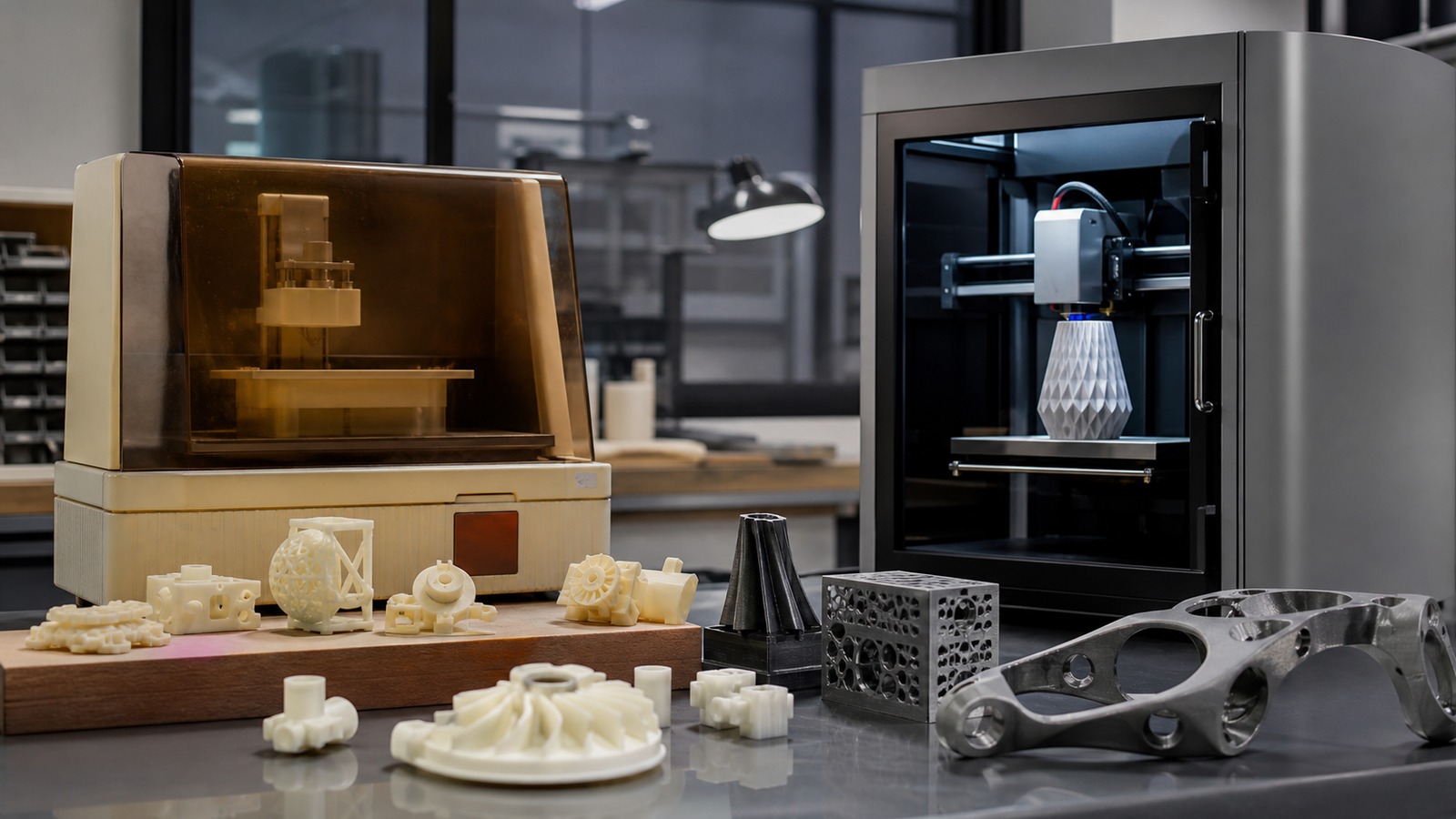
Once the first viable process had been established, innovation accelerated. Different teams approached additive manufacturing from different technical angles, each trying to solve the same central challenge: how to create solid objects from digital models with reliable material control. This period led to the emergence of several foundational methods that still dominate discussions of 3D printing today. Selective Laser Sintering, or SLS, introduced a powder-based approach in which a laser fused material into solid layers. Fused Deposition Modeling, or FDM, took a different route by extruding heated thermoplastic through a nozzle. Each method offered distinct advantages. SLA brought fine detail, SLS expanded material and structural possibilities, and FDM opened the door to simpler machine architectures. The history of 3D printing is not the story of one machine replacing another. It is the story of several core processes developing in parallel, each expanding what additive manufacturing could become.

Why Early 3D Printing Was Built for Prototyping

In its early decades, 3D printing was primarily a rapid prototyping technology. That role made sense because the greatest immediate advantage of additive manufacturing was speed in development rather than speed in large-scale production. Engineers could design a part on a computer, print a physical version, inspect it, revise it, and print again. That feedback loop dramatically changed how products were developed.

This period is crucial in understanding the complete history of 3D printing because it explains why the technology gained traction even before it became affordable or widespread. Early printers were expensive, specialized, and often limited in materials. But they could save companies enormous time during development. A faster prototype meant a faster decision. A faster decision meant a shorter path to refinement. In industrial design, that advantage was powerful enough to justify the technology long before it reached mainstream awareness.

The 1990s: Industrial Legitimacy and Steady Expansion

During the 1990s, 3D printing gained industrial legitimacy. It was no longer just an intriguing engineering experiment. It became a recognized part of product development in sectors that valued precision and iteration. Automotive, aerospace, medical device development, and consumer product design all began using additive processes to improve how prototypes were created and tested. At the same time, the language around the field matured. Terms such as rapid prototyping and additive manufacturing became more common, reflecting a broader understanding that the technology had applications beyond novelty. Machines became more capable, software improved, and the connection between CAD workflows and printing systems became more refined. The decade did not yet produce mass consumer adoption, but it established 3D printing as a serious industrial tool with growing strategic importance.

Materials Began to Drive New Possibilities

As the technology matured, materials became one of the most important drivers of innovation. Early systems were often tied to narrow material categories, but the field expanded as researchers improved resins, thermoplastics, powders, and eventually metals. This broadened the functional range of printed parts. Instead of merely representing shape, parts could begin to serve more realistic performance roles.

That progression changed how engineers thought about additive manufacturing. A printed object no longer had to be just a model. It could be a fit-check component, a tooling aid, a custom fixture, or, in some cases, an end-use part. The development of materials pushed 3D printing beyond visual demonstration and into functional relevance. This was a major turning point because it transformed the value of the process from speed alone to speed combined with utility.

The 2000s: Patents, Openness, and Accessibility

The 2000s were a defining chapter in the history of 3D printing because they reshaped access. As important patents began to expire, new companies and communities gained room to experiment. The field became less concentrated and more dynamic. Lower barriers encouraged alternative machine designs, lower-cost systems, and a new wave of technical creativity outside traditional industrial structures. This was also the era in which open-source culture began to influence 3D printing in a visible way. Communities formed around the idea that printers could be improved, modified, and shared rather than locked into closed industrial systems. That spirit had a profound effect on desktop printing. It reduced the conceptual distance between professional engineering equipment and personal fabrication tools. In practical terms, it helped turn 3D printing from something companies bought into something individuals could build, understand, and eventually own.

The Rise of Desktop 3D Printing

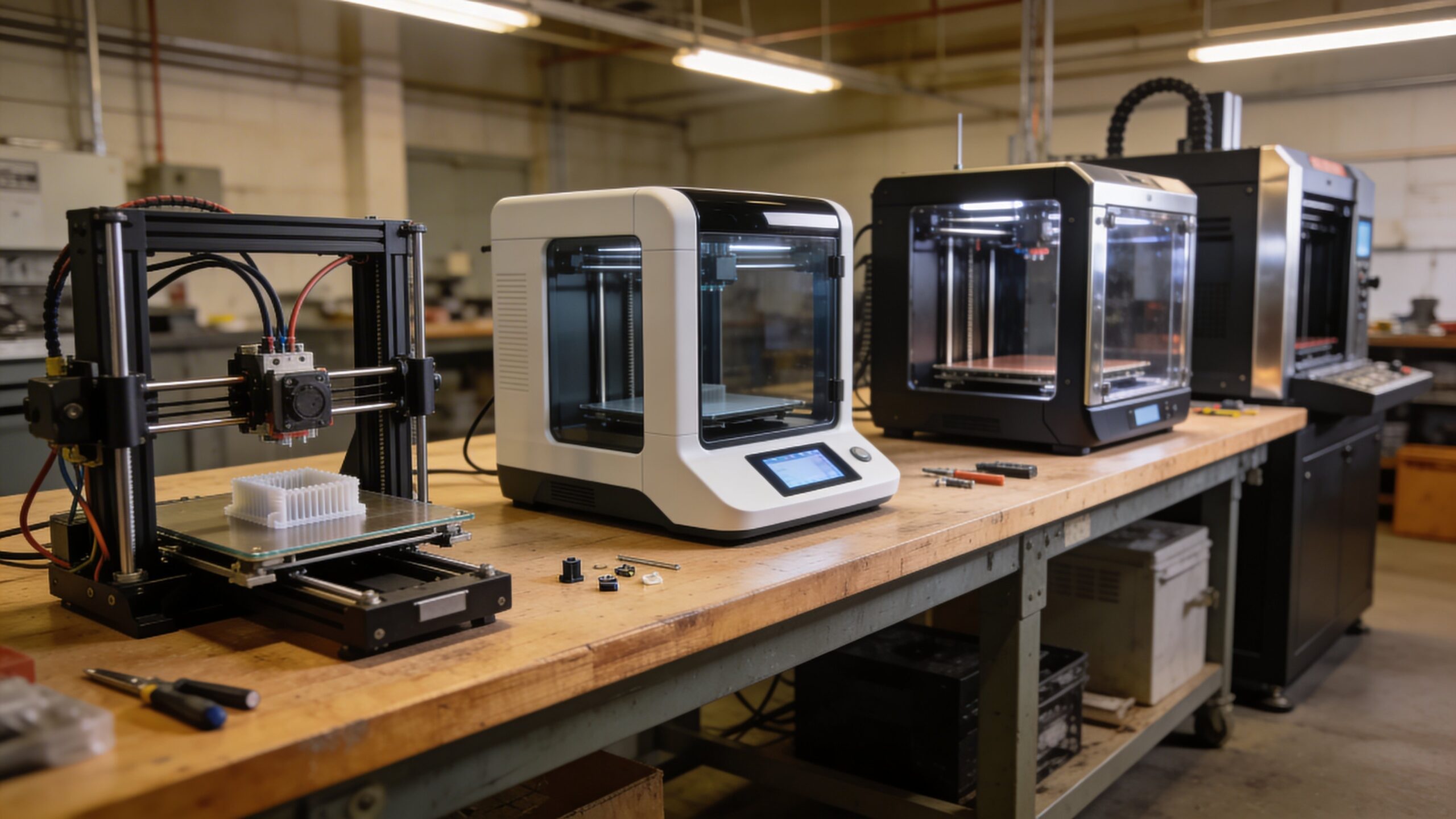
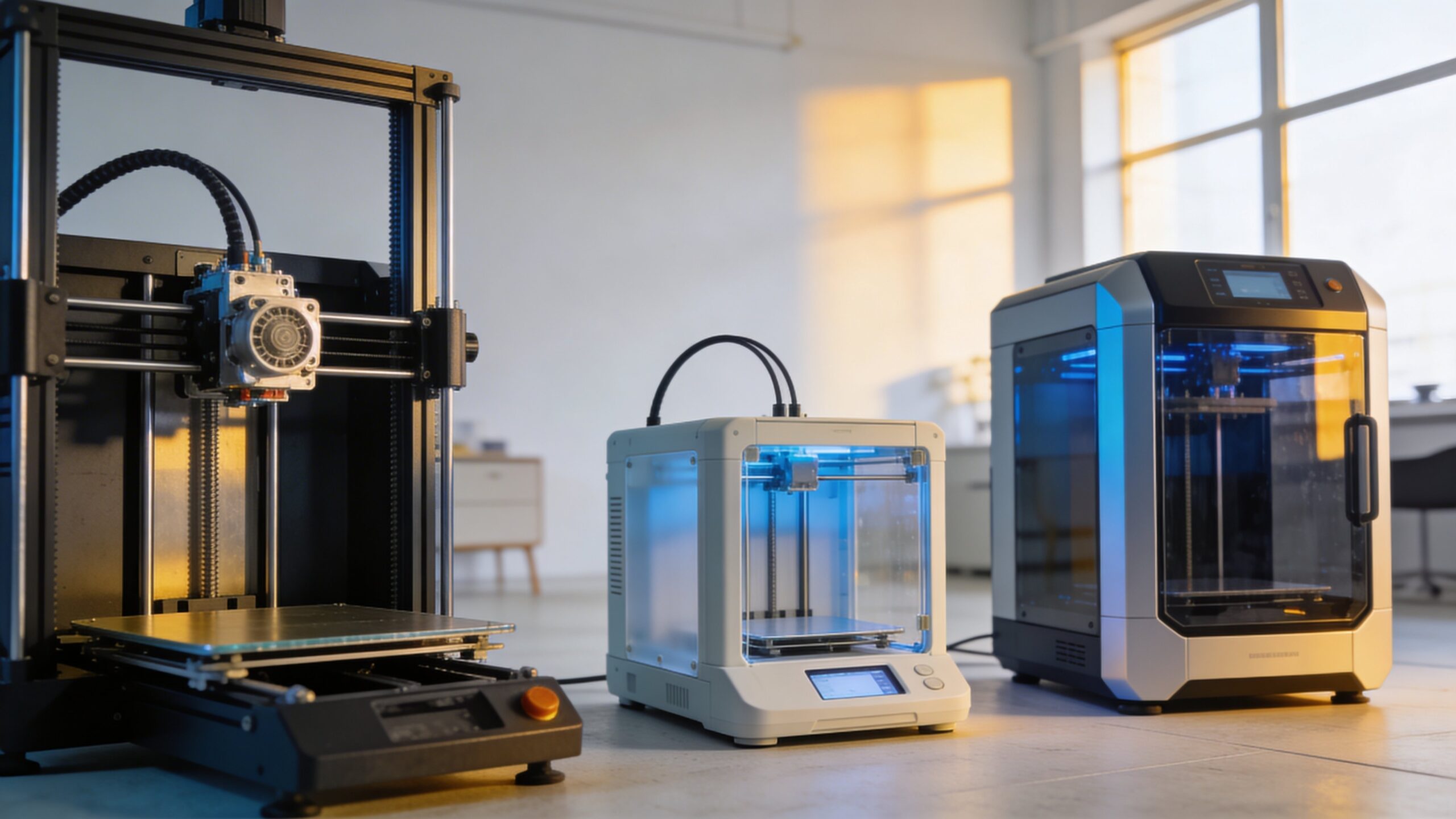
Desktop 3D printing changed the public identity of the field. What had once been associated almost entirely with industrial labs and engineering departments began appearing in schools, workshops, makerspaces, and home offices. FDM in particular became central to this transition because it offered a relatively approachable combination of affordability, mechanical simplicity, and material availability.

This change mattered for more than market expansion. It changed who participated in the evolution of 3D printing. Educators used it as a teaching tool. Designers used it for rapid concept iteration. Hobbyists used it to create custom parts, models, and experimental devices. Small businesses used it for prototyping and short-run production. The technology became culturally visible, and that visibility accelerated demand, experimentation, and expectations. The complete history of 3D printing cannot be understood without this democratization phase, because it turned additive manufacturing into a public-facing technology.

The Maker Movement and Cultural Momentum

The maker movement gave 3D printing a cultural narrative that extended beyond engineering. Suddenly the technology was associated with creativity, independence, customization, and digital craftsmanship. People began to see printers not only as manufacturing tools but as platforms for invention. That shift broadened the emotional appeal of 3D printing and drew in audiences who might never have encountered industrial prototyping systems. This cultural momentum also changed the content ecosystem around printing. Online design repositories, slicer tutorials, community forums, and hardware modification guides became part of how the technology spread. Knowledge was no longer confined to corporate environments or technical specialists. It moved through shared experimentation. That open and collaborative dimension helped make 3D printing feel accessible, even when the learning curve remained real.

From Prototype Tool to Production Technology

As printers improved in reliability, resolution, material performance, and process control, 3D printing began moving beyond prototypes and into production-oriented roles. This did not mean it replaced conventional manufacturing across the board. Instead, it carved out strengths in areas where geometry complexity, customization, low-volume production, or part consolidation created an advantage.

This transition is one of the most important developments in modern additive manufacturing. Industries began using 3D printing for medical guides, dental applications, aerospace components, tooling inserts, customized consumer products, and specialized replacement parts. In each case, the appeal was not simply that a part could be printed. It was that the printed approach solved a design or supply problem more effectively than conventional methods. That is the hallmark of mature technology: it stops being interesting only because it is new and becomes valuable because it is useful.

The Role of Software in the Evolution of 3D Printing

When people think about the history of 3D printing, they often focus on printers and materials. But software has been just as essential. From CAD design to slicing algorithms, support generation, path planning, and machine control, the digital side of additive manufacturing determines whether an idea can move successfully into physical form. Over time, software became more powerful and more user-friendly. Early workflows were specialized and often technically demanding. Modern tools are far more accessible, allowing a wider range of users to prepare, simulate, and optimize prints. This matters because additive manufacturing is fundamentally a digital manufacturing process. Every improvement in modeling, automation, and print planning has expanded the practical reach of the technology. The story of 3D printing is not only mechanical. It is computational.

Modern Innovation: Metals, Bioprinting, and Large-Scale Systems

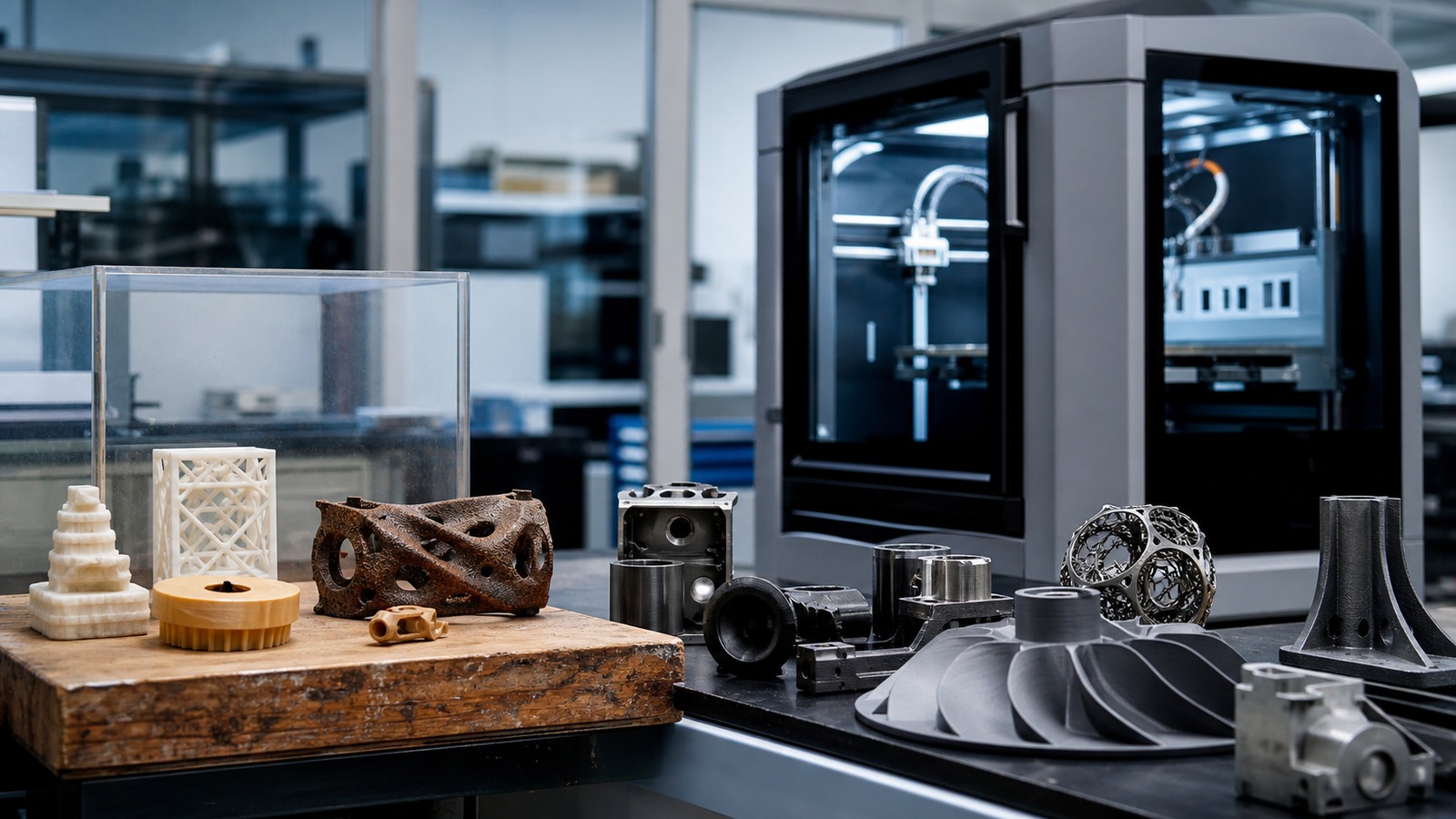
Modern 3D printing now spans far beyond the early trio of SLA, SLS, and FDM. Metal additive manufacturing has grown into a major field with applications in aerospace, medical implants, and advanced engineering. Bioprinting explores how layer-based fabrication can interact with living materials and tissue research. Large-scale construction printing has pushed the concept of additive manufacturing into architecture and infrastructure.

These developments show how far the field has traveled from its origins in rapid prototyping. The central principle remains the same, but the scale, precision, and ambition have expanded dramatically. Today, 3D printing sits at the intersection of manufacturing, design, computation, and material innovation. It is no longer defined by a single use case. It is defined by flexibility.

Why the History of 3D Printing Still Matters

Understanding the complete history of 3D printing helps explain why the technology looks the way it does today. Many of its current strengths and limitations are direct results of its developmental path. Its emphasis on iteration comes from rapid prototyping. Its digital dependency comes from CAD-based engineering. Its wide process diversity comes from multiple technical branches solving similar problems in different ways. History also reveals something more important: 3D printing did not become influential because of one dramatic moment alone. It became influential through accumulated refinement. One invention created a path, another widened it, and later innovations made it accessible, practical, and commercially relevant. That layered progression mirrors the process of printing itself. The technology was built, in effect, one layer at a time.

From Concept to Modern Innovation

The complete history of 3D printing is the story of an idea that kept proving itself in new contexts. It began as a bold rethinking of how objects could be made. It matured through industrial prototyping, expanded through new materials and methods, reached wider audiences through desktop systems, and continues to evolve through advanced manufacturing applications.

What makes 3D printing remarkable is not only that it exists, but that it continues to adapt. Its history is unfinished. New materials, better automation, smarter software, and more specialized applications keep redefining what additive manufacturing can do. That makes the past especially important. The better we understand how 3D printing evolved from concept to modern innovation, the more clearly we can see why it remains one of the most dynamic technologies in manufacturing.