The Fascinating World of Layered Manufacturing
3D printing has transformed the way people think about manufacturing, creativity, and design. What once seemed like futuristic science fiction is now a common technology found in homes, schools, engineering labs, hospitals, and massive industrial facilities. At the heart of this revolutionary process is one simple but powerful idea: objects are built layer by layer. Unlike traditional manufacturing methods that cut, drill, or carve material away from a larger block, 3D printers create items by gradually adding material until a complete object takes shape. This additive manufacturing process allows extraordinary precision and flexibility. From tiny tabletop gaming miniatures to aerospace components and custom medical implants, modern 3D printers can produce remarkably detailed creations. Understanding how a 3D printer builds objects layer by layer reveals why this technology has become one of the most exciting innovations in modern manufacturing.
A: Match the model, material, settings, and finish plan to the purpose of the print.
A: Bed leveling, surface cleanliness, nozzle height, temperature, and material condition are the usual suspects.
A: No. Slower speeds can improve detail, but heat buildup and profile balance still matter.
A: Use the right material, more walls, smart orientation, enough infill, and realistic load testing.
A: Temperature, retraction, travel moves, moisture, and material type all contribute.
A: Diagnose poor first layers, weak parts, stringing, warping, and rough surfaces before buying parts.
A: Very important; it shows toolpaths, supports, layer changes, and possible weak spots before printing.
A: First layers, simple calibration prints, support cleanup, and basic material profiles.
A: Clean orientation, tuned settings, good material handling, and careful support removal, sanding, painting, fitting, and practical testing.
A: It is most useful for makers who want cleaner prints and fewer wasted attempts.
From Digital File to Physical Object
Every 3D printed object begins as a digital design. Designers create these models using specialized CAD software, sculpting tools, or downloadable 3D model libraries. The digital model acts as a blueprint that tells the printer exactly what shape to build and how each layer should look. Without this digital foundation, the printer would have no instructions to follow.
Before printing begins, slicing software converts the model into hundreds or even thousands of horizontal layers. This process generates machine-readable instructions called G-code. The file contains detailed commands that guide the printer’s movements, temperatures, print speeds, and layer dimensions. Once the file is loaded into the printer, the machine begins transforming the virtual design into a physical object one microscopic layer at a time.
The Importance of Thin Layers
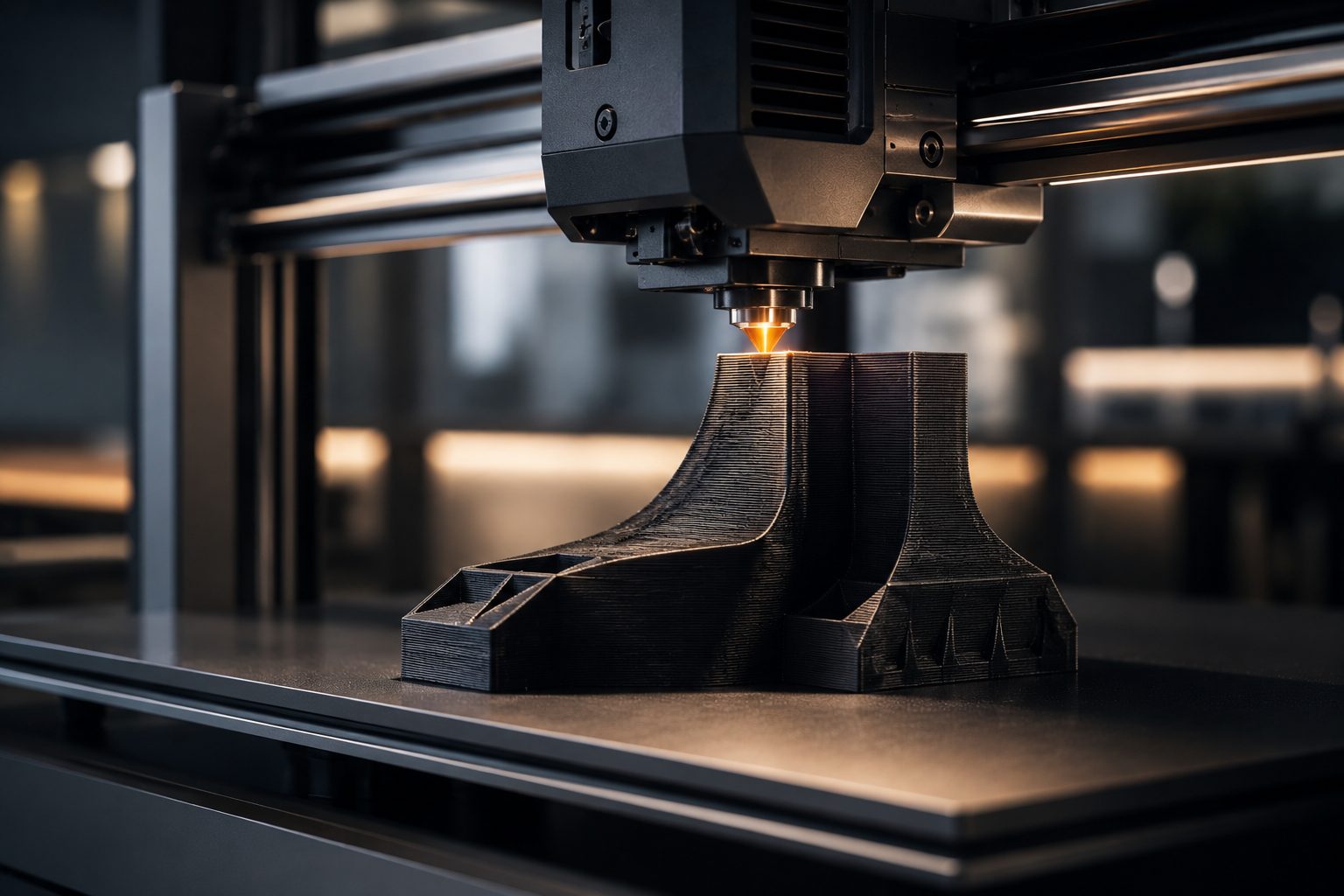
The concept of layering is what makes 3D printing possible. Instead of forming an entire object instantly, the printer creates extremely thin horizontal slices stacked on top of each other. Each layer bonds to the previous one, gradually building the final shape. Depending on the printer settings, layers can be incredibly thin, sometimes measuring only fractions of a millimeter. Thin layers improve surface quality and detail. Smaller layer heights create smoother curves and more refined finishes, while thicker layers print faster but may reveal more visible lines. The layer-by-layer approach gives 3D printers the ability to create intricate geometry that would be difficult or impossible using traditional manufacturing techniques.
How the Extrusion Process Works
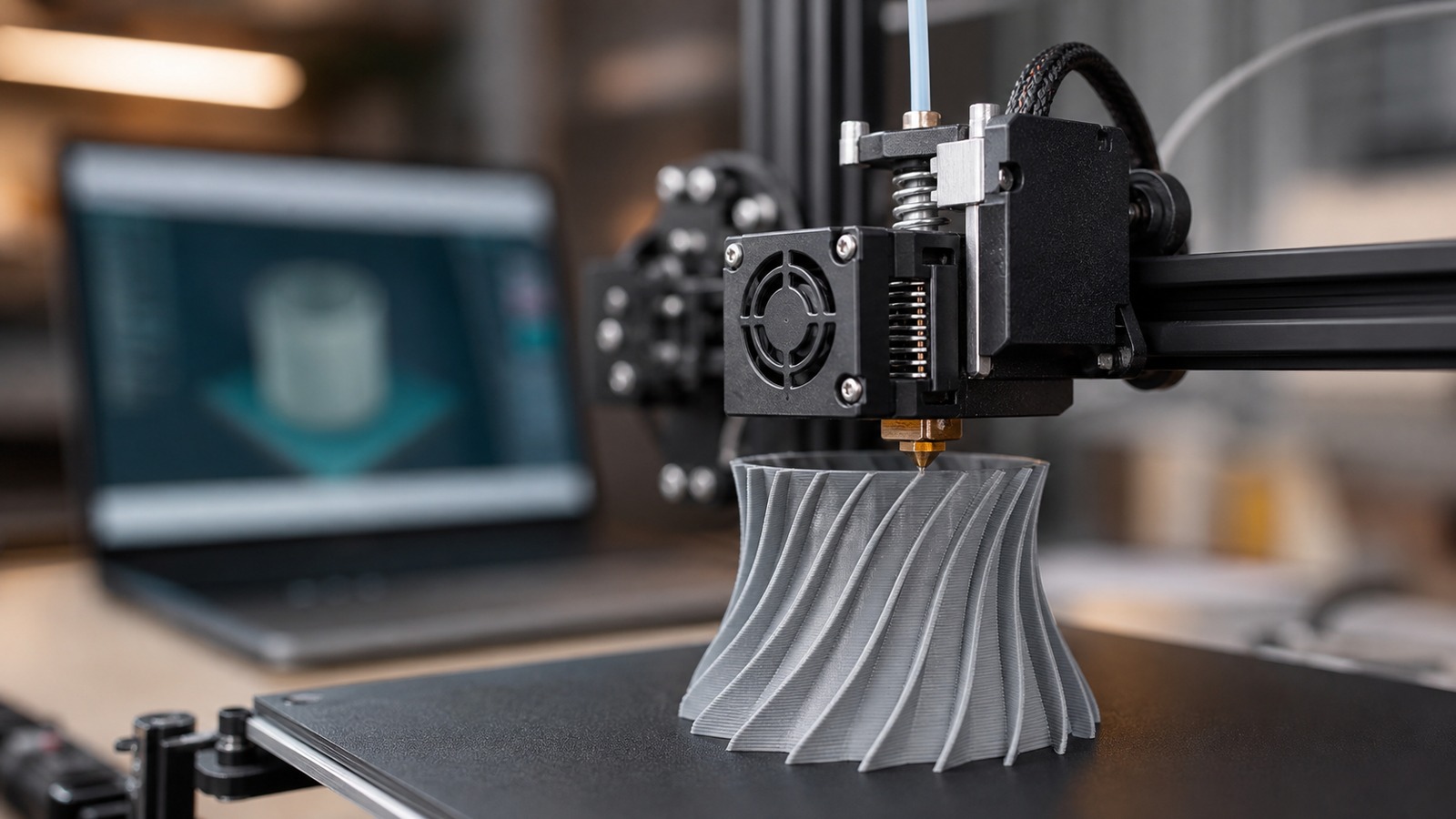
In FDM 3D printing, which is one of the most common types of 3D printing, the machine builds layers using melted plastic filament. The filament is fed into a heated component called the hotend, where it softens into a semi-liquid state. A nozzle then deposits the material onto the build plate following precise coordinates generated by the slicing software.
The printer carefully controls the nozzle’s movement across the X, Y, and Z axes. The nozzle moves side to side and forward and backward while the printer gradually raises the height after each completed layer. As the material cools, it hardens and bonds to the previous layer beneath it. This repeated process slowly transforms a spool of plastic into a complete three-dimensional object.
Why Precision Matters
Precision is essential in layer-by-layer manufacturing. Every movement must be carefully controlled to ensure that each layer aligns perfectly with the one below it. Even tiny inaccuracies can affect print quality, causing weak structures, rough surfaces, or failed prints. Modern 3D printers use stepper motors, belts, rails, and advanced firmware to maintain accurate positioning during the printing process. Many machines also include sensors and auto-leveling systems that improve consistency. The result is an incredibly controlled manufacturing process capable of producing highly detailed objects with impressive dimensional accuracy.
The Role of the Build Plate
The build plate serves as the foundation for every printed object. The first layer is critical because it determines how well the rest of the print will adhere during the manufacturing process. If the initial layer fails to stick properly, the entire object can shift, warp, or collapse.
Many modern printers use heated build plates to improve adhesion and reduce warping. The warmth helps the material cool gradually and maintain better contact with the surface. Some printers also use textured plates, adhesive sheets, or specialty coatings to create stronger first-layer bonding and improve print reliability.
Layer Adhesion and Structural Strength
One of the most important parts of layer-by-layer printing is ensuring that layers bond together correctly. When the printer deposits fresh material, it partially melts into the previous layer, creating a fused connection. Strong adhesion between layers determines the durability and strength of the final object. Print temperature, cooling speed, and material choice all influence layer adhesion. If layers cool too quickly or temperatures are too low, the object may become weak or brittle. Proper calibration helps maintain strong bonds throughout the print, resulting in durable finished products capable of handling stress and repeated use.
Understanding Infill and Internal Structures
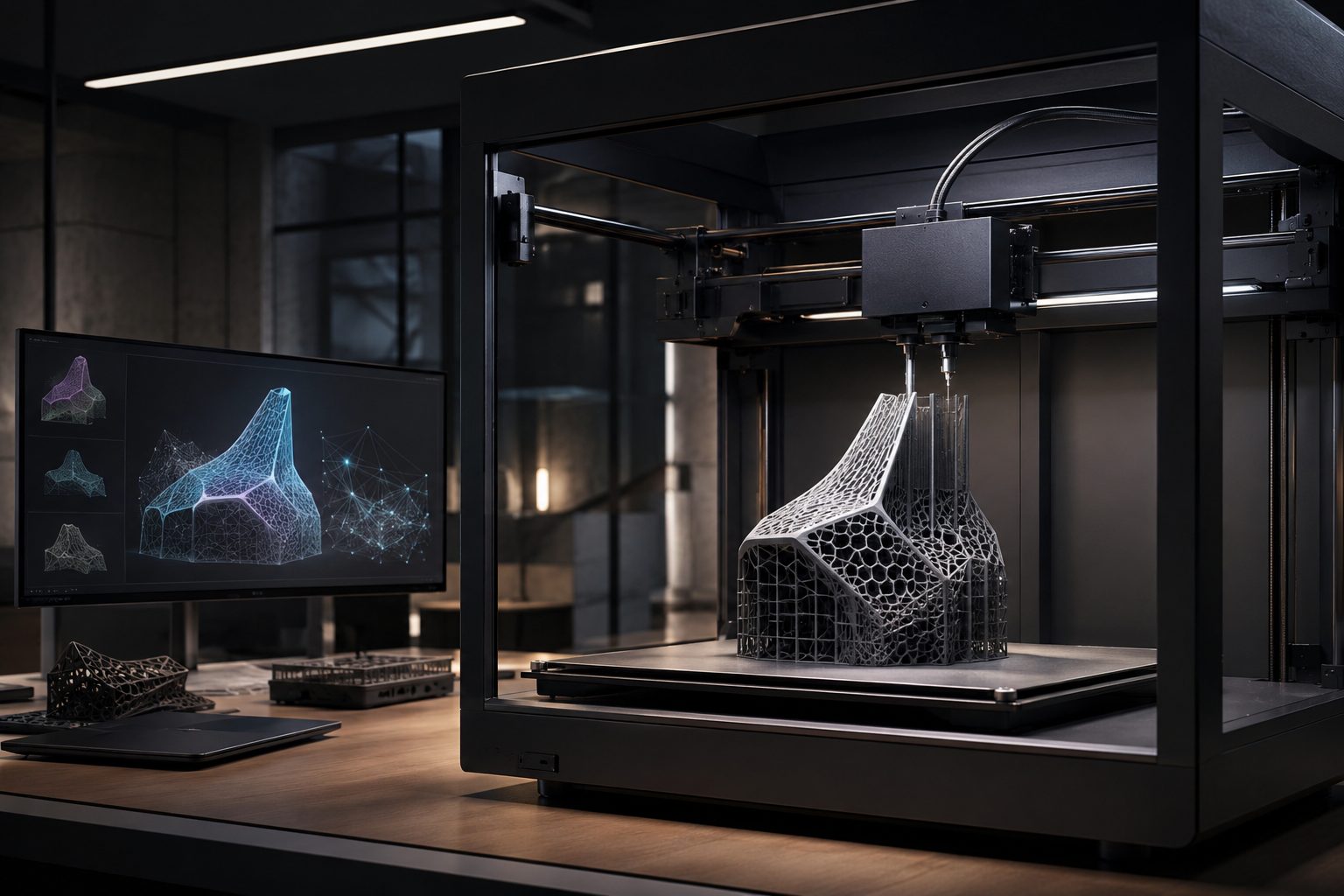
Most 3D printed objects are not completely solid. Instead, printers use internal support patterns called infill. These structures reduce material usage while maintaining strength and stability. Infill patterns can vary dramatically, from simple grid structures to advanced geometric designs that optimize durability.
The layer-by-layer process allows the printer to create these hidden internal frameworks automatically. Different infill percentages affect weight, print speed, flexibility, and strength. Lower infill produces lightweight objects, while higher infill creates stronger and more rigid parts suited for functional applications.
How 3D Printers Handle Complex Shapes
One of the greatest strengths of 3D printing is its ability to create highly complex geometry. Curves, overhangs, hollow sections, and intricate internal channels can all be produced through careful layering. Traditional manufacturing methods often struggle with these types of designs. To support difficult shapes during printing, slicer software generates temporary support structures beneath overhangs and floating sections. These supports are removed after the print finishes. Layer-by-layer construction makes it possible to manufacture designs that would be nearly impossible to produce using conventional machining methods.
The Science Behind Cooling
Cooling plays a major role in successful layer-by-layer printing. After extrusion, the material must solidify quickly enough to maintain shape without deforming. Cooling fans direct airflow onto freshly deposited layers to stabilize the print and improve detail quality.
Different materials require different cooling strategies. PLA typically benefits from aggressive cooling, while ABS often needs slower cooling to reduce warping and cracking. Balancing heat and cooling is one of the key challenges that determines overall print success and surface finish quality.
Different Technologies Use Layers Differently
Although FDM printers are extremely popular, many other 3D printing technologies also rely on layer-by-layer construction. Resin printers use ultraviolet light to cure liquid resin one layer at a time. Powder-based printers fuse fine particles together using lasers or heat. Metal 3D printers use advanced fusion techniques to create industrial-grade components. Each technology approaches layering differently, but the core principle remains the same. Objects are built incrementally from the bottom upward through carefully controlled material deposition or curing. This shared concept is what unites nearly every form of additive manufacturing.
Why Layer Height Changes Everything
Layer height has a massive impact on print appearance and performance. Smaller layers create smoother surfaces and finer detail because each individual step between layers becomes less noticeable. Larger layers speed up production but create more visible layer lines.
Choosing the right layer height depends on the purpose of the object. Decorative models often use finer layers for visual quality, while functional prototypes may prioritize speed and strength. This flexibility allows users to customize the printing process for different applications and goals.
The Growing Intelligence of Modern 3D Printers
Today’s 3D printers are becoming smarter and more automated. Many machines now include cameras, AI-powered failure detection, wireless monitoring, and advanced motion systems that improve print speed and accuracy. Some printers can even pause automatically when filament runs out or recover after power failures. These innovations are making layer-by-layer manufacturing more accessible to beginners while increasing reliability for professionals. As hardware and software continue to evolve, the quality and efficiency of 3D printing continue to improve at an impressive pace.
Real-World Applications of Layered Printing
The ability to build objects layer by layer has opened the door to countless applications across industries. Engineers create rapid prototypes in hours instead of weeks. Doctors produce custom prosthetics and dental models tailored to individual patients. Artists and designers create intricate sculptures and wearable products with extraordinary detail.
The automotive and aerospace industries use 3D printing for lightweight components and rapid experimentation. Schools use the technology to teach design and engineering concepts. Hobbyists create everything from cosplay props to replacement household parts. The versatility of layer-by-layer manufacturing continues to expand as materials and machines become more advanced.
The Future of Layer-by-Layer Manufacturing
The future of 3D printing looks incredibly promising. Researchers are developing faster printers, stronger materials, and new methods capable of producing larger and more complex objects than ever before. Entire homes, medical tissues, and advanced industrial systems are already being explored through additive manufacturing technologies. As printers become more affordable and easier to use, layer-by-layer manufacturing will likely become even more integrated into everyday life. What began as a niche prototyping technology is rapidly evolving into a transformative manufacturing revolution that could redefine how products are designed, built, and distributed around the world.
Practical Next Steps
Before applying this topic to a real print, use the following checks to connect the idea to a specific part, material, printer, and workflow.
- Define the part’s job before choosing a printer, material, file, or setting.
- Use a small test print to check scale, fit, surface detail, strength, and orientation.
- Compare the full workflow, including design, slicing, printing, cleanup, finishing, and inspection.
- Save successful settings with the material, printer, and part type so the next print is easier to repeat.
FAQ
What is the best first step?
Define the part’s job: what it must fit, hold, resist, display, move, or survive.
How can I avoid wasting material?
Print a small test section first, especially for tolerances, hinges, threads, snap fits, and surfaces that need to look clean.
What makes a print successful?
A successful print is not just complete. It matches the required size, strength, finish, safety, cost, and repeatability for its intended use.
Sources and Further Reading
Use these references to verify terminology, process limits, material behavior, and design guidance related to this topic.