What Metal 3D Printing Means
Metal 3D printing is a group of additive manufacturing processes that build metal parts from digital files. Instead of cutting a block of metal down to shape, the machine creates geometry layer by layer from metal powder, wire, or bound metal feedstock.
A: Match the model, material, settings, and finish plan to the purpose of the print.
A: Bed leveling, surface cleanliness, nozzle height, temperature, and material condition are the usual suspects.
A: No. Slower speeds can improve detail, but heat buildup and profile balance still matter.
A: Use the right material, more walls, smart orientation, enough infill, and realistic load testing.
A: Temperature, retraction, travel moves, moisture, and material type all contribute.
A: Diagnose poor first layers, weak parts, stringing, warping, and rough surfaces before buying parts.
A: Very important; it shows toolpaths, supports, layer changes, and possible weak spots before printing.
A: First layers, simple calibration prints, support cleanup, and basic material profiles.
A: Clean orientation, tuned settings, good material handling, and careful support removal, sanding, painting, fitting, and practical testing.
A: It is most useful for makers who want cleaner prints and fewer wasted attempts.
What Metal 3D Printing Means
Metal 3D printing is a group of additive manufacturing processes that build metal parts from digital files. Instead of cutting a block of metal down to shape, the machine creates geometry layer by layer from metal powder, wire, or bound metal feedstock.
The most common industrial conversations center on powder bed fusion and directed energy deposition. NIST describes powder bed fusion as melting and fusing layers of powdered material with a high-power laser or electron beam. NIST describes directed energy deposition as depositing material through a nozzle and melting it with a focused energy source.
Powder Bed Fusion
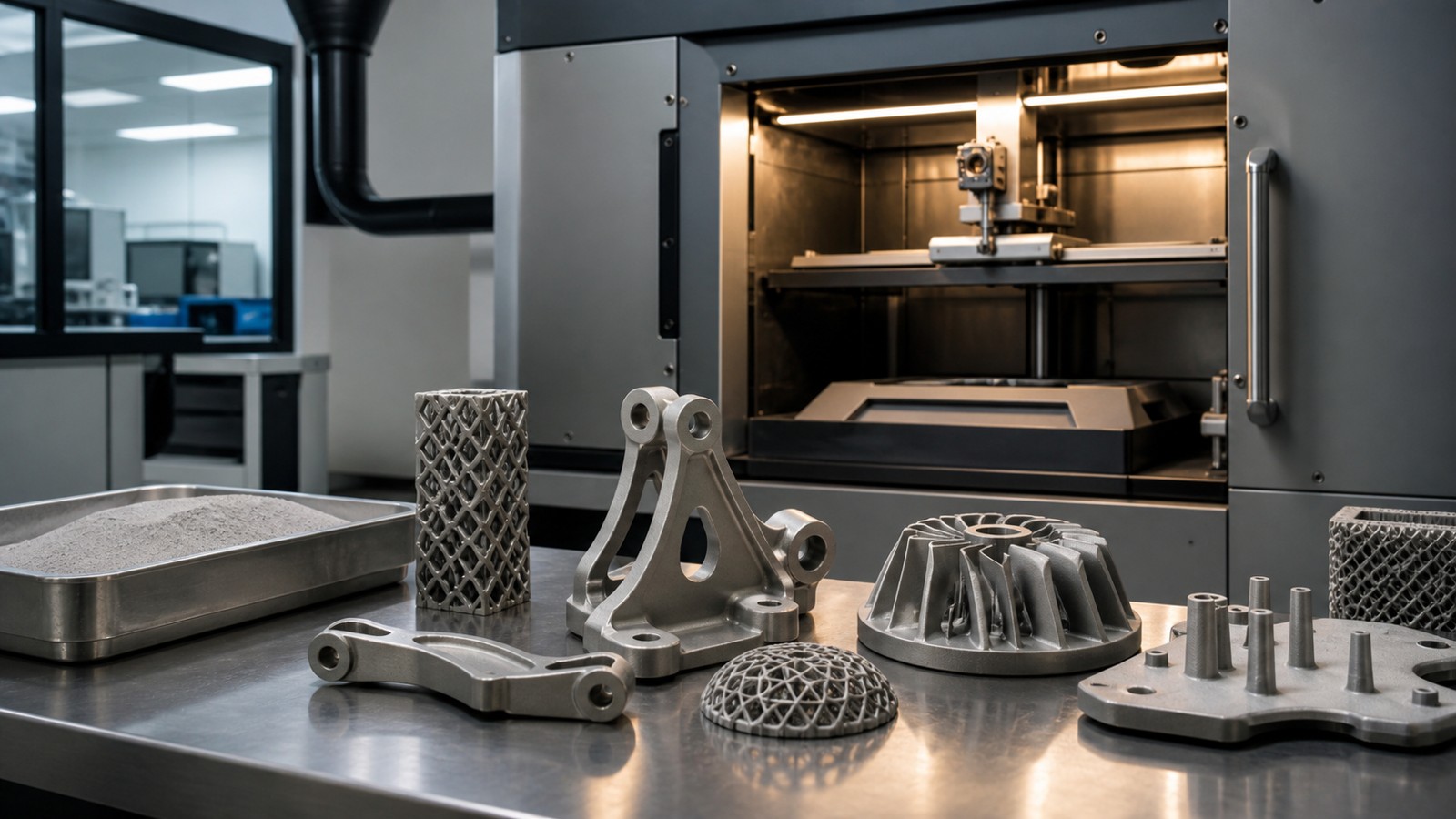
In laser powder bed fusion, a thin layer of metal powder is spread across a build plate. A laser scans selected areas, melting the powder into solid metal. The build platform lowers, another powder layer is spread, and the process repeats until the part is complete.
This process is used for complex metal parts with internal channels, lattice structures, lightweight brackets, medical components, aerospace parts, and tooling inserts. It can make shapes that are difficult or impossible to machine from solid stock.
Directed Energy Deposition
Directed energy deposition feeds powder or wire into a melt pool created by a laser, electron beam, or other energy source. It can build near-net-shape features, add material to an existing part, or repair worn components.
DED often appears in repair, large metal builds, hybrid manufacturing systems, and applications where adding metal to a specific area is more valuable than printing a whole part from scratch.
What Happens After Printing
Metal prints usually need post-processing. Supports may be removed, heat treatment may relieve stress or improve properties, surfaces may be machined, and parts may be inspected with dimensional checks or non-destructive evaluation.
This is why metal additive manufacturing is not simply a print-and-use shortcut. The printed geometry is part of a larger production route that includes material control, process parameters, finishing, and qualification.
When Metal Printing Makes Sense
Metal 3D printing makes sense when geometry, weight reduction, internal flow paths, customization, part consolidation, or repair value justify the cost. It can be powerful for low-volume complex parts and high-value engineering problems.
It is usually not the cheapest way to make simple metal blocks, plates, shafts, or brackets. For simple geometry and tight tolerances, machining, casting, forging, or sheet metal can still be the better route.
Key Limits Beginners Miss
Metal printers are expensive, powders can require careful handling, build size is limited, and qualification can be demanding. Surface finish and tolerance often need machining. Part strength depends on alloy, process, orientation, heat treatment, and inspection.
The right question is not whether metal 3D printing is advanced. The right question is whether it solves a manufacturing problem that other methods handle poorly.
FAQ
Is metal 3D printing real metal?
Yes. Industrial processes can produce functional metal parts, but properties depend on the alloy, process, heat treatment, and inspection.
Is metal 3D printing stronger than CNC machining?
Not automatically. CNC starts with wrought or cast stock, while printed metal depends on process control and post-processing. Each can be stronger for different jobs.
What metals can be printed?
Common options include stainless steels, tool steels, titanium alloys, aluminum alloys, nickel alloys, cobalt-chrome, and other qualified materials depending on the machine.