Put Nylon Filament: The Complete Beginner’s Guide on the Workbench
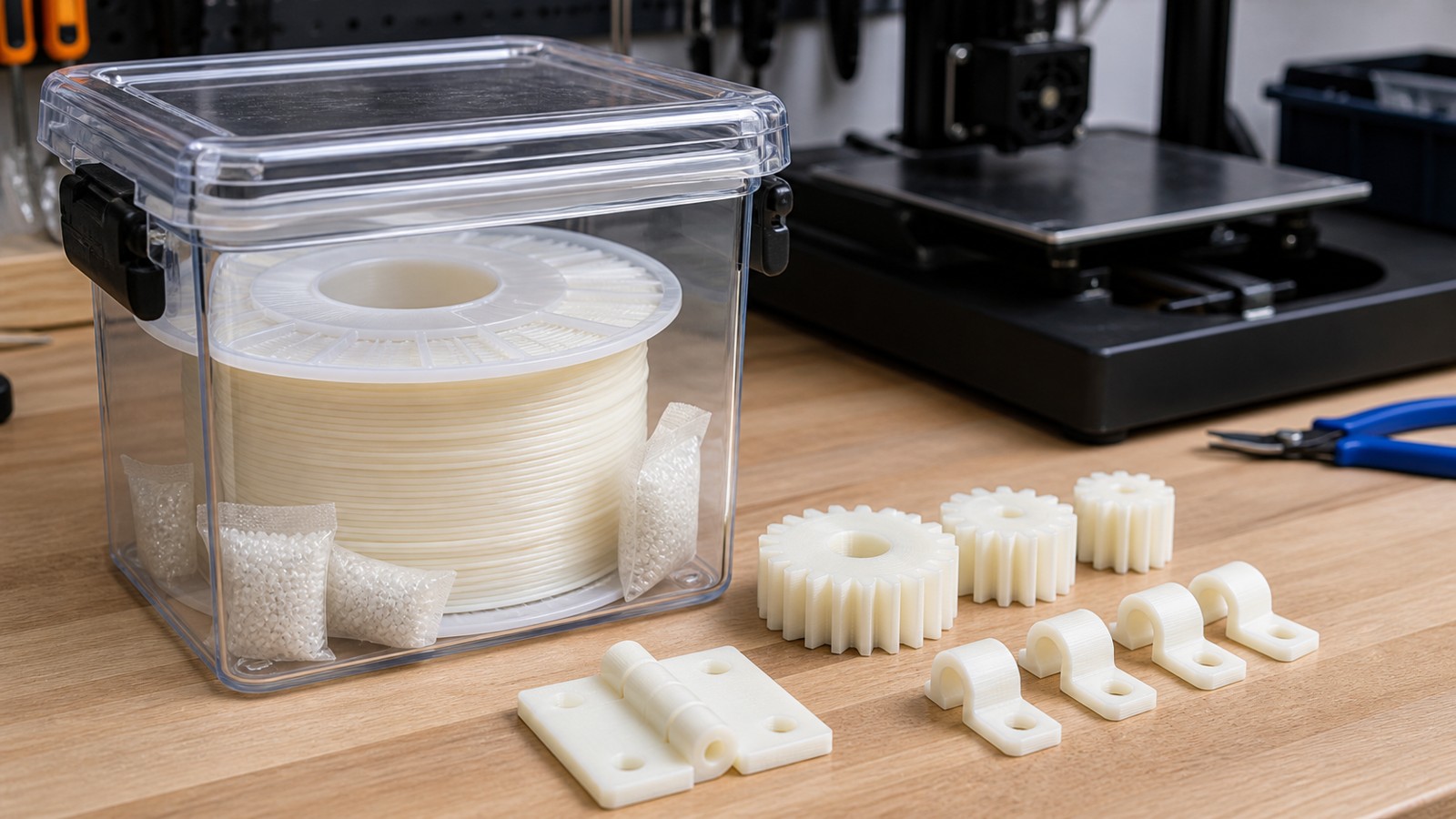
Most print advice becomes more useful when Nylon Filament: The Complete Beginner’s Guide is tied to a real object that has to survive handling. This guide is written for advanced hobbyists choosing tough, moisture-sensitive materials, so it keeps the explanation close to examples such as tool brackets, gears, and living hinges. The important questions are concrete: how impact behavior changes the setup, where temperature resistance creates risk, and what evidence proves that the chosen approach actually improved the print. Instead of treating the topic as a list of isolated tips, the article follows the way a maker or small shop would think through a real job: choose a direction, test the most fragile assumption, read the result honestly, and only then commit to a larger or more expensive build. It also separates this title from nearby September topics by focusing on engineering-filament, using bearing blocks and protective guards as working examples instead of repeating the same material checklist.For this specific article, the extra emphasis is on high-heat clips and warping, because those details help readers connect the advice to a physical result instead of treating the topic as a generic setup preference, especially during the final inspection step.
A: Match the model, material, settings, and finish plan to the purpose of the print.
A: Bed leveling, surface cleanliness, nozzle height, temperature, and material condition are the usual suspects.
A: No. Slower speeds can improve detail, but heat buildup and profile balance still matter.
A: Use the right material, more walls, smart orientation, enough infill, and realistic load testing.
A: Temperature, retraction, travel moves, moisture, and material type all contribute.
A: Diagnose stringing, warping, weak layers, clogs, and moisture bubbles before buying parts.
A: Very important; it shows toolpaths, supports, layer changes, and possible weak spots before printing.
A: First layers, simple calibration prints, support cleanup, and basic material profiles.
A: Clean orientation, tuned settings, good material handling, and careful support removal, sanding, painting, smoothing, and part testing.
A: It is most useful for makers matching material behavior to the job instead of only the color.
The Practical Job Behind Nylon Beginner S
The first change is usually not dramatic. With Nylon Filament: The Complete Beginner’s Guide, the earliest difference often appears in impact behavior, because that choice decides whether the print is being asked to do something realistic. A maker looking at tool brackets should not judge success only by whether the part finished; the better question is whether the printed shape supports its real job. That is why engineering-filament matters: it turns a vague preference into a checkable decision. For nylon beginner s, check high-heat clips.
The same topic can look very different on gears. A decorative version may tolerate a soft corner or a longer cleanup pass, while a functional version may fail if a hole shifts, a tab flexes, or a mating face needs sanding. Readers get better results when they name that difference before slicing the model. Useful evidence: impact behavior on tool brackets.
For high-heat clips, the most useful detail is not whether the print completed, but whether warping made the part easier to trust after handling. That distinction keeps the article focused on evidence rather than enthusiasm. That gives nylon beginner s its own checkpoint.
A shop using Nylon Filament: The Complete Beginner’s Guide could test the riskiest corner, hinge, channel, or mating face on bearing blocks. If that small piece answers the question, the full model becomes a confirmation instead of a gamble. Use living hinges before the larger print.
Setup Choices That Shape the Outcome
The decision gets real when temperature resistance meets the limits of the printer and material. This is where generic advice starts to thin out, because a setting that helps living hinges may make bearing blocks worse. The print should be judged against its role: display piece, fit check, shop aid, customer prototype, classroom demo, or end-use component. Useful evidence: temperature resistance on tool brackets.
A useful reader perspective is to ask what failure would be most expensive. Sometimes it is wasted filament; sometimes it is a missed delivery, a brittle hinge, a support scar in the worst possible spot, or a part that looks fine until it is assembled. That risk should guide the first test more than a popular profile found online. That gives nylon beginner s its own checkpoint.
For close comparison titles, this section is especially important. The goal is not to crown a universal winner. It is to separate the job where one option is comfortable from the job where the other option is worth the extra tuning. Use living hinges before the larger print.
The practical standard changes with the audience. A classroom sample can teach the concept with visible layer lines, while a customer prototype needs cleaner fit and a more predictable finish. Nylon Filament: The Complete Beginner’s Guide should be judged against that standard from the beginning. For nylon beginner s, check bearing blocks.
That is why temperature resistance deserves a separate note. It may seem like a small setup choice, but it often decides whether the part can be repeated without rediscovering the same problem. Useful evidence: warping on protective guards.
Small Evidence Before Big Commitments
Before a full print, isolate the feature that carries the most uncertainty. For Nylon Filament: The Complete Beginner’s Guide, that might mean a corner of protective guards, a small section of high-heat clips, or a short coupon that reveals drying without consuming the whole afternoon. A focused test is not a delay; it is a way to make the next decision cleaner. That gives nylon beginner s its own checkpoint.
The test should be small enough to repeat but realistic enough to matter. A flat rectangle may prove bed adhesion, but it will not reveal how a thin upright wall, a trapped support, or a snap feature behaves. The best test includes one problem that the final part must solve. Use living hinges before the larger print.
Cost also has to include attention. A material or method that demands drying, enclosure control, careful supports, or post-processing may still be the right choice, but only when the part’s value justifies those extra decisions. For nylon beginner s, check bearing blocks.
In a small batch, one failed assumption can repeat across every copy. Testing bearing blocks before the batch protects time, material, and confidence without turning the project into a long research project. Useful evidence: impact behavior on protective guards.
Comparing Prints Without Guesswork
Reading the first result takes more discipline than printing it. Look at the part after it cools, after supports come off, after washing or sanding if those steps apply, and after it touches the object it must fit. That second look often reveals whether enclosure is merely acceptable or genuinely under control. Use living hinges before the larger print.
Good notes do not need to be long. Record the material condition, orientation, key setting change, cleanup effort, and the one thing the next version should improve. If the note cannot explain why the next print will be different, it is probably just a diary entry rather than useful evidence. For nylon beginner s, check bearing blocks.
The comparison should include handling. A print that looks crisp on the plate can still feel wrong when it bends, clips, slides, warms up, or carries a load. That is where Nylon Filament: The Complete Beginner’s Guide becomes a practical judgment instead of a search-result summary. Useful evidence: temperature resistance on protective guards.
Many readers improve faster when they keep the final use visible. A part that will be painted, assembled, warmed, flexed, or washed needs to be checked after that step, not only while it looks fresh on the build plate. That gives nylon beginner s its own checkpoint.
If warping is the weak point, the next print should target that weakness directly. A beautiful unrelated surface cannot compensate for a feature that fails where the part actually works. Use tool brackets before the larger print.
When the Material or Method Earns Its Place
Every option has a tradeoff, and the useful ones should be named before the print begins. Better detail can mean slower production. More heat resistance can mean more warping control. A cleaner support strategy can increase print time. A stronger part can be harder on the nozzle or less forgiving during assembly. For nylon beginner s, check bearing blocks.
For advanced hobbyists choosing tough, moisture-sensitive materials, the best choice is usually the one that removes the most important risk without adding two new problems. That might favor a simple material for tool brackets and a more demanding setup for bearing blocks. The answer should follow the part, not the label on the spool or bottle. Useful evidence: drying on protective guards.
For bearing blocks, the most useful detail is not whether the print completed, but whether enclosure made the part easier to trust after handling. That distinction keeps the article focused on evidence rather than enthusiasm. That gives nylon beginner s its own checkpoint.
A shop using Nylon Filament: The Complete Beginner’s Guide could test the riskiest corner, hinge, channel, or mating face on gears. If that small piece answers the question, the full model becomes a confirmation instead of a gamble. Use tool brackets before the larger print.
Troubleshooting Without Chasing Noise
The common mistake is changing too many variables at once. If bed grip is poor, the fix might be temperature, drying, orientation, support interface, speed, or model geometry. Changing all of them can produce a better-looking part while teaching nothing about why it improved. Useful evidence: enclosure on protective guards.
Another mistake is trusting the first decent print. A single success is useful, but it does not prove repeatability. Print a second small sample, assemble the mating feature, or compare the same geometry in a slightly different orientation before assuming the method is settled. That gives nylon beginner s its own checkpoint.
Beginners also undercount cleanup. Supports, sanding, curing, drying, trimming, or insert installation can matter as much as print time. If cleanup is the hidden bottleneck, the technically stronger option may not be the better workflow. Use tool brackets before the larger print.
The practical standard changes with the audience. A classroom sample can teach the concept with visible layer lines, while a customer prototype needs cleaner fit and a more predictable finish. Nylon Filament: The Complete Beginner’s Guide should be judged against that standard from the beginning. For nylon beginner s, check gears.
That is why warping deserves a separate note. It may seem like a small setup choice, but it often decides whether the part can be repeated without rediscovering the same problem. Useful evidence: temperature resistance on living hinges.
Finish With One Clear Test
The next print should answer one question that the article made visible. It might test warping, compare two orientations, try a smaller support interface, dry one spool, or print the same feature in a different material. Keep the test narrow enough that the result is not ambiguous. That gives nylon beginner s its own checkpoint.
After that, the project can scale with more confidence. Move from a coupon to gears, from a fit corner to the full assembly, or from a single material trial to a short production run. That progression keeps Nylon Filament: The Complete Beginner’s Guide grounded in evidence and gives the reader a useful way to act today. Use tool brackets before the larger print.
Cost also has to include attention. A material or method that demands drying, enclosure control, careful supports, or post-processing may still be the right choice, but only when the part’s value justifies those extra decisions. For nylon beginner s, check gears.
In a small batch, one failed assumption can repeat across every copy. Testing gears before the batch protects time, material, and confidence without turning the project into a long research project. Useful evidence: drying on living hinges.