Why SLS Is Ideal for Functional Prototypes

Photorealistic 3D printing scene for Why SLS Is Ideal for Functional Prototypes

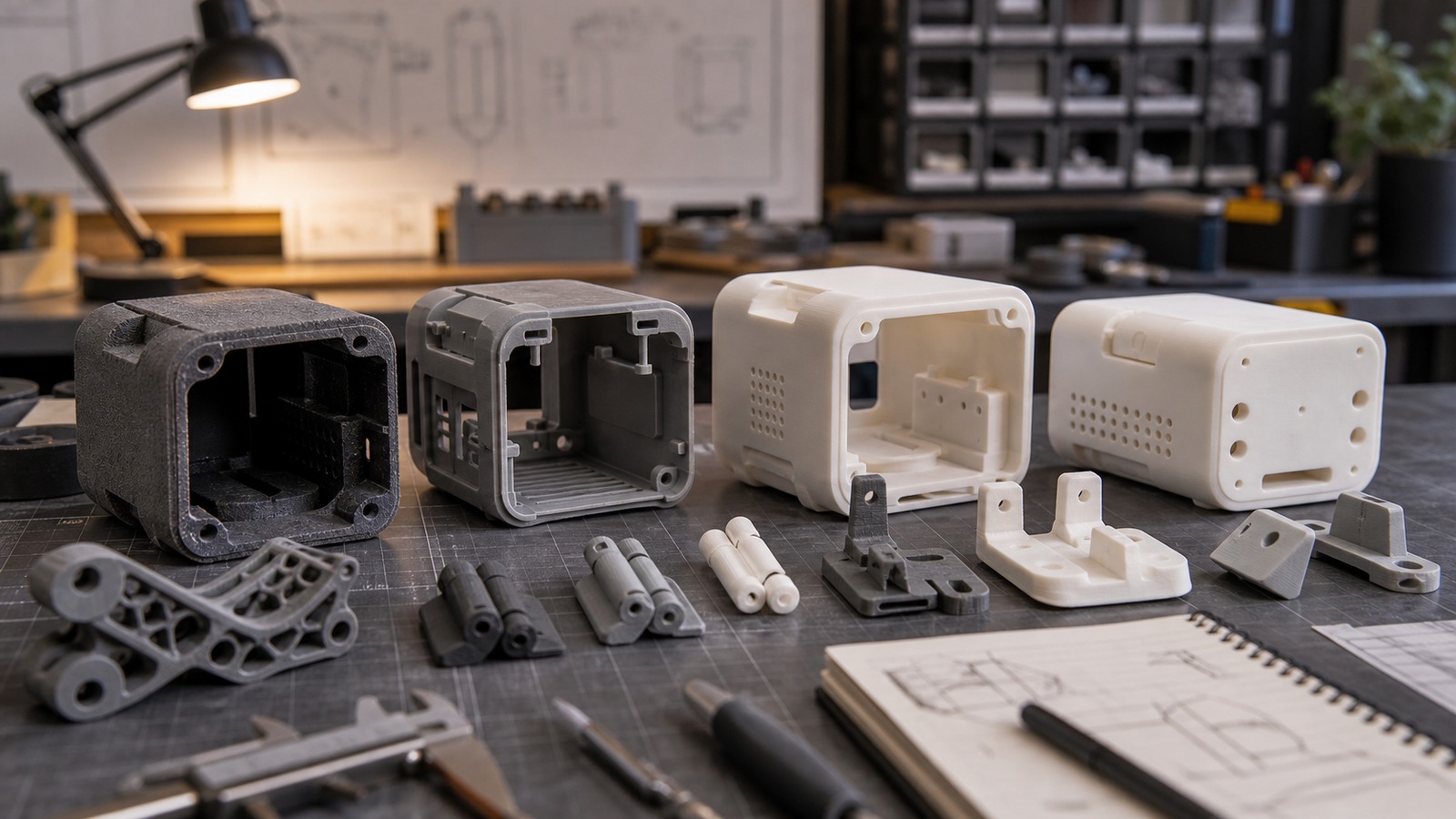
Why SLS Is Ideal for Functional Prototypes deserves a focused explanation because functional prototyping changes how teams that need prototypes to behave like real parts make practical 3D printing decisions. The useful lens is a product-development sprint where fit, assembly, movement, and handling matter more than a pretty demo, not a generic promise that every printer can make every part. This guide follows snap-fit housings, hinges, brackets, ducts, clips, grip textures, and assembly fixtures and shows how assembly fit, durability, wall behavior, iteration speed, feature freedom, and finish readiness shape the result a person actually sees.

Start With the Real Job Behind Functional Prototyping

The first question is not whether the subject sounds advanced; it is what job the printed part must perform in a product-development sprint where fit, assembly, movement, and handling matter more than a pretty demo. For teams that need prototypes to behave like real parts, the job may be a faster design answer, a stronger functional part, a better fit, or a clearer purchasing decision. Keeping that job visible prevents using a fragile display prototype when the team needs a functional engineering answer.

A practical brief for functional prototyping should name the part, the user, the environment, and the evidence that will prove success. In this topic, that evidence usually includes assembly fit, durability, wall behavior, iteration speed, feature freedom, and finish readiness. Without those functional prototyping details, even an attractive Why SLS Is Ideal for Functional Prototypes print can become an expensive guess.

How the Functional Prototyping Workflow Looks Before the Machine Runs

Most functional prototyping outcomes are decided while the work is still digital. The model, orientation, nesting plan, material choice, and finishing expectations have to fit together before snap-fit housings, hinges, brackets, ducts, clips, grip textures, and assembly fixtures move into production. That is especially true when PA12, PA11, TPU, dyed nylon, and glass-filled nylon react differently to heat, handling, and cleanup.

A good functional prototyping pre-print review asks whether geometry can be cleaned, measured, assembled, and revised. The strongest Why SLS Is Ideal for Functional Prototypes projects also record assumptions so the next build does not repeat the same uncertainty. That habit is small, but it turns whether the prototype reveals how the product will work in the hand or assembly into a deliberate engineering check.

The Design Choices That Change Functional Prototyping Results

Design for functional prototyping is less about making something unusual and more about making the right tradeoffs visible. Wall thickness, radii, clearances, escape paths, and surface orientation affect assembly fit, durability, wall behavior, iteration speed, feature freedom, and finish readiness. A clean CAD model for Why SLS Is Ideal for Functional Prototypes gives the printer fewer opportunities to amplify a weak decision.

The best functional prototyping designs also respect the life of the part after printing. If the functional prototyping part will be handled, flexed, painted, fastened, or inspected, those downstream steps belong in the design conversation for teams that need prototypes to behave like real parts. A product team testing latch feel and screw-boss placement before paying for tooling is a good reminder that the printed object is only useful when it answers a real use case.

Materials and Process Limits in Functional Prototyping

Materials are not interchangeable labels in functional prototyping. Pa12, pa11, tpu, dyed nylon, and glass-filled nylon each bring different behavior in strength, surface feel, cleanup, temperature response, and cost. The right functional prototyping material choice depends on the part's job rather than the powder, resin, or filament that happens to be available first.

Process limits also matter because a functional prototyping machine is building a physical object, not just displaying a digital file. Heat, powder age, resin exposure, support contact, layer strategy, and finishing chemistry all leave marks on Why SLS Is Ideal for Functional Prototypes. A user who understands those limits can decide which prototype questions deserve SLS and which can be answered with simpler printing with fewer surprises.

What Beginners Often Misread About Functional Prototyping

Beginners often judge a functional prototyping print too early. A Why SLS Is Ideal for Functional Prototypes part may look successful in the build chamber and still fail because a hole is tight, a clip is brittle, a surface is rough, or a cleaning step damages detail. In functional prototyping, the complete result includes preparation, printing, post-processing, inspection, and use.

The opposite mistake in Why SLS Is Ideal for Functional Prototypes is rejecting a rough-looking prototype that answered the important question. Early functional prototyping prints are valuable when they reveal fit, motion, ergonomics, assembly order, or failure points. The goal for teams that need prototypes to behave like real parts is not perfection on the first attempt; it is learning fast without confusing activity for progress.

How Professionals Judge Functional Prototyping Success

Professionals usually separate visual quality from functional quality. In functional prototyping, they check whether critical dimensions are stable, whether the material supports the load, and whether finishing changed anything important. For this topic, the strongest inspection plan watches assembly fit, durability, wall behavior, iteration speed, feature freedom, and finish readiness.

Documentation is part of that functional prototyping judgment. Build notes for functional prototyping, material batches, orientation choices, cleaning methods, and measured results make a second success easier to repeat. That repeatability is what turns whether the prototype reveals how the product will work in the hand or assembly from a one-time experiment into a usable workflow.

A Real Functional Prototyping Tradeoff

Consider a product team testing latch feel and screw-boss placement before paying for tooling. The obvious functional prototyping goal is to make the object, but the better goal is to learn whether the object behaves correctly in context. That may mean changing a radius, choosing a different material, adjusting orientation, or accepting a finish that supports Why SLS Is Ideal for Functional Prototypes over appearance.

This functional prototyping example also shows why blanket advice is risky. A choice that helps one Why SLS Is Ideal for Functional Prototypes print can hurt another if the load case, material, quantity, or customer expectation changes. Good Why SLS Is Ideal for Functional Prototypes decisions stay attached to the specific problem rather than floating as generic 3D printing rules.

Cost, Time, and Risk for Functional Prototyping

Cost in functional prototyping is not only the material trapped inside the part. For Why SLS Is Ideal for Functional Prototypes, it includes setup, machine time, failed attempts, labor, post-processing, inspection, shipping, and the cost of waiting for answers. That is why which prototype questions deserve SLS and which can be answered with simpler printing should be judged against the whole project, not a single line item.

Time has the same hidden layers in functional prototyping. A fast functional prototyping print can still be slow if cleanup is painful, while a slower build can be efficient if it produces a packed tray of usable parts. The practical winner for Why SLS Is Ideal for Functional Prototypes is the workflow that gets trustworthy information or usable components with the least avoidable rework.

Questions to Ask Before Committing to Functional Prototyping

Before committing to a functional prototyping method, ask what the part must prove, who will handle it, and what environment it will face. Ask whether PA12, PA11, TPU, dyed nylon, and glass-filled nylon support that environment and whether snap-fit housings, hinges, brackets, ducts, clips, grip textures, and assembly fixtures can be finished without damaging the feature that matters most. Then ask how the functional prototyping result will be measured.

A second set of Why SLS Is Ideal for Functional Prototypes questions belongs to scale. Will the Why SLS Is Ideal for Functional Prototypes project need one part, ten parts, hundreds, or a design that changes every week? Those functional prototyping answers often decide whether the best path is direct printing, outsourced production, tooling, or another manufacturing method.

Where Functional Prototyping Is Heading Next

The next stage for this topic is not simply faster machines. It is a more connected functional prototyping workflow where software, materials, safety, inspection, and finishing all support better decisions. Watch for faster prototype loops, stronger digital validation, and more direct paths from prototype to short-run production.

That functional prototyping future still depends on clear thinking at the part level. A printer cannot rescue a vague functional prototyping requirement, and a premium material cannot fix a design that ignores use. The durable advantage comes from matching ideal, functional, prototypes, prototyping, snap, housings, hinges, brackets, ducts to a specific problem and then measuring the result honestly.

The Practical Takeaway for Why SLS Is Ideal for Functional Prototypes

The most useful conclusion is that Why SLS Is Ideal for Functional Prototypes should be approached as a decision framework, not a slogan. Define the functional prototyping purpose, choose the material and process around that purpose, and judge the part by evidence from the real workflow. When teams that need prototypes to behave like real parts do that, 3D printing becomes less mysterious and much more useful.

One more practical habit for Why SLS Is Ideal for Functional Prototypes is to keep a short build note tied to the part. Record the functional prototyping material, the feature that mattered most, the measurement that passed or failed, and the next change suggested by the result. For Why SLS Is Ideal for Functional Prototypes, that note should mention whether the prototype reveals how the product will work in the hand or assembly and the keywords ideal, functional, prototypes, prototyping, snap, housings.

One more practical habit for Why SLS Is Ideal for Functional Prototypes is to keep a short build note tied to the part. Record the functional prototyping material, the feature that mattered most, the measurement that passed or failed, and the next change suggested by the result. For Why SLS Is Ideal for Functional Prototypes, that note should mention whether the prototype reveals how the product will work in the hand or assembly and the keywords ideal, functional, prototypes, prototyping, snap, housings.

One more practical habit for Why SLS Is Ideal for Functional Prototypes is to keep a short build note tied to the part. Record the functional prototyping material, the feature that mattered most, the measurement that passed or failed, and the next change suggested by the result. For Why SLS Is Ideal for Functional Prototypes, that note should mention whether the prototype reveals how the product will work in the hand or assembly and the keywords ideal, functional, prototypes, prototyping, snap, housings.

One more practical habit for Why SLS Is Ideal for Functional Prototypes is to keep a short build note tied to the part. Record the functional prototyping material, the feature that mattered most, the measurement that passed or failed, and the next change suggested by the result. For Why SLS Is Ideal for Functional Prototypes, that note should mention whether the prototype reveals how the product will work in the hand or assembly and the keywords ideal, functional, prototypes, prototyping, snap, housings.

One more practical habit for Why SLS Is Ideal for Functional Prototypes is to keep a short build note tied to the part. Record the functional prototyping material, the feature that mattered most, the measurement that passed or failed, and the next change suggested by the result. For Why SLS Is Ideal for Functional Prototypes, that note should mention whether the prototype reveals how the product will work in the hand or assembly and the keywords ideal, functional, prototypes, prototyping, snap, housings.